


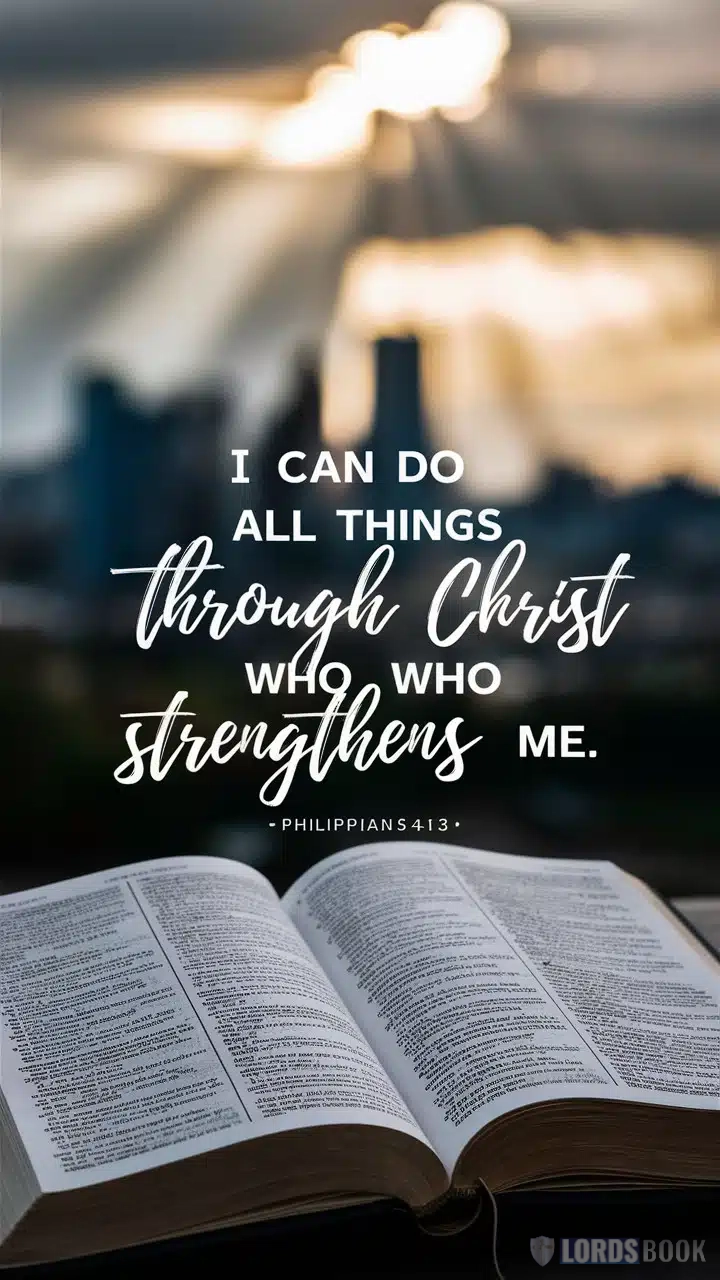
You know that Bible verse, "I can do all things through Christ who strengthens me"? It's everywhere—on T-shirts, water bottles, social media captions. It’s easy to shrink it down into a simple self-help mantra, like a secret key to nailing that job interview or winning the big game.
But if you peek at the original story, it’s not about that at all. It’s actually way more powerful, and honestly, a lot more humble. It’s not a guarantee of success; it’s a recipe for a kind of peace that doesn't depend on your circumstances.
So, what’s the real deal? Let’s break it down in everyday terms.
1. It’s about finding calm, not conquering the world.
Think about the guy who wrote this, the Apostle Paul. He wasn’t writing from a corner office after a major promotion. He was in prison. And yet, he says he’s learned the secret to being content whether he’s feasting or starving, rolling in it or flat broke. The "all things" he’s talking about isn’t about winning every battle. It’s about having the inner strength to get through any battle without your joy being stolen. It’s resilience, not a victory lap.
2. It’s a promise for the hard days, not a free pass to an easy life.
Let's be real: life throws curveballs. This verse is for those moments—when you get the bad news, when you’re exhausted, when you feel like you just can’t take one more thing. It’s not a promise that God will clear all the obstacles from your path. It’s the assurance that you won’t have to face them alone. You’ll be given the strength to endure, to put one foot in front of the other, even when the path is steep.
3. It’s about borrowing strength, not relying on your own willpower.
Our culture is obsessed with "pulling yourself up by your bootstraps." But this verse flips that idea on its head. It says, "You don't have to have it all together." The power doesn't come from your own grit or determination; it comes from leaning into your connection with Christ. It takes the pressure off, reminding you that it’s okay to not be the strongest person in the room all the time.
4. It’s about a relationship that satisfies, not stuff that temporary.
We’re often told that the next purchase, the next achievement, the next milestone will finally make us happy. But as one pastor put it, that kind of happiness is like cotton candy—it’s sweet for a second but dissolves into nothing. Paul discovered something deeper. His contentment came from who he knew, not what he had. That’s a peace that can’t be shaken by a bad economy or a failed plan, because it’s rooted in something that lasts.
But if you peek at the original story, it’s not about that at all. It’s actually way more powerful, and honestly, a lot more humble. It’s not a guarantee of success; it’s a recipe for a kind of peace that doesn't depend on your circumstances.
So, what’s the real deal? Let’s break it down in everyday terms.
1. It’s about finding calm, not conquering the world.
Think about the guy who wrote this, the Apostle Paul. He wasn’t writing from a corner office after a major promotion. He was in prison. And yet, he says he’s learned the secret to being content whether he’s feasting or starving, rolling in it or flat broke. The "all things" he’s talking about isn’t about winning every battle. It’s about having the inner strength to get through any battle without your joy being stolen. It’s resilience, not a victory lap.
2. It’s a promise for the hard days, not a free pass to an easy life.
Let's be real: life throws curveballs. This verse is for those moments—when you get the bad news, when you’re exhausted, when you feel like you just can’t take one more thing. It’s not a promise that God will clear all the obstacles from your path. It’s the assurance that you won’t have to face them alone. You’ll be given the strength to endure, to put one foot in front of the other, even when the path is steep.
3. It’s about borrowing strength, not relying on your own willpower.
Our culture is obsessed with "pulling yourself up by your bootstraps." But this verse flips that idea on its head. It says, "You don't have to have it all together." The power doesn't come from your own grit or determination; it comes from leaning into your connection with Christ. It takes the pressure off, reminding you that it’s okay to not be the strongest person in the room all the time.
4. It’s about a relationship that satisfies, not stuff that temporary.
We’re often told that the next purchase, the next achievement, the next milestone will finally make us happy. But as one pastor put it, that kind of happiness is like cotton candy—it’s sweet for a second but dissolves into nothing. Paul discovered something deeper. His contentment came from who he knew, not what he had. That’s a peace that can’t be shaken by a bad economy or a failed plan, because it’s rooted in something that lasts.
You know that Bible verse, "I can do all things through Christ who strengthens me"? It's everywhere—on T-shirts, water bottles, social media captions. It’s easy to shrink it down into a simple self-help mantra, like a secret key to nailing that job interview or winning the big game.
But if you peek at the original story, it’s not about that at all. It’s actually way more powerful, and honestly, a lot more humble. It’s not a guarantee of success; it’s a recipe for a kind of peace that doesn't depend on your circumstances.
So, what’s the real deal? Let’s break it down in everyday terms.
1. It’s about finding calm, not conquering the world.
Think about the guy who wrote this, the Apostle Paul. He wasn’t writing from a corner office after a major promotion. He was in prison. And yet, he says he’s learned the secret to being content whether he’s feasting or starving, rolling in it or flat broke. The "all things" he’s talking about isn’t about winning every battle. It’s about having the inner strength to get through any battle without your joy being stolen. It’s resilience, not a victory lap.
2. It’s a promise for the hard days, not a free pass to an easy life.
Let's be real: life throws curveballs. This verse is for those moments—when you get the bad news, when you’re exhausted, when you feel like you just can’t take one more thing. It’s not a promise that God will clear all the obstacles from your path. It’s the assurance that you won’t have to face them alone. You’ll be given the strength to endure, to put one foot in front of the other, even when the path is steep.
3. It’s about borrowing strength, not relying on your own willpower.
Our culture is obsessed with "pulling yourself up by your bootstraps." But this verse flips that idea on its head. It says, "You don't have to have it all together." The power doesn't come from your own grit or determination; it comes from leaning into your connection with Christ. It takes the pressure off, reminding you that it’s okay to not be the strongest person in the room all the time.
4. It’s about a relationship that satisfies, not stuff that temporary.
We’re often told that the next purchase, the next achievement, the next milestone will finally make us happy. But as one pastor put it, that kind of happiness is like cotton candy—it’s sweet for a second but dissolves into nothing. Paul discovered something deeper. His contentment came from who he knew, not what he had. That’s a peace that can’t be shaken by a bad economy or a failed plan, because it’s rooted in something that lasts.


 Arabic
 French
 Spanish
 Portuguese
 Deutsch
 Turkish
 Dutch
Dutch
 Italiano
 Russian
 Romaian
 Portuguese (Brazil)
 Greek
Greek
 हिन्दी