


- Reside em Patharkandi
- De Nagpur
- País India
- Estudou Bachelor Degree na TBML College
- Male
- 07/14/1962
- Seguido por 61 pessoas
Amigos 68


Atualizações Recentes
- Life Of Charles G. Finney.
By
Aaron Merritt Hills
Part 1 - B
SENT OF GOD
Charles Finney found the old authors in his law books frequently quoting from the Scriptures. This excited his curiosity so much that he purchased a Bible, the first that he had ever owned, and hunted up every passage referred to. This led to careful reading and much meditation upon the Sacred Word. Here follow two facts that are profoundly important to all Churches and Christians, and especially to all who would ever be successful soul-winners. His pastor's name was Rev. George W. Gale, a graduate of Princeton College and Theological Seminary. His theology was hyper-Calvinistic and not yhe genui e Calvinism taught in Princeton at that time. Gale believed that man’s nature was so totally sinful that he was utterly incapable of any good; the will was incapable of a right choice; the soul was utterly passive in regeneration; ''there was no adaptation in the gospel to change his nature, and consequently no connection in religion between means and ends.”
"This Brother Gale sternly held; and consequently, in his preaching, he never seemed to expect, nor did he even aim at converting anybody by any sermon that I ever heard him preach. And yet he was an able preacher, as preaching was then estimated. The fact is, these dogmas were a perfect strait-jacket to him. If he preached repentance, he must be sure, before he sat down, to leave the impression on his people that they could not repent. If he called them to believe, he must be sure to inform them that, until their nature was changed by the Holy Spirit, faith was impossible to them. And so his orthodoxy was a perfect snare to himself and to his hearers." (Memoirs of C. G. Finney, pp. 59, 60.)
The pastor was in the habit of dropping into the
young lawyer’s office to see what impression his sermons had made on the lawyer’s mind. Finney was at this time leader of his choir, and of course their relations were familiar. With the keen, subtle, intellectual acumen which characterized him and a frankness bordering on to impolite bluntness, and probably with a touch of cynical irreverence, the lawyer satisfied the minister’s curiosity completely; for fifty years afterward he wrote: 'I now think that I criticised his sermons unmercifully. . . . Indeed, I found it impossible to attach any meaning to the terms which he used with great formality and frequency. What did he mean by repentance? Was it a mere feeling of sorrow for sin? Was it altogether a passive state of mind, or did it involve a voluntary element? If it was a change of mind, in what sense was it a change of mind? What did he mean by the term 'regeneration?’
What did such language mean when applied to a spiritual change? What did he mean by faith? Was it merely an intellectual state? Was it merely a conviction or persuasion that the things stated in the gospel were true? What did he mean by sanctification? Did it involve any physical change in the subject, or any physical influence on the part of God? I could not tell; neither did he seem to know himself. I sometimes told him that he seemed to begin in the middle of his discourse, and to assume many things which, to my mind, needed to be proved. I must say, I was rather perplexed than edified by his preaching.”
(Memoirs, pp. 7, 8.)
As one reads such words, one can not help wondering how many ministers now are as vague and misty as was Rev. Gale, and how many multitudes are still sitting in the pews and wondering what the ministers are talking about. Neither can one help reflecting that, with such a theology prevailing, it is little wonder that infidelity was widespread at the beginning of the century, and revivals were few, with seldom a conversion, and that only one in fourteen of the population of this country was even a professor of religion!
Everybody was told that they were absolutely helpless, and could do nothing to secure their own repentance or conversion; and they generally believed it. With one accord they were idly waiting, in imaginary helplessness, for a sovereign God to enable them to repent and believe; and thus whole generations were sweeping into hell. What appalling results can flow from a false theology!
The other striking fact was this: Finney read a great deal in his Bible about prayer and answers to
prayer and prayer promises; and yet he continually heard people pray for the outpouring of the Holy Spirit, and as often confess that they did not receive what they asked for. He heard them exhort each other to wake up and be engaged and pray earnestly for a revival of religion, professing that, if they were in earnest, they would have a revival, and the impenitent would be converted; but they would as continually bemoan their coldness and complain that they were making no progress. He says : '"This inconsistency, the fact that they prayed so much and were not answered, was a sad stumbling-block to me.'' ‘'On one occasion, when I was in one of the prayer-meetings, I was asked if I did not desire that they should pray for me. I told them, ‘No,' because I did not see that God answered their prayers. I said: ‘I suppose that I need to be prayed for—for I am conscious that I am a sinner—but I do not see that it will do any good for you to pray for me; for you are continually asking, but do not receive. You have been praying for a revival of religion ever since I have been in Adams [three years], and yet you have it not. You have prayed enough since I have attended these meetings to have prayed the devil out of Adams, if there is any virtue in your prayers. But here you are, praying on and complaining still.' " (Memoirs, p. 10.)
Some young people proposed to pray for Finney, among them the noble young woman who afterward became his wife. But the hopeless pastor remarked that it would do no good; he did not believe that Finney would ever be converted, since he had already sinned against so much light that his heart was hopelessly hardened! And what was the more, the choir was so much under Finney's influence that it was doubtful if they would ever be converted while their leader remained in Adams.
Fortunately for the kingdom of God, some one had more faith than the pastor, and laid hold of God for Finney’s conversion. To use his own words, he became 'Very restless.” A little reflection showed him that he was by no means in a state of mind to go to heaven, if he should die. He began to feel that there was something in religion of infinite importance, and that, if the soul was immortal, he needed a great change to be prepared for happiness in heaven. The great soul was approaching his Bethel: he was standing face to face with God, and confronting the decisive question whether he would accept Christ as presented in the gospel, or pursue a worldly course of life. Prayers were being answered at last; for God had his hook in Finney’s jaw, and was pulling with the mighty cord of Infinite Love.Life Of Charles G. Finney. By Aaron Merritt Hills Part 1 - B SENT OF GOD Charles Finney found the old authors in his law books frequently quoting from the Scriptures. This excited his curiosity so much that he purchased a Bible, the first that he had ever owned, and hunted up every passage referred to. This led to careful reading and much meditation upon the Sacred Word. Here follow two facts that are profoundly important to all Churches and Christians, and especially to all who would ever be successful soul-winners. His pastor's name was Rev. George W. Gale, a graduate of Princeton College and Theological Seminary. His theology was hyper-Calvinistic and not yhe genui e Calvinism taught in Princeton at that time. Gale believed that man’s nature was so totally sinful that he was utterly incapable of any good; the will was incapable of a right choice; the soul was utterly passive in regeneration; ''there was no adaptation in the gospel to change his nature, and consequently no connection in religion between means and ends.” "This Brother Gale sternly held; and consequently, in his preaching, he never seemed to expect, nor did he even aim at converting anybody by any sermon that I ever heard him preach. And yet he was an able preacher, as preaching was then estimated. The fact is, these dogmas were a perfect strait-jacket to him. If he preached repentance, he must be sure, before he sat down, to leave the impression on his people that they could not repent. If he called them to believe, he must be sure to inform them that, until their nature was changed by the Holy Spirit, faith was impossible to them. And so his orthodoxy was a perfect snare to himself and to his hearers." (Memoirs of C. G. Finney, pp. 59, 60.) The pastor was in the habit of dropping into the young lawyer’s office to see what impression his sermons had made on the lawyer’s mind. Finney was at this time leader of his choir, and of course their relations were familiar. With the keen, subtle, intellectual acumen which characterized him and a frankness bordering on to impolite bluntness, and probably with a touch of cynical irreverence, the lawyer satisfied the minister’s curiosity completely; for fifty years afterward he wrote: 'I now think that I criticised his sermons unmercifully. . . . Indeed, I found it impossible to attach any meaning to the terms which he used with great formality and frequency. What did he mean by repentance? Was it a mere feeling of sorrow for sin? Was it altogether a passive state of mind, or did it involve a voluntary element? If it was a change of mind, in what sense was it a change of mind? What did he mean by the term 'regeneration?’ What did such language mean when applied to a spiritual change? What did he mean by faith? Was it merely an intellectual state? Was it merely a conviction or persuasion that the things stated in the gospel were true? What did he mean by sanctification? Did it involve any physical change in the subject, or any physical influence on the part of God? I could not tell; neither did he seem to know himself. I sometimes told him that he seemed to begin in the middle of his discourse, and to assume many things which, to my mind, needed to be proved. I must say, I was rather perplexed than edified by his preaching.” (Memoirs, pp. 7, 8.) As one reads such words, one can not help wondering how many ministers now are as vague and misty as was Rev. Gale, and how many multitudes are still sitting in the pews and wondering what the ministers are talking about. Neither can one help reflecting that, with such a theology prevailing, it is little wonder that infidelity was widespread at the beginning of the century, and revivals were few, with seldom a conversion, and that only one in fourteen of the population of this country was even a professor of religion! Everybody was told that they were absolutely helpless, and could do nothing to secure their own repentance or conversion; and they generally believed it. With one accord they were idly waiting, in imaginary helplessness, for a sovereign God to enable them to repent and believe; and thus whole generations were sweeping into hell. What appalling results can flow from a false theology! The other striking fact was this: Finney read a great deal in his Bible about prayer and answers to prayer and prayer promises; and yet he continually heard people pray for the outpouring of the Holy Spirit, and as often confess that they did not receive what they asked for. He heard them exhort each other to wake up and be engaged and pray earnestly for a revival of religion, professing that, if they were in earnest, they would have a revival, and the impenitent would be converted; but they would as continually bemoan their coldness and complain that they were making no progress. He says : '"This inconsistency, the fact that they prayed so much and were not answered, was a sad stumbling-block to me.'' ‘'On one occasion, when I was in one of the prayer-meetings, I was asked if I did not desire that they should pray for me. I told them, ‘No,' because I did not see that God answered their prayers. I said: ‘I suppose that I need to be prayed for—for I am conscious that I am a sinner—but I do not see that it will do any good for you to pray for me; for you are continually asking, but do not receive. You have been praying for a revival of religion ever since I have been in Adams [three years], and yet you have it not. You have prayed enough since I have attended these meetings to have prayed the devil out of Adams, if there is any virtue in your prayers. But here you are, praying on and complaining still.' " (Memoirs, p. 10.) Some young people proposed to pray for Finney, among them the noble young woman who afterward became his wife. But the hopeless pastor remarked that it would do no good; he did not believe that Finney would ever be converted, since he had already sinned against so much light that his heart was hopelessly hardened! And what was the more, the choir was so much under Finney's influence that it was doubtful if they would ever be converted while their leader remained in Adams. Fortunately for the kingdom of God, some one had more faith than the pastor, and laid hold of God for Finney’s conversion. To use his own words, he became 'Very restless.” A little reflection showed him that he was by no means in a state of mind to go to heaven, if he should die. He began to feel that there was something in religion of infinite importance, and that, if the soul was immortal, he needed a great change to be prepared for happiness in heaven. The great soul was approaching his Bethel: he was standing face to face with God, and confronting the decisive question whether he would accept Christ as presented in the gospel, or pursue a worldly course of life. Prayers were being answered at last; for God had his hook in Finney’s jaw, and was pulling with the mighty cord of Infinite Love. 1 Comentários 0 Compartilhamentos 25 Visualizações
 - Life Of Charles G. Finney.
Part 1 - A
SENT OF GOD
On 29th August 1792, in Warren, Litchfield County, Connecticut, was born ''Charles Grandison’' Finney, named after a character in a novel written by Richardson, with which his parents were better acquainted than with their Bible.
One of his ancestors, seven generations back, came over in the Mayflower, which makes an illustrious pedigree in Massachusetts. His immediate parents were utterly godless. Finney had never owned a Bible till he bought one
to hunt up the passages referred to in his law books.
Strange origin this for "the prince of evangelists!”
One of God’s great surprises—like Martin Luther, the famous Reformer, coming from a peasant-miner's home; and Abraham Lincoln, the greatest President of the world’s greatest Republic, coming from a pioneer’s log-cabin! Evidently when God wants a really great man, He knows how to produce him and where to find him.
When Charles was but two years old, his parents moved into the wilderness of Central New York in
Oneida County. ‘'There' he says, ‘I seldom heard a sermon, unless from some traveling minister, or some miserable holding forth of an ignorant preacher. I remember well how the people would return from meeting, and spend a considerable time in irrepressiblelaughter at the strange mistakes made and the absurdities which had been advanced."
When Charles reached the age of sixteen, a meeting-house was erected in his neighborhood; but his parents, as if afraid of a sanctuary and Christian civilization, took their family, and made another plungeinto the wilderness, going to the extreme eastern end of Lake Ontario, and far to the north, approaching the line of Canada. Here again his life was unblessed by religious privileges.
But the New England emigrants, true to their native instincts, planted their common schools even in the wilderness; and these the boy Charles attended until he was himself able to teach a country school.
When he was twenty years old, he returned to Connecticut. He then went to New Jersey, to teach in a German community, returning twice to his native State to continue his studies under a graduate of Yale. He thus taught and studied for six years as best he could, until his teacher informed him that in two years more of private study he could complete the course of study then pursued at Yale.
His teacher invited the earnest young student to go with him to some Southern State and open an academy. He was inclined to accept the proposal; but his parents, hearing of it, immediately came after him and persuaded him to go home with them to Jefferson County, New York. This was in 1818, when Finney was twenty-six. After making his parents a visit, he concluded to enter, as a student, the law office of Mr. Wright, in the town of Adams, of that county.
He afterward wrote: ‘When I went to Adams to study law, I was almost as ignorant of religion as a heathen. I had been brought up mostly in the woods. I had very little regard for the Sabbath, and had no definite knowledge of religious truth. At Adams, for the first time, I sat statedly for a length of time under an educated ministry. ... I had never, until this time, lived where I could attend a stated prayer-meeting. As one was held by the Church near our office every week, I used to attend and listen to the prayers as often as I could be excused from business at that hour.'Life Of Charles G. Finney. Part 1 - A SENT OF GOD On 29th August 1792, in Warren, Litchfield County, Connecticut, was born ''Charles Grandison’' Finney, named after a character in a novel written by Richardson, with which his parents were better acquainted than with their Bible. One of his ancestors, seven generations back, came over in the Mayflower, which makes an illustrious pedigree in Massachusetts. His immediate parents were utterly godless. Finney had never owned a Bible till he bought one to hunt up the passages referred to in his law books. Strange origin this for "the prince of evangelists!” One of God’s great surprises—like Martin Luther, the famous Reformer, coming from a peasant-miner's home; and Abraham Lincoln, the greatest President of the world’s greatest Republic, coming from a pioneer’s log-cabin! Evidently when God wants a really great man, He knows how to produce him and where to find him. When Charles was but two years old, his parents moved into the wilderness of Central New York in Oneida County. ‘'There' he says, ‘I seldom heard a sermon, unless from some traveling minister, or some miserable holding forth of an ignorant preacher. I remember well how the people would return from meeting, and spend a considerable time in irrepressiblelaughter at the strange mistakes made and the absurdities which had been advanced." When Charles reached the age of sixteen, a meeting-house was erected in his neighborhood; but his parents, as if afraid of a sanctuary and Christian civilization, took their family, and made another plungeinto the wilderness, going to the extreme eastern end of Lake Ontario, and far to the north, approaching the line of Canada. Here again his life was unblessed by religious privileges. But the New England emigrants, true to their native instincts, planted their common schools even in the wilderness; and these the boy Charles attended until he was himself able to teach a country school. When he was twenty years old, he returned to Connecticut. He then went to New Jersey, to teach in a German community, returning twice to his native State to continue his studies under a graduate of Yale. He thus taught and studied for six years as best he could, until his teacher informed him that in two years more of private study he could complete the course of study then pursued at Yale. His teacher invited the earnest young student to go with him to some Southern State and open an academy. He was inclined to accept the proposal; but his parents, hearing of it, immediately came after him and persuaded him to go home with them to Jefferson County, New York. This was in 1818, when Finney was twenty-six. After making his parents a visit, he concluded to enter, as a student, the law office of Mr. Wright, in the town of Adams, of that county. He afterward wrote: ‘When I went to Adams to study law, I was almost as ignorant of religion as a heathen. I had been brought up mostly in the woods. I had very little regard for the Sabbath, and had no definite knowledge of religious truth. At Adams, for the first time, I sat statedly for a length of time under an educated ministry. ... I had never, until this time, lived where I could attend a stated prayer-meeting. As one was held by the Church near our office every week, I used to attend and listen to the prayers as often as I could be excused from business at that hour.' 1 Comentários 0 Compartilhamentos 16 Visualizações
 - Arguments of backsliders and John Wesley’s Answers from his sermon “ A Call to Backsliders”
"Will the Lord absent himself for ever And will he be no more entreated Is his mercy clean gone for ever And is his promise come utterly to an end for evermore" Ps. 77:7, 8.
So many backsliders think that God hath forgotten to be gracious.
1. The first argument which induces many backsliders to believe that "the Lord will be no more entreated," is drawn from the very reason of the thing: "If," say they, "a man rebel against an earthly prince, many times he dies for the first offence; he pays his life for the first transgression. Yet, possibly, if the crime be extenuated by some favourable circumstance, or if strong intercession be made for him, his life may be given him. But if, after a full and free pardon he were guilty of rebelling a second time, who would dare to intercede for him He must expect no farther mercy. Now, if one rebelling against an earthly king, after he has been freely pardoned once, cannot with any colour of reason hope to be forgiven a second time; what must be the case of him that, after having been freely pardoned for rebelling against the great King of heaven and earth, rebels against him again What can be expected, but that `vengeance will come upon him to the uttermost'"
"Unto whom will ye liken me, saith the Lord" "I am God, and not man, therefore the house of Israel is not consumed." Because he is God, and not man, "therefore his compassions fail not." None then can infer, that because an earthly king will not pardon one that rebels against him a second time, therefore the King of heaven will not. Yea, he will; not until seven times only, or until seventy times seven. Nay, were your rebellions multiplied as the stars of heaven; were they more in number than the hairs of your head; yet "return unto the Lord, and he will have mercy upon you; and to our God, and he will abundantly pardon."
2. "If any man see his brother sin a sin which is not unto death, he shall ask, and God shall give him life for them that sin not unto death. There is a sin unto death. I do not say that he shall pray for it." 1 John 5:16
(A sin unto death: a sin that God has determined to punish with death)
I see no absurdity at all in this interpretation of the word. It seems to be one meaning (at least) of the expression, "a sin unto death;" a sin which God has determined to punish by the death of the sinner. If, therefore, you have sinned a sin of this kind, and your sin has overtaken you; if God is chastising you by some severe disease, it will not avail to pray for your life; you are irrevocably sentenced to die. But observe! This has no reference to eternal death. It does by no means imply that you are condemned to die the second death. No; it rather implies the contrary: The body is destroyed, that the soul may escape destruction. I have myself, during the course of many years, seen numerous instances of this. I have known many sinners (chiefly notorious backsliders from high degrees of holiness, and such as had given great occasion to the enemies of religion to blaspheme) whom God has cut short in the midst of their journey; yea, before they had lived out half their days: These, I apprehend, had sinned "a sin unto death;" in consequence of which they were cut off, sometimes more swiftly, sometimes more slowly, by an unexpected stroke. But in most of these cases it has been observed that "mercy rejoiced over judgment." And the persons themselves were fully convinced of the goodness as well as justice of God. They acknowledged that he destroyed the body in order to save the soul. Before they went hence, he healed their backsliding. So they died that they might live for ever.
A very remarkable instance of this occurred many years ago. young collier [coal miner] in Kingswood, near Bristol, was an eminent sinner, and afterwards an eminent saint. But, by little and little, he renewed his acquaintance with his old companions, who by degrees wrought upon him, till he dropped all his religion, and was two-fold more a child of hell than before. One day he was working in the pit with a serious young man, who suddenly stopped and cried out, "O Tommy, what a man was you once! How did your words and example provoke many to love and to good works! And what are you now What would become of you, if you were to die as you are" "Nay, God forbid," said Thomas, "for then I should fall into hell headlong! O let us cry to God!" They did so for a considerable time, first the one, and then the other. They called upon God with strong cries and tears, wrestling with him in mighty prayer. After some time, Thomas broke out, "Now I know God hath healed my backsliding. I know again, that my Redeemer liveth, and that he hath washed me from my sins with his own blood. I am willing to go to him." Instantly part of the pit calved in, and crushed him to death in a moment. Whoever thou art that hast sinned "a sin unto death," lay this to heart! It may be, God will require thy soul of thee in an hour when thou lookest not for it! But if he doth, there is mercy in the midst of judgment: Thou shalt not die eternally.
To be concludedArguments of backsliders and John Wesley’s Answers from his sermon “ A Call to Backsliders” "Will the Lord absent himself for ever And will he be no more entreated Is his mercy clean gone for ever And is his promise come utterly to an end for evermore" Ps. 77:7, 8. So many backsliders think that God hath forgotten to be gracious. 1. The first argument which induces many backsliders to believe that "the Lord will be no more entreated," is drawn from the very reason of the thing: "If," say they, "a man rebel against an earthly prince, many times he dies for the first offence; he pays his life for the first transgression. Yet, possibly, if the crime be extenuated by some favourable circumstance, or if strong intercession be made for him, his life may be given him. But if, after a full and free pardon he were guilty of rebelling a second time, who would dare to intercede for him He must expect no farther mercy. Now, if one rebelling against an earthly king, after he has been freely pardoned once, cannot with any colour of reason hope to be forgiven a second time; what must be the case of him that, after having been freely pardoned for rebelling against the great King of heaven and earth, rebels against him again What can be expected, but that `vengeance will come upon him to the uttermost'" "Unto whom will ye liken me, saith the Lord" "I am God, and not man, therefore the house of Israel is not consumed." Because he is God, and not man, "therefore his compassions fail not." None then can infer, that because an earthly king will not pardon one that rebels against him a second time, therefore the King of heaven will not. Yea, he will; not until seven times only, or until seventy times seven. Nay, were your rebellions multiplied as the stars of heaven; were they more in number than the hairs of your head; yet "return unto the Lord, and he will have mercy upon you; and to our God, and he will abundantly pardon." 2. "If any man see his brother sin a sin which is not unto death, he shall ask, and God shall give him life for them that sin not unto death. There is a sin unto death. I do not say that he shall pray for it." 1 John 5:16 (A sin unto death: a sin that God has determined to punish with death) I see no absurdity at all in this interpretation of the word. It seems to be one meaning (at least) of the expression, "a sin unto death;" a sin which God has determined to punish by the death of the sinner. If, therefore, you have sinned a sin of this kind, and your sin has overtaken you; if God is chastising you by some severe disease, it will not avail to pray for your life; you are irrevocably sentenced to die. But observe! This has no reference to eternal death. It does by no means imply that you are condemned to die the second death. No; it rather implies the contrary: The body is destroyed, that the soul may escape destruction. I have myself, during the course of many years, seen numerous instances of this. I have known many sinners (chiefly notorious backsliders from high degrees of holiness, and such as had given great occasion to the enemies of religion to blaspheme) whom God has cut short in the midst of their journey; yea, before they had lived out half their days: These, I apprehend, had sinned "a sin unto death;" in consequence of which they were cut off, sometimes more swiftly, sometimes more slowly, by an unexpected stroke. But in most of these cases it has been observed that "mercy rejoiced over judgment." And the persons themselves were fully convinced of the goodness as well as justice of God. They acknowledged that he destroyed the body in order to save the soul. Before they went hence, he healed their backsliding. So they died that they might live for ever. A very remarkable instance of this occurred many years ago. young collier [coal miner] in Kingswood, near Bristol, was an eminent sinner, and afterwards an eminent saint. But, by little and little, he renewed his acquaintance with his old companions, who by degrees wrought upon him, till he dropped all his religion, and was two-fold more a child of hell than before. One day he was working in the pit with a serious young man, who suddenly stopped and cried out, "O Tommy, what a man was you once! How did your words and example provoke many to love and to good works! And what are you now What would become of you, if you were to die as you are" "Nay, God forbid," said Thomas, "for then I should fall into hell headlong! O let us cry to God!" They did so for a considerable time, first the one, and then the other. They called upon God with strong cries and tears, wrestling with him in mighty prayer. After some time, Thomas broke out, "Now I know God hath healed my backsliding. I know again, that my Redeemer liveth, and that he hath washed me from my sins with his own blood. I am willing to go to him." Instantly part of the pit calved in, and crushed him to death in a moment. Whoever thou art that hast sinned "a sin unto death," lay this to heart! It may be, God will require thy soul of thee in an hour when thou lookest not for it! But if he doth, there is mercy in the midst of judgment: Thou shalt not die eternally. To be concluded 0 Comentários 0 Compartilhamentos 26 Visualizações
 - ‘There were many instances of remarkable conversions at the Music Hall.
One especially was so singular that I have often related it as a proof that God sometimes guides His servants to say what they would themselves never have thought of uttering, in order that He may bless the hearer for whom the message is personally intended.
‘You have sold your soul to Satan for fourpence!’
‘While preaching in the hall, on one occasion, I deliberately pointed to a man in the midst of the crowd, and said, “There is a man sitting there, who is a shoemaker ; he keeps his shop open on Sundays, it was open last Sabbath morning, he took ninepence, and there was fourpence profit out of it; his soul is sold to Satan for fourpence!”’
The shoe seller tells the story from his side
Spurgeon continues, ‘A city missionary, when going his rounds, met with this man, and seeing that he was reading one of my sermons, he asked the question, “Do you know Mr. Spurgeon?”
“Yes,” replied the man, “I have every reason to know him, I have been to hear him; and, under his preaching, by God’s grace I have become a new creature in Christ Jesus. Shall I tell you how it happened?
I went to the Music Hall, and took my seat in the middle of the place. Mr. Spurgeon looked at me as if he knew me, and in his sermon he pointed to me, and told the congregation that I was a shoemaker, and that I kept my shop open on Sundays. And I did, sir.”
Stunning Accuracy
“I should not have minded that, but he also said that I took ninepence the Sunday before, and that there was fourpence profit out of it. I did take ninepence that day, and fourpence was just the profit. But how he should know that, I could not tell. Then it struck me that it was God who had spoken to my soul through him, so I shut up my shop the next Sunday. At first, I was afraid to go again to hear him, lest he should tell the people more about me, but afterwards I went, and the Lord met with me, and saved my soul.”’
https://lexloiz.wordpress.com Below: C H Spurgeon preaching at the Surrey Gardens Music Hall, Newington.‘There were many instances of remarkable conversions at the Music Hall. One especially was so singular that I have often related it as a proof that God sometimes guides His servants to say what they would themselves never have thought of uttering, in order that He may bless the hearer for whom the message is personally intended. ‘You have sold your soul to Satan for fourpence!’ ‘While preaching in the hall, on one occasion, I deliberately pointed to a man in the midst of the crowd, and said, “There is a man sitting there, who is a shoemaker ; he keeps his shop open on Sundays, it was open last Sabbath morning, he took ninepence, and there was fourpence profit out of it; his soul is sold to Satan for fourpence!”’ The shoe seller tells the story from his side Spurgeon continues, ‘A city missionary, when going his rounds, met with this man, and seeing that he was reading one of my sermons, he asked the question, “Do you know Mr. Spurgeon?” “Yes,” replied the man, “I have every reason to know him, I have been to hear him; and, under his preaching, by God’s grace I have become a new creature in Christ Jesus. Shall I tell you how it happened? I went to the Music Hall, and took my seat in the middle of the place. Mr. Spurgeon looked at me as if he knew me, and in his sermon he pointed to me, and told the congregation that I was a shoemaker, and that I kept my shop open on Sundays. And I did, sir.” Stunning Accuracy “I should not have minded that, but he also said that I took ninepence the Sunday before, and that there was fourpence profit out of it. I did take ninepence that day, and fourpence was just the profit. But how he should know that, I could not tell. Then it struck me that it was God who had spoken to my soul through him, so I shut up my shop the next Sunday. At first, I was afraid to go again to hear him, lest he should tell the people more about me, but afterwards I went, and the Lord met with me, and saved my soul.”’ https://lexloiz.wordpress.com. Below: C H Spurgeon preaching at the Surrey Gardens Music Hall, Newington. 0 Comentários 0 Compartilhamentos 17 Visualizações
 - You Are of More Value than Birds!
Corrie Ten Boom
I know many people who trust the Lord for their eternal safety, but they have no faith for the cares of every day. They would find it easy to die, for they know God has promised them a mansion in heaven. In fact, some of them would like to die, just to escape this world. They have no faith for today--just for tomorrow. They do not see that their daily problems are the material from which the Lord Jesus builds His miracles.
When I was in the German concentration camp at Ravensbruck, one bitter winter morning I woke up with a bad cold. My nose was running. Back in Holland I would have been able to adjust to a cold, because I would have a tissue or a hankie to blow my nose. But in the concentration camp, and without a hankie, I felt I could not stand it.
"Well, why don't you pray for a hankie?" Betsie, my sister, asked.
I started to laugh. There we were with the world falling apart around us. We were locked in a camp where thousands of people were being executed each week, being beaten to death, or put through unbearable suffering-and Betsie suggests I pray for a hankie! If I were to pray for anything, it would be for something big, not something little, like that.
But before I could object, Betsie began to pray, "Father, in the name of Jesus I now pray for a hankie for Corrie, because she has a bad cold." I shook my head and walked away.
Very shortly after, I was standing by the window when I heard someone call my name. I looked out and spotted out a friend of mine, another prisoner, who worked in the hospital.
"Here you are," she said in a matter-of-fact tone. "Take it. I bring you a little present." I opened the little parcel, and inside was the handkerchief! I could hardly believe my eyes! "How did know? Did Betsie tell you? Did you know I have a cold?" She shrugged. "I know nothing. I was busy sewing you
handkerchiefs out of an old piece of sheet, and there was a voice in my heart saying, "Take a hankie to Corrie Ten Boom. So, there is your gift from God."
That pocket handkerchief made from an old piece of sheet, was a message from heaven to me. It told me that there is a Heavenly Father who hears, even if one of His children on this little planet prays for a tiny little thing like a hankie. Not only does He hear, but He speaks to other of His children and says, "Bring a hankie to Corrie Ten Boom."
Why should I worry, when I can children-His own children! pray? We are God's
Are you not of more value than birds? Matthew 6:26
CHRIST IS VICTOR, JUNE 2024You Are of More Value than Birds! Corrie Ten Boom I know many people who trust the Lord for their eternal safety, but they have no faith for the cares of every day. They would find it easy to die, for they know God has promised them a mansion in heaven. In fact, some of them would like to die, just to escape this world. They have no faith for today--just for tomorrow. They do not see that their daily problems are the material from which the Lord Jesus builds His miracles. When I was in the German concentration camp at Ravensbruck, one bitter winter morning I woke up with a bad cold. My nose was running. Back in Holland I would have been able to adjust to a cold, because I would have a tissue or a hankie to blow my nose. But in the concentration camp, and without a hankie, I felt I could not stand it. "Well, why don't you pray for a hankie?" Betsie, my sister, asked. I started to laugh. There we were with the world falling apart around us. We were locked in a camp where thousands of people were being executed each week, being beaten to death, or put through unbearable suffering-and Betsie suggests I pray for a hankie! If I were to pray for anything, it would be for something big, not something little, like that. But before I could object, Betsie began to pray, "Father, in the name of Jesus I now pray for a hankie for Corrie, because she has a bad cold." I shook my head and walked away. Very shortly after, I was standing by the window when I heard someone call my name. I looked out and spotted out a friend of mine, another prisoner, who worked in the hospital. "Here you are," she said in a matter-of-fact tone. "Take it. I bring you a little present." I opened the little parcel, and inside was the handkerchief! I could hardly believe my eyes! "How did know? Did Betsie tell you? Did you know I have a cold?" She shrugged. "I know nothing. I was busy sewing you handkerchiefs out of an old piece of sheet, and there was a voice in my heart saying, "Take a hankie to Corrie Ten Boom. So, there is your gift from God." That pocket handkerchief made from an old piece of sheet, was a message from heaven to me. It told me that there is a Heavenly Father who hears, even if one of His children on this little planet prays for a tiny little thing like a hankie. Not only does He hear, but He speaks to other of His children and says, "Bring a hankie to Corrie Ten Boom." Why should I worry, when I can children-His own children! pray? We are God's Are you not of more value than birds? Matthew 6:26 CHRIST IS VICTOR, JUNE 2024 0 Comentários 0 Compartilhamentos 19 Visualizações
 - “Colgate”
The Colgate-Palmolive Company is one of the oldest in America, going back nearly two hundred years. It was started by a young man named William Colgate. He left home at sixteen years of age to seek his fortune, and everything that he owned in this world was tied in a bundle that he carried in his hand. But as he walked along on his way to the city, he met an old neighbor, the captain of a canal boat, and the words the old man spoke to him on that day stayed with him his entire life.
“Well, William, where are you going?” asked the canal-boat captain.
“I don’t know. Father is too poor to keep me at home any longer, and says I must make a living for myself now.” William went on to say that he had no skills, that he didn’t know how to do anything except make soap and candles.
“Well,” said the old man, “let me pray with you and give you a little advice.”
There in the pathway, the two of them—a teenager and an old man— knelt down and the man prayed earnestly for William. Then, rising up, the boat captain said this:
“Someone will soon be the leading soap maker in New York. It can be you as well as anyone. Be a good man; give your heart to Christ; give the Lord all that belongs to Him of every dollar you earn; make an honest soap; give a full pound; and I am certain you will yet be a prosperous and rich man.”
When William arrived in New York, he had trouble finding a job, but he followed the old man’s advice. He dedicated himself to Christ, joined a church, and began worshiping there. The first thing he did with the first dollar he earned was to give 10 percent of it to the Lord’s work. From that point on, he considered ten cents of every dollar as sacred to the Lord. In fact, he soon began giving 20 percent of his income to the Lord, and then he raised it to 30 percent, then to 40 percent, then to 50 percent. And late in his life, he had become so successful that he devoted the whole of his yearly income—100 percent of it—to the Lord.
And even today, this very morning, nearly two hundred years later, some of you brushed your teeth or washed your faces with products from that young man’s factory.
-Selected, lefi.org“Colgate” The Colgate-Palmolive Company is one of the oldest in America, going back nearly two hundred years. It was started by a young man named William Colgate. He left home at sixteen years of age to seek his fortune, and everything that he owned in this world was tied in a bundle that he carried in his hand. But as he walked along on his way to the city, he met an old neighbor, the captain of a canal boat, and the words the old man spoke to him on that day stayed with him his entire life. “Well, William, where are you going?” asked the canal-boat captain. “I don’t know. Father is too poor to keep me at home any longer, and says I must make a living for myself now.” William went on to say that he had no skills, that he didn’t know how to do anything except make soap and candles. “Well,” said the old man, “let me pray with you and give you a little advice.” There in the pathway, the two of them—a teenager and an old man— knelt down and the man prayed earnestly for William. Then, rising up, the boat captain said this: “Someone will soon be the leading soap maker in New York. It can be you as well as anyone. Be a good man; give your heart to Christ; give the Lord all that belongs to Him of every dollar you earn; make an honest soap; give a full pound; and I am certain you will yet be a prosperous and rich man.” When William arrived in New York, he had trouble finding a job, but he followed the old man’s advice. He dedicated himself to Christ, joined a church, and began worshiping there. The first thing he did with the first dollar he earned was to give 10 percent of it to the Lord’s work. From that point on, he considered ten cents of every dollar as sacred to the Lord. In fact, he soon began giving 20 percent of his income to the Lord, and then he raised it to 30 percent, then to 40 percent, then to 50 percent. And late in his life, he had become so successful that he devoted the whole of his yearly income—100 percent of it—to the Lord. And even today, this very morning, nearly two hundred years later, some of you brushed your teeth or washed your faces with products from that young man’s factory. -Selected, lefi.org 0 Comentários 0 Compartilhamentos 20 Visualizações1
- Answered Prayer - with Cattle!
Shortly after Dallas Theological Seminary was founded in 1924, it almost came to the point of bankruptcy. All the creditors were going to foreclose at noon on a particular day. That morning, they met in the president's office with Dr. Chafer for prayer that God would provide. In that prayer meeting was a man by the name of Harry Ironside. When it was his turn to pray, he prayed in his characteristic manner: "Lord, we know that the cattle on a thousand hills are Thine. Please sell some of them and send us the money."
While they were praying, a tall Texan with boots on and an open collar stepped up to the business office and said, "I just sold two carloads of cattle in Ft. Worth. I've been trying to make a business deal but it fell through, and I feel compelled to give the money to the seminary. I don't know if you need it or not, but here's the cheque!"
A little secretary took the cheque and, knowing how critical things were financially, went to the door of the prayer meeting and timidly tapped. When she finally got a response, Dr. Chafer took the cheque out of her hand. It was exactly the amount of the debt! When he looked at the name, he recognized the cattleman in Ft. Worth, and turning to Dr. Ironside said, "Harry, God sold the cattle!"
"I have seen many men work without praying, though I have never seen any good come out of it; but I have never seen a man pray without working."-Hudson Taylor
CHRIST IS VICTOR
JUNE 2024Answered Prayer - with Cattle! Shortly after Dallas Theological Seminary was founded in 1924, it almost came to the point of bankruptcy. All the creditors were going to foreclose at noon on a particular day. That morning, they met in the president's office with Dr. Chafer for prayer that God would provide. In that prayer meeting was a man by the name of Harry Ironside. When it was his turn to pray, he prayed in his characteristic manner: "Lord, we know that the cattle on a thousand hills are Thine. Please sell some of them and send us the money." While they were praying, a tall Texan with boots on and an open collar stepped up to the business office and said, "I just sold two carloads of cattle in Ft. Worth. I've been trying to make a business deal but it fell through, and I feel compelled to give the money to the seminary. I don't know if you need it or not, but here's the cheque!" A little secretary took the cheque and, knowing how critical things were financially, went to the door of the prayer meeting and timidly tapped. When she finally got a response, Dr. Chafer took the cheque out of her hand. It was exactly the amount of the debt! When he looked at the name, he recognized the cattleman in Ft. Worth, and turning to Dr. Ironside said, "Harry, God sold the cattle!" "I have seen many men work without praying, though I have never seen any good come out of it; but I have never seen a man pray without working."-Hudson Taylor CHRIST IS VICTOR JUNE 2024 0 Comentários 0 Compartilhamentos 13 Visualizações
 - An Olympic Gold Medallist
Eric Liddell refused to race on a Sunday at the 1924 Olympics because it was the Lord's Day. Honouring God was more important than the chance of an almost certain Olympic gold medal in the 100 metres.
He ran instead in the 400 metres, a completely different event, requiring completely different training and skills. On the morning of the final he was handed a note from his masseur which simply reads "The Bible says, 'He that honours Me I will honour.' Wishing you the best of success always." God did honour him as he went on to win the 400 metres in a new world record time.
His desire to serve God led him in 1925, one year after winning Olympic gold, to retire from athletics and travel to Tientsin, China, as a missionary.
His missionary work took him to outlying villages and he worked in constant danger as the Japanese occupied China. Foreigners risked internment or worse, yet Liddell continued his work serving God. In 1941, with fears for their safety running high, Liddell's wife of seven years and his two daughters sailed to Canada leaving him behind. In March 1943 he and his colleagues were taken to an internment camp at Weihsien, where he was to end his days.
In the misery and squalor of the camp it was Liddell who constantly tried to brighten the lives of the hundreds of inmates. Working far too hard with insufficient rest and
nourishment he was a father, brother, friend and teacher. He missed his wife and daughters (one of whom he had never seen) and would often be found gazing at photographs of them.
His selfless work took its toll and his health began to suffer. He continued cheerfully, but ultimately, it proved too much for him. On 21 February 1945 at the age of 43 Eric Liddell died of an inoperable brain tumour. With his last breath he whispered to a long time friend, "It's complete surrender." He surrendered himself into the arms of God and went to be with Him. At the funeral, attended by the entire camp, Liddell's favourite hymn was sung- "Be still my soul; the Lord is on your side."
Eric Liddell received accolades from all aspects of the media and was universally acclaimed as a hero. "Scotland has lost a son who did her proud every hour of his life." "Probably the most illustrious example, Christianity has ever known." These were just two of the headlines. Liddell did not seek those headlines. God had given him a gift, which he used to the full..
He never once compromised his principles and with God's help, ran the race set out before him and achieved the prize which was far greater than any Olympic medal.
Christ is Victor, AUGUST 2004An Olympic Gold Medallist Eric Liddell refused to race on a Sunday at the 1924 Olympics because it was the Lord's Day. Honouring God was more important than the chance of an almost certain Olympic gold medal in the 100 metres. He ran instead in the 400 metres, a completely different event, requiring completely different training and skills. On the morning of the final he was handed a note from his masseur which simply reads "The Bible says, 'He that honours Me I will honour.' Wishing you the best of success always." God did honour him as he went on to win the 400 metres in a new world record time. His desire to serve God led him in 1925, one year after winning Olympic gold, to retire from athletics and travel to Tientsin, China, as a missionary. His missionary work took him to outlying villages and he worked in constant danger as the Japanese occupied China. Foreigners risked internment or worse, yet Liddell continued his work serving God. In 1941, with fears for their safety running high, Liddell's wife of seven years and his two daughters sailed to Canada leaving him behind. In March 1943 he and his colleagues were taken to an internment camp at Weihsien, where he was to end his days. In the misery and squalor of the camp it was Liddell who constantly tried to brighten the lives of the hundreds of inmates. Working far too hard with insufficient rest and nourishment he was a father, brother, friend and teacher. He missed his wife and daughters (one of whom he had never seen) and would often be found gazing at photographs of them. His selfless work took its toll and his health began to suffer. He continued cheerfully, but ultimately, it proved too much for him. On 21 February 1945 at the age of 43 Eric Liddell died of an inoperable brain tumour. With his last breath he whispered to a long time friend, "It's complete surrender." He surrendered himself into the arms of God and went to be with Him. At the funeral, attended by the entire camp, Liddell's favourite hymn was sung- "Be still my soul; the Lord is on your side." Eric Liddell received accolades from all aspects of the media and was universally acclaimed as a hero. "Scotland has lost a son who did her proud every hour of his life." "Probably the most illustrious example, Christianity has ever known." These were just two of the headlines. Liddell did not seek those headlines. God had given him a gift, which he used to the full.. He never once compromised his principles and with God's help, ran the race set out before him and achieved the prize which was far greater than any Olympic medal. Christ is Victor, AUGUST 20040 Comentários 0 Compartilhamentos 17 Visualizações1
- Be Willing to Ask Forgiveness
This incident occurred between John Wesley and Joseph Bradford. Bradford was for some years the travelling companion of Mr. Wesley for whom he would have sacrificed health and even life, but to whom his will would never bend.
"Joseph," said Mr. Wesley one day, "take these letters to the post office."
Bradford replied, "I will take them after your preaching, sir."
Wesley again said, "Take them now, Joseph."
Bradford turned to Mr. Wesley and said, "I wish to hear you preach, sir; and there will be sufficient time for the post office after the service."
Wesley was not at all pleased and said, “I insist upon your going now, Joseph."
Bradford rather angrily replied, "I will not go at present." "You will not!"
"No, sir."
"Then you and I must part," said Wesley.
"Very well, sir," was Mr. Bradford's quick response.
The good men slept over it. Both were early risers. At four o'clock the next morning, Wesley said to Bradford, "Joseph, have you considered what I said—that we must part?"
"Yes, sir," was the reply. "And must we part?"
"Please yourself, sir," -
Then Wesley said, "Will you ask my pardon, Joseph?" "No, sir," came the quick reply from Bradford. "You will not?"
"No, sir," Bradford said again. "Then," answered Wesley, "I will ask yours, Joseph." That is what a Christian should do-be willing to ask forgiveness instead of expecting others to ask forgiveness of him.
CHRIST IS VICTOR, MAY 2007Be Willing to Ask Forgiveness This incident occurred between John Wesley and Joseph Bradford. Bradford was for some years the travelling companion of Mr. Wesley for whom he would have sacrificed health and even life, but to whom his will would never bend. "Joseph," said Mr. Wesley one day, "take these letters to the post office." Bradford replied, "I will take them after your preaching, sir." Wesley again said, "Take them now, Joseph." Bradford turned to Mr. Wesley and said, "I wish to hear you preach, sir; and there will be sufficient time for the post office after the service." Wesley was not at all pleased and said, “I insist upon your going now, Joseph." Bradford rather angrily replied, "I will not go at present." "You will not!" "No, sir." "Then you and I must part," said Wesley. "Very well, sir," was Mr. Bradford's quick response. The good men slept over it. Both were early risers. At four o'clock the next morning, Wesley said to Bradford, "Joseph, have you considered what I said—that we must part?" "Yes, sir," was the reply. "And must we part?" "Please yourself, sir," - Then Wesley said, "Will you ask my pardon, Joseph?" "No, sir," came the quick reply from Bradford. "You will not?" "No, sir," Bradford said again. "Then," answered Wesley, "I will ask yours, Joseph." That is what a Christian should do-be willing to ask forgiveness instead of expecting others to ask forgiveness of him. CHRIST IS VICTOR, MAY 20071 Comentários 0 Compartilhamentos 18 Visualizações2 - Reverend Stephen Hislop (8 September 1817, Duns, Scotland – 4 September 1863, Takalghat), was a missionary to India, an educationist and a keen geologist. He lived and worked in the Vidarbha area of Eastern Maharashtra near Nagpur for 18 years. He spent the first 15 months learning Marathi. As soon as he was fluent he began his missionary work.
Dr. Stephen Hislop founded his first school in Shukrawari on May 2, 1846. The school started with around 30 students, a few of them belonging to the scheduled caste. The school later developed into Hislop College. Hislop had played a significant role in saving Nagpur from turmoil of the Sepoy Mutiny in 1857. He contributed much in the field of geology. Hislop's researches in geological history of Central India led to the development of the coalfields in Chanda and Pench valley. The green mineral Hislopite is named after him. Among his geological discoveries is the fossil reptile, Brachyops laticeps.
Hislop also studied the aboriginal tribes in central India; he published his findings in a paper for the British Association in 1859. This work resulted in a mission for the Gondi people.
Early in his career, Hislop protested against some of the evil practices, such as “hook-swinging” and the exclusion of low castes from the use public wells and tanks, were abolished were abolished by Sir Richard Temple , Chief Commissioner in 1862.Reverend Stephen Hislop (8 September 1817, Duns, Scotland – 4 September 1863, Takalghat), was a missionary to India, an educationist and a keen geologist. He lived and worked in the Vidarbha area of Eastern Maharashtra near Nagpur for 18 years. He spent the first 15 months learning Marathi. As soon as he was fluent he began his missionary work. Dr. Stephen Hislop founded his first school in Shukrawari on May 2, 1846. The school started with around 30 students, a few of them belonging to the scheduled caste. The school later developed into Hislop College. Hislop had played a significant role in saving Nagpur from turmoil of the Sepoy Mutiny in 1857. He contributed much in the field of geology. Hislop's researches in geological history of Central India led to the development of the coalfields in Chanda and Pench valley. The green mineral Hislopite is named after him. Among his geological discoveries is the fossil reptile, Brachyops laticeps. Hislop also studied the aboriginal tribes in central India; he published his findings in a paper for the British Association in 1859. This work resulted in a mission for the Gondi people. Early in his career, Hislop protested against some of the evil practices, such as “hook-swinging” and the exclusion of low castes from the use public wells and tanks, were abolished were abolished by Sir Richard Temple , Chief Commissioner in 1862.0 Comentários 0 Compartilhamentos 26 Visualizações1 - The Steps and Stops
Once, when Dr. Pierson was in George Mueller's study, he took a glance into his Bible. As he was leafing through it he came to Psalm 37:23, "The steps of a good man are ordered by Jehovah." He noticed that George Mueller had written by the side of it in the margin, "and the stops!"
If our tongues know when to go and when to stop, then our whole bodies, our whole personalities, will know when to move and when to stop. If we don't have God's bridle, these tongues of ours will keep going incessantly. Now we need the steps and the stops, too!
If it were not for the bridle, the rider would find it very difficult, if not impossible, to stop the horse. Why does the horse stop? Because the bits in the bridle hurt his tongue.
It is so with God in His dealings with us. We are moving so fast in the wrong direction, toward our own goal and destruction that God has to pull hard on the bridle to cause us to stop.The Steps and Stops Once, when Dr. Pierson was in George Mueller's study, he took a glance into his Bible. As he was leafing through it he came to Psalm 37:23, "The steps of a good man are ordered by Jehovah." He noticed that George Mueller had written by the side of it in the margin, "and the stops!" If our tongues know when to go and when to stop, then our whole bodies, our whole personalities, will know when to move and when to stop. If we don't have God's bridle, these tongues of ours will keep going incessantly. Now we need the steps and the stops, too! If it were not for the bridle, the rider would find it very difficult, if not impossible, to stop the horse. Why does the horse stop? Because the bits in the bridle hurt his tongue. It is so with God in His dealings with us. We are moving so fast in the wrong direction, toward our own goal and destruction that God has to pull hard on the bridle to cause us to stop.0 Comentários 0 Compartilhamentos 38 Visualizações2 - Miraculous Escape!
With a deep determination to make the name of Christ known in Tibet Sadhu Sundar Singh continued his work, knowing that sooner or later bitter persecution would be his lot. At a town called Rasar he was arrested and arraigned before the head Lama on the charge of entering the country and preaching the Gospel of Christ. He was found guilty, and amidst a crowd of evil-disposed persons he was led away to the place of execution. The two favourite forms of capital punishment are being sewn up in a wet yak skin and put out in the sun until death ends the torment, or being cast into the depths of a dry well, the top being firmly fastened over the head of the culprit. The latter was chosen for the Sadhu.
Arrived at the place he was stripped of his clothes, and cast into the dark depths of this ghastly charnel house with such violence that his right arm was injured. Many others had gone down this same well before him never to return, and he alighted on a mass of human bones and rotting flesh. Any death seemed preferable to this. Wherever he laid his hands they met putrid flesh, while the odour almost poisoned him. In the words of the Saviour he cried, "Why hast Thou forsaken me?"
Day passed into night, making no change in the darkness of this awful place and bringing no relief by sleep. Without food or even water the hours grew into days, and Sundar felt he could not last much longer. On the third night, just when he had been crying to God in prayer he heard a grating sound overhead. Someone was opening the locked lid of his dismal prison. He heard the key turned and the rattle of the iron covering as it was drawn away. Then a voice reached him from the top of the well, telling him to take hold of the rope that was being let down for his rescue. As the rope reached him he grasped it with all his remaining strength, and was strongly but gently pulled up from the evil place into the fresh air above.
Arrived at the top of the well the lid was drawn over again and locked. When he looked round his deliverer was nowhere to be seen, but the pain in his arm was gone, and the clean air filled him with new life. All that the Sadhu felt able to do was to praise God for his wonderful deliverance, and when morning came he struggled back to the town, where he rested in the serai until he was able to start preaching again. His return to the city and his old work was a cause for a great commotion. The news was quickly taken to the Lama that the man they all thought dead was well and preaching again.
The Sadhu was again arrested and brought to the judgment seat of the Lama, and being questioned as to what had happened he told the story of his marvellous escape. The Lama was greatly angered, declaring that someone must have have secured the key and gone to his rescue but when search wus made for the key and it was found on his own girdle, he was speechless with amazement and fear. He then ordered Sundar to leave the city and get away as far as possible, lest his powerful God should bring some untold disaster upon himself and his people. Thus was Sundar delivered from a fearful death, and praised God for interposing on his behalf.
Taken from the book, "Sadhu Sundar Singh Called of God" by Mrs. Arthur ParkerMiraculous Escape! With a deep determination to make the name of Christ known in Tibet Sadhu Sundar Singh continued his work, knowing that sooner or later bitter persecution would be his lot. At a town called Rasar he was arrested and arraigned before the head Lama on the charge of entering the country and preaching the Gospel of Christ. He was found guilty, and amidst a crowd of evil-disposed persons he was led away to the place of execution. The two favourite forms of capital punishment are being sewn up in a wet yak skin and put out in the sun until death ends the torment, or being cast into the depths of a dry well, the top being firmly fastened over the head of the culprit. The latter was chosen for the Sadhu. Arrived at the place he was stripped of his clothes, and cast into the dark depths of this ghastly charnel house with such violence that his right arm was injured. Many others had gone down this same well before him never to return, and he alighted on a mass of human bones and rotting flesh. Any death seemed preferable to this. Wherever he laid his hands they met putrid flesh, while the odour almost poisoned him. In the words of the Saviour he cried, "Why hast Thou forsaken me?" Day passed into night, making no change in the darkness of this awful place and bringing no relief by sleep. Without food or even water the hours grew into days, and Sundar felt he could not last much longer. On the third night, just when he had been crying to God in prayer he heard a grating sound overhead. Someone was opening the locked lid of his dismal prison. He heard the key turned and the rattle of the iron covering as it was drawn away. Then a voice reached him from the top of the well, telling him to take hold of the rope that was being let down for his rescue. As the rope reached him he grasped it with all his remaining strength, and was strongly but gently pulled up from the evil place into the fresh air above. Arrived at the top of the well the lid was drawn over again and locked. When he looked round his deliverer was nowhere to be seen, but the pain in his arm was gone, and the clean air filled him with new life. All that the Sadhu felt able to do was to praise God for his wonderful deliverance, and when morning came he struggled back to the town, where he rested in the serai until he was able to start preaching again. His return to the city and his old work was a cause for a great commotion. The news was quickly taken to the Lama that the man they all thought dead was well and preaching again. The Sadhu was again arrested and brought to the judgment seat of the Lama, and being questioned as to what had happened he told the story of his marvellous escape. The Lama was greatly angered, declaring that someone must have have secured the key and gone to his rescue but when search wus made for the key and it was found on his own girdle, he was speechless with amazement and fear. He then ordered Sundar to leave the city and get away as far as possible, lest his powerful God should bring some untold disaster upon himself and his people. Thus was Sundar delivered from a fearful death, and praised God for interposing on his behalf. Taken from the book, "Sadhu Sundar Singh Called of God" by Mrs. Arthur Parker0 Comentários 0 Compartilhamentos 83 Visualizações1 - Just Passing Through!
The story is told of an American tourist who visited the 19th century Polish rabbi, Hofetz Chaim. Astonished to see that the rabbi's home was only a simple room filled with books, plus a table and a bench, the tourist asked, "Rabbi, where is your furniture?" "Where is yours?" replied the rabbi.
"Mine?" asked the puzzled American. "But I'm a visitor here. I'm only passing through."
"So am I," said Hofetz Chaim.
What a difference it would make in our lives if we truly had the perspective of which we sometimes sing: "This world is not my home, I'm just a-passing through." In a few days, I will be leaving town for a week. I will pack one suitcase and will take with me very few essential items. I will not take my furniture with me. I will not take any stereo equipment. I will definitely not take a lawn mower. I understand the difference between staying in a hotel for a short length of time and establishing a permanent residency.
But by the looks of things, it appears that many people (including many Christians) haven't yet learned the difference. We accumulate stuff as if this world is going to be our permanent dwelling. It was a mistake that the patriarchs of old didn't make. Abraham, Isaac and Jacob-all freely confessed that they were “strangers and pilgrims on the earth." (Heb. 11:13). We need to develop the same mentality. If we understand that our home is somewhere else, then we will view things around us differently.
- Jesus put it this way: "Don't hoard treasure down here where it gets eaten by moths and corroded by rust or worse! - stolen by burglars. Stockpile treasure in heaven, where it's safe from moth and rust and burglars. It's obvious, isn't it? The place where your treasure is, is the place you will most want to be, and end up being." (Matthew 6:19-21, The Message)
Where are your treasures? Are you just passing through, or have you set up a 'Permanent Residency?
CHRIST IS VICTOR MARCH 2015Just Passing Through! The story is told of an American tourist who visited the 19th century Polish rabbi, Hofetz Chaim. Astonished to see that the rabbi's home was only a simple room filled with books, plus a table and a bench, the tourist asked, "Rabbi, where is your furniture?" "Where is yours?" replied the rabbi. "Mine?" asked the puzzled American. "But I'm a visitor here. I'm only passing through." "So am I," said Hofetz Chaim. What a difference it would make in our lives if we truly had the perspective of which we sometimes sing: "This world is not my home, I'm just a-passing through." In a few days, I will be leaving town for a week. I will pack one suitcase and will take with me very few essential items. I will not take my furniture with me. I will not take any stereo equipment. I will definitely not take a lawn mower. I understand the difference between staying in a hotel for a short length of time and establishing a permanent residency. But by the looks of things, it appears that many people (including many Christians) haven't yet learned the difference. We accumulate stuff as if this world is going to be our permanent dwelling. It was a mistake that the patriarchs of old didn't make. Abraham, Isaac and Jacob-all freely confessed that they were “strangers and pilgrims on the earth." (Heb. 11:13). We need to develop the same mentality. If we understand that our home is somewhere else, then we will view things around us differently. - Jesus put it this way: "Don't hoard treasure down here where it gets eaten by moths and corroded by rust or worse! - stolen by burglars. Stockpile treasure in heaven, where it's safe from moth and rust and burglars. It's obvious, isn't it? The place where your treasure is, is the place you will most want to be, and end up being." (Matthew 6:19-21, The Message) Where are your treasures? Are you just passing through, or have you set up a 'Permanent Residency? CHRIST IS VICTOR MARCH 2015 0 Comentários 0 Compartilhamentos 31 Visualizações1
 - Undistracted and Undivided Focus
Leonardo Da Vinci dedicated three whole years to his famous painting of “The Last Supper’determining in his heart that it would be his crowning work. Before the unveiling, he decided to show it to a friend-someone whose opinion he had the utmost respect for. The friend's praise was unbounded. “The cup in Jesus' hands,” he said, “is especially beautiful.”
Disappointed and dejected, at once Da Vinci began to paint out the cup. Astonished, the distinguished friend asked for an explanation. The answer resounded so deep in my heart.
“Nothing," Da Vinci explained, “must distract from the person of Christ." 1
Isn't that so true in our lives each and every single day, each and every single season? It is filled with good things, things that pull our attention and dare I say even beautiful things. Yet, in the words of the great artist, nothing must distract us from Christ. In Him is everything we need. It is by Him and for Him, and Christ holds everything together. Our entire lives can be anchored, centred, and fixated on the person of Jesus Christ.
When Da Vinci removed the cup, something had to be done with the hand holding it. Jesus' left hand was outstretched just above the table, lifting, as if to bless and to command. The now empty right hand? Stretched out as if to invite us to come, and love Him, look on Him, trust in Him, follow Him, give Him all of our hearts and our lives.
May God fan aflame that desire in our hearts once again for Him. May nothing in life pull our undivided focus away from the person of Jesus Christ.
CHRIST IS VICTORUndistracted and Undivided Focus Leonardo Da Vinci dedicated three whole years to his famous painting of “The Last Supper’determining in his heart that it would be his crowning work. Before the unveiling, he decided to show it to a friend-someone whose opinion he had the utmost respect for. The friend's praise was unbounded. “The cup in Jesus' hands,” he said, “is especially beautiful.” Disappointed and dejected, at once Da Vinci began to paint out the cup. Astonished, the distinguished friend asked for an explanation. The answer resounded so deep in my heart. “Nothing," Da Vinci explained, “must distract from the person of Christ." 1 Isn't that so true in our lives each and every single day, each and every single season? It is filled with good things, things that pull our attention and dare I say even beautiful things. Yet, in the words of the great artist, nothing must distract us from Christ. In Him is everything we need. It is by Him and for Him, and Christ holds everything together. Our entire lives can be anchored, centred, and fixated on the person of Jesus Christ. When Da Vinci removed the cup, something had to be done with the hand holding it. Jesus' left hand was outstretched just above the table, lifting, as if to bless and to command. The now empty right hand? Stretched out as if to invite us to come, and love Him, look on Him, trust in Him, follow Him, give Him all of our hearts and our lives. May God fan aflame that desire in our hearts once again for Him. May nothing in life pull our undivided focus away from the person of Jesus Christ. CHRIST IS VICTOR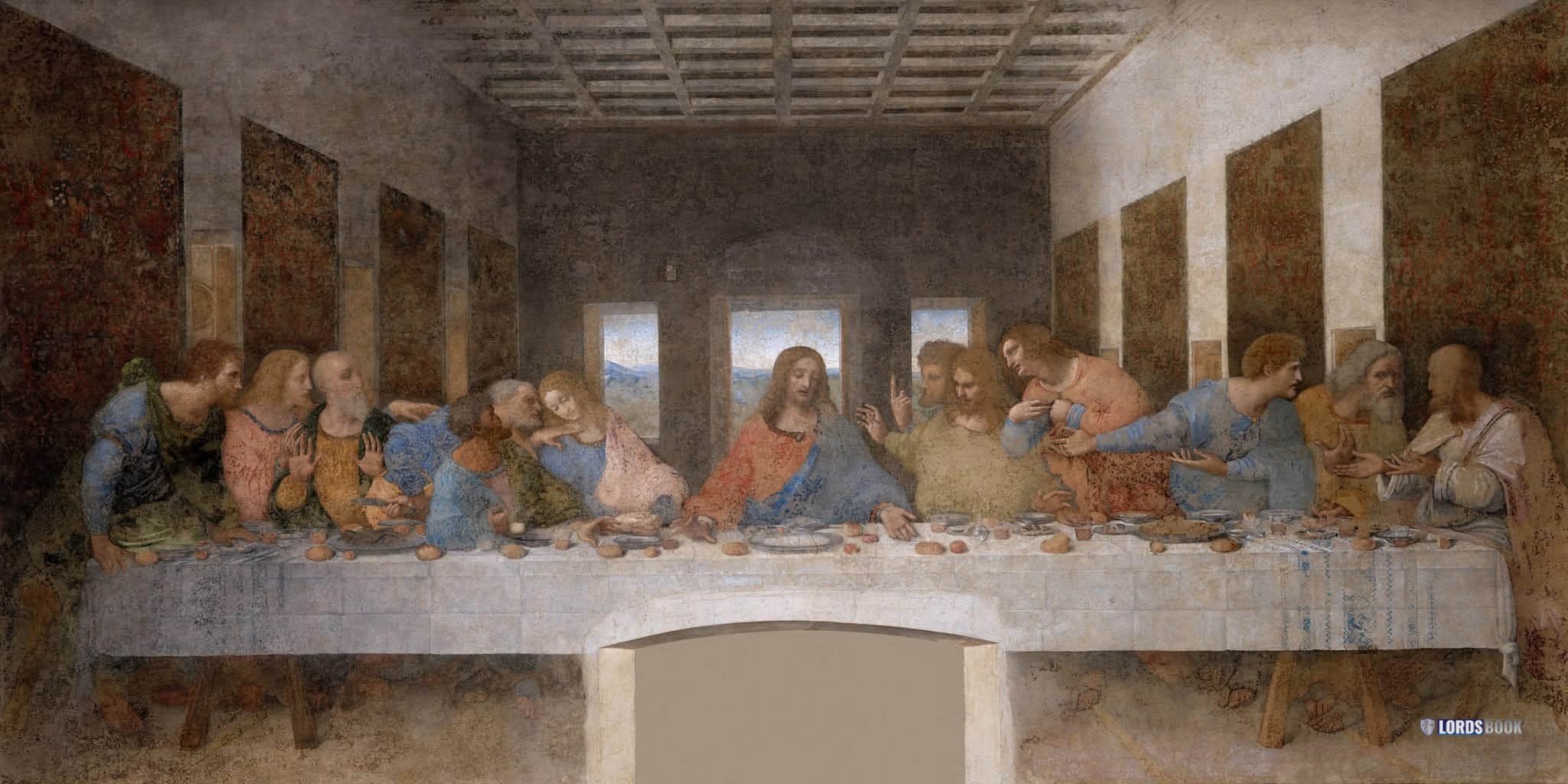 0 Comentários 0 Compartilhamentos 19 Visualizações1
 - Is there no clergyman in this village who can pray? I can do nothing here!
Is any sick among you? Let him call for the elders of the church; and let them pray over him, anointing him with oil in the name of the Lord:
James 5:14
Is any sick among you? let him call for the elders of the church; and let them pray over him, anointing him with oil in the name of the Lord:
Is any sick among you? let him call for the elders of the church; and let them pray over him, anointing him with oil in the name of the Lord:
Is any sick among you? let him call for the elders of the church; and let them pray over him, anointing him with oil in the name of the Lord:
Is any sick among you? let him call for the elders of the church; and let them pray over him, anointing him with oil in the name of the Lord:
JOHN CHRISTOPH BLUMHARDT was born in Stuttgart, July 16, 1805. He began to preach in 1828. He had a strong faith in God—a faith that took absolute hold on the promises of the Word and rested upon them in calm confidence. After a short service as pastor of Iptingen, in 1838 he removed to Mottlingen, a village in the Black Forest of the kingdom of Wurtemberg. The whole place was pervaded with a spirit of vice and superstition. Unbelief was rampant; the vilest uncleanness almost universal, and a sort of spiritism, or practice of the old incantations of the black art, prevailed to an astonishing degree. As the darkest hour is just before the dawn, so the most terrible manifestation of Satan’s power was to precede the coming of the Holy Ghost upon the sinful village.
KATARINA DITTUS.
Gottliebin and Katarina Dittus, two sisters in Mottlingen (Germany), were strangely and un- accountably affected by Satan’s power. For a period of two years Blumhardt had them constantly on his mind, and presented them to God in prayer. But all this time they grew worse, and the attacks became more frequent. To careful observers the symptoms appeared to coincide with those of the demoniacs in the time of Christ. All medical treatment was unavailing, and at last the physician, ap- palled by the manifestations, exclaimed, “Is there no clergyman in this village who can pray? I can do nothing here!” With characteristic modesty Blumhardt wished to retreat, but some of his people said to him, “If you do not want to shake our faith in your preaching, you cannot retreat before the evil one.” After a little time he replied, “You are right; but to be in accord with the Word of God you also must unite with me in supplication, according to James 5: 14.”
Prayer was made and the fulfilment of the promise claimed. But Satan would not give up without a struggle. Katarina’s symptoms became terrible, almost beyond belief. Several strong men were obliged to hold her in a chair, and even their efforts were unavailing to control the frightful convulsions and contortions which racked her body. Through an entire night this continued, Blumhardt praying unceasingly and with rising faith.
An unnatural voice, not her own, would speak from the poor woman’s throat and strive to engage the pastor in argument or conversation; but he steadily prayed on. This voice distinctly proclaimed its Satanic origin, and at intervals gave utterance to a horrible cry of despair and fear, which issued from her mouth, without any intermission, for a quarter of an hour at a time. Again the voice addressed Jesus, demanding that, as he (the voice), was a high minister of Satan, Christ should not compel him to leave this woman in the ordinary way; but that he should cast him out by some wonderful and mighty miracle. Still the pastor prayed, and toward morning the struggle culminated, the demon was vanquished and cried out, with a great and terrible cry, heard by almost the entire village, “Jesus is Victor! Jesus is Victor!”
When the sun arose the afflicted one was whole. During the whole of Blumhardt’s life, the humble, grateful woman, who was afterward happily married, labored with the pastor for the souls and bodies of the hundreds who came to Bad Boll; and now upon her tomb- stone we may read the words that marked her marvellous deliverance, “Jesus ist Sieger’ (Jesus is Victor).
Copied from the book Pastor Blumhardt: Selections from his life and ministryIs there no clergyman in this village who can pray? I can do nothing here! Is any sick among you? Let him call for the elders of the church; and let them pray over him, anointing him with oil in the name of the Lord: James 5:14 Is any sick among you? let him call for the elders of the church; and let them pray over him, anointing him with oil in the name of the Lord: Is any sick among you? let him call for the elders of the church; and let them pray over him, anointing him with oil in the name of the Lord: Is any sick among you? let him call for the elders of the church; and let them pray over him, anointing him with oil in the name of the Lord: Is any sick among you? let him call for the elders of the church; and let them pray over him, anointing him with oil in the name of the Lord: JOHN CHRISTOPH BLUMHARDT was born in Stuttgart, July 16, 1805. He began to preach in 1828. He had a strong faith in God—a faith that took absolute hold on the promises of the Word and rested upon them in calm confidence. After a short service as pastor of Iptingen, in 1838 he removed to Mottlingen, a village in the Black Forest of the kingdom of Wurtemberg. The whole place was pervaded with a spirit of vice and superstition. Unbelief was rampant; the vilest uncleanness almost universal, and a sort of spiritism, or practice of the old incantations of the black art, prevailed to an astonishing degree. As the darkest hour is just before the dawn, so the most terrible manifestation of Satan’s power was to precede the coming of the Holy Ghost upon the sinful village. KATARINA DITTUS. Gottliebin and Katarina Dittus, two sisters in Mottlingen (Germany), were strangely and un- accountably affected by Satan’s power. For a period of two years Blumhardt had them constantly on his mind, and presented them to God in prayer. But all this time they grew worse, and the attacks became more frequent. To careful observers the symptoms appeared to coincide with those of the demoniacs in the time of Christ. All medical treatment was unavailing, and at last the physician, ap- palled by the manifestations, exclaimed, “Is there no clergyman in this village who can pray? I can do nothing here!” With characteristic modesty Blumhardt wished to retreat, but some of his people said to him, “If you do not want to shake our faith in your preaching, you cannot retreat before the evil one.” After a little time he replied, “You are right; but to be in accord with the Word of God you also must unite with me in supplication, according to James 5: 14.” Prayer was made and the fulfilment of the promise claimed. But Satan would not give up without a struggle. Katarina’s symptoms became terrible, almost beyond belief. Several strong men were obliged to hold her in a chair, and even their efforts were unavailing to control the frightful convulsions and contortions which racked her body. Through an entire night this continued, Blumhardt praying unceasingly and with rising faith. An unnatural voice, not her own, would speak from the poor woman’s throat and strive to engage the pastor in argument or conversation; but he steadily prayed on. This voice distinctly proclaimed its Satanic origin, and at intervals gave utterance to a horrible cry of despair and fear, which issued from her mouth, without any intermission, for a quarter of an hour at a time. Again the voice addressed Jesus, demanding that, as he (the voice), was a high minister of Satan, Christ should not compel him to leave this woman in the ordinary way; but that he should cast him out by some wonderful and mighty miracle. Still the pastor prayed, and toward morning the struggle culminated, the demon was vanquished and cried out, with a great and terrible cry, heard by almost the entire village, “Jesus is Victor! Jesus is Victor!” When the sun arose the afflicted one was whole. During the whole of Blumhardt’s life, the humble, grateful woman, who was afterward happily married, labored with the pastor for the souls and bodies of the hundreds who came to Bad Boll; and now upon her tomb- stone we may read the words that marked her marvellous deliverance, “Jesus ist Sieger’ (Jesus is Victor). Copied from the book Pastor Blumhardt: Selections from his life and ministry 0 Comentários 0 Compartilhamentos 14 Visualizações
 - The Cumulative and Progressive Character of the Good done through a Tract or a Book!
The Rev. Mr. Kincaid, of Burmah, favourably known to many in Madras, at a late meeting of the American Tract Society held up a little tract, which he said cost one cent, but which had been the means of converting the son of a Karen Chief; and he asked who gave that cent? No doubt it was given with many others that were lost. It was the one shot of a thousand which alone took effect. But in the great day of account, its value will be fully known, and all who contribute to the blessing will rejoice together.
A tract or book, thrown into the dead sea of heathenism, may cause a movement which shall spread to its remotest shores. We cannot expect to see as manifest results here as in Christian lands, but the principle is the same. There a Baxter wrote in thoughts that breathe and words that burn — and a spark from his writings, which have lighted multitudes on their way to heaven, fell on the conscience of Doddridge, and urged him, smarting under his sins, to the Saviour. Doddridge, in turn, among other books, wrote the Rise and Progress of Religion, and this was the means of converting Wilberforce as well as thousands of others. Wilberforce wrote his Practical Christianity, so much blessed to many in different parts of the world, and among them to Legh Richmond, whose charming and convincing writings have done and are doing so much in many languages and many climes.
Instance the manner in which these have been scattered. Soon after the first downfall of Napoleon, the Emperor Alexander of Russia visited England. As he was standing one day on one of the towers near Plymouth dock-yard, viewing the shipping, he was accosted very courteously by a gentleman in black, who offered his telescope and pointed out intelligently the various objects worthy of the Emperor's notice. This was Legh Richmond, and he took occasion from the interview to send the Emperor his little tract, the Dairyman's Daughter. The Emperor received it kindly, and after his return home, sent the author a diamond ring in return. The tract was translated into Russian by a pious Princess, who had previously been acquainted with Dr. Pinkerton, and who entered into a correspondence with the author, and obtained from him his other tracts, which she also translated, and scattered far and wide, in that destitute land.
An instance in which Doddridge's Rise and Progress had been made particularly useful. More than forty years ago a clergyman, travelling into the Western part of the State of New York, in America, took with him a few books, among which was the Rise and Progress. In a part of the country then almost a wilderness, with only here and there a rising village, he found at an inn a young woman busy at intervals, as she waited upon him. reading a book; and as he noticed, making' also extracts from it. He inquired what book it was, and learned that it was the Rise and Progress, and that, as it was borrowed and must soon be returned, she was selecting from it such parts as she thought would be particularly useful to her. The clergyman was so much gratified by her earnestness, that he gave her, from those which he had with him, the volume which she seemed to prize so much.
Thirty-seven years after this clergyman was passing through the same section of the country, and came to this place, then a large and flourishing village. As he had taken the name and address of the young woman, to whom he had given the book, he inquired for her, and was directed to an elegant mansion, of which he was told she was the mistress. He called, and introduced himself, mentioning the circumstance of giving the little volume at the inn, and had the happiness of learning that it had been lent, and read extensively in private and in social meetings; that several had in consequence been converted; a religious society, of which there was previously none, had been formed, and a minister settled. All this had apparently, as the moving cause, been effected by a single book.
In heathen countries, too, good may be done, which for a long time is unobserved. Recently in Africa the Rev. Dr. Philip in a tour into the interior had discovered several scattered little settlements of Christians, where it was not known there were any in existence. On inquiry it was found that the seed was springing up after many years. Mr. Read had laboured several years at Lattakoo, and after him the indefatigable Moffat and both had left with the impression that labour there, and in the vicinity, was nearly hopeless. Yet after more than sixteen years, a man who had been under instruction at Lattakoo when a boy, and had left it young, had been brought to consider on his ways, and turn to the Lord, while far away from any missionary and destitute of the means of grace; and he had set himself to convince others of the truth. Thus these little Christian settlements had commenced, in the beginning, unknown to the missionaries.
- Remarks of Rev. M. WINSLOW, A. M., on the Twenty-fifth Anniversary of The Madras Tract and Book Society held in the Davidson Street Chapel on Wednesday Evening, the 7th February 1844.The Cumulative and Progressive Character of the Good done through a Tract or a Book! The Rev. Mr. Kincaid, of Burmah, favourably known to many in Madras, at a late meeting of the American Tract Society held up a little tract, which he said cost one cent, but which had been the means of converting the son of a Karen Chief; and he asked who gave that cent? No doubt it was given with many others that were lost. It was the one shot of a thousand which alone took effect. But in the great day of account, its value will be fully known, and all who contribute to the blessing will rejoice together. A tract or book, thrown into the dead sea of heathenism, may cause a movement which shall spread to its remotest shores. We cannot expect to see as manifest results here as in Christian lands, but the principle is the same. There a Baxter wrote in thoughts that breathe and words that burn — and a spark from his writings, which have lighted multitudes on their way to heaven, fell on the conscience of Doddridge, and urged him, smarting under his sins, to the Saviour. Doddridge, in turn, among other books, wrote the Rise and Progress of Religion, and this was the means of converting Wilberforce as well as thousands of others. Wilberforce wrote his Practical Christianity, so much blessed to many in different parts of the world, and among them to Legh Richmond, whose charming and convincing writings have done and are doing so much in many languages and many climes. Instance the manner in which these have been scattered. Soon after the first downfall of Napoleon, the Emperor Alexander of Russia visited England. As he was standing one day on one of the towers near Plymouth dock-yard, viewing the shipping, he was accosted very courteously by a gentleman in black, who offered his telescope and pointed out intelligently the various objects worthy of the Emperor's notice. This was Legh Richmond, and he took occasion from the interview to send the Emperor his little tract, the Dairyman's Daughter. The Emperor received it kindly, and after his return home, sent the author a diamond ring in return. The tract was translated into Russian by a pious Princess, who had previously been acquainted with Dr. Pinkerton, and who entered into a correspondence with the author, and obtained from him his other tracts, which she also translated, and scattered far and wide, in that destitute land. An instance in which Doddridge's Rise and Progress had been made particularly useful. More than forty years ago a clergyman, travelling into the Western part of the State of New York, in America, took with him a few books, among which was the Rise and Progress. In a part of the country then almost a wilderness, with only here and there a rising village, he found at an inn a young woman busy at intervals, as she waited upon him. reading a book; and as he noticed, making' also extracts from it. He inquired what book it was, and learned that it was the Rise and Progress, and that, as it was borrowed and must soon be returned, she was selecting from it such parts as she thought would be particularly useful to her. The clergyman was so much gratified by her earnestness, that he gave her, from those which he had with him, the volume which she seemed to prize so much. Thirty-seven years after this clergyman was passing through the same section of the country, and came to this place, then a large and flourishing village. As he had taken the name and address of the young woman, to whom he had given the book, he inquired for her, and was directed to an elegant mansion, of which he was told she was the mistress. He called, and introduced himself, mentioning the circumstance of giving the little volume at the inn, and had the happiness of learning that it had been lent, and read extensively in private and in social meetings; that several had in consequence been converted; a religious society, of which there was previously none, had been formed, and a minister settled. All this had apparently, as the moving cause, been effected by a single book. In heathen countries, too, good may be done, which for a long time is unobserved. Recently in Africa the Rev. Dr. Philip in a tour into the interior had discovered several scattered little settlements of Christians, where it was not known there were any in existence. On inquiry it was found that the seed was springing up after many years. Mr. Read had laboured several years at Lattakoo, and after him the indefatigable Moffat and both had left with the impression that labour there, and in the vicinity, was nearly hopeless. Yet after more than sixteen years, a man who had been under instruction at Lattakoo when a boy, and had left it young, had been brought to consider on his ways, and turn to the Lord, while far away from any missionary and destitute of the means of grace; and he had set himself to convince others of the truth. Thus these little Christian settlements had commenced, in the beginning, unknown to the missionaries. - Remarks of Rev. M. WINSLOW, A. M., on the Twenty-fifth Anniversary of The Madras Tract and Book Society held in the Davidson Street Chapel on Wednesday Evening, the 7th February 1844.0 Comentários 0 Compartilhamentos 25 Visualizações3 - A Beautiful and Inspiring Story About the Simplicity of a Child's Faith
Faith That Works Miraculous Change
(The Boy Who Searched for Money in a Fish’s Mouth)
"Everything is possible for one who believes." — Mark 9:23
There was once a poor widow called Mary who had an only son. Even at a young age, the boy realized how hard his mother worked and how much she struggled. To him, the biggest problem his mother faced was the constant lack of money.
The boy regularly attended Sunday School. One particular day, he was feeling very sad. All the children in the Sunday School were collecting a small amount of money for the Christmas celebration. The amount he had to give was small, but even that was something his mother could not afford. He sat through the class with a heavy heart.
That day, the Sunday School teacher explained the incident from Matthew 17, where Jesus tells Peter to go to the sea and cast a hook: "Take the first fish that comes up; and when you have opened its mouth, you will find a piece of money. Take that and give it to them for me and you." After explaining this, they prayed.
When the boy returned home, he couldn't stop thinking about what the teacher had said. He made a firm decision. He began to save the small coins his mother occasionally gave him to buy biscuits. After a month, he had a handful of coins. He ran excitedly to the fish market. He approached a fishmonger and said, "Sir, I want a big fish!" and happily handed over his handful of coins.
The shopkeeper counted the money and said, "Son, if you want a big fish, you need to give much more than this. For the money you’ve given, you can only get a fish head."
After thinking for a moment, the boy replied, "That’s alright, sir. The head is the most important part anyway. Take my money and give me the fish head."
The shopkeeper wrapped a large fish head in an old newspaper and gave it to him. The boy ran home full of joy. "Mom! Mom! Come here! There is a miracle inside this package. Open it and see!" he cried.
His mother curiously opened the package. Seeing a fish head, she asked, "What is this, son?" He replied, "Mom, look inside the fish head!" They searched through the fish head thoroughly, but there was nothing there. Heartbroken, the boy fell onto his bed crying, "Jesus has disappointed me!" When his mother gently questioned him, she learned about what he had heard in Sunday School and why he had bought the fish head.
The mother tried to comfort him, but he continued to weep. Leaving her son to rest, she went to the kitchen to clean up the pieces of the fish head.
She gathered the scraps and went to wrap them in the newspaper the fish had come in. It was then that she glanced at the paper. She was shocked to see her own name printed there. Yes, it was truly her name.
It turned out that she was a distant relative of a wealthy man. The wealthy man’s lawyer had placed an advertisement. The man had no heirs and, before passing away, had written a will stating: "After my death, all my properties should go to this specific woman, my distant relative." Since no one knew where she lived, the lawyer had placed an advertisement in the newspaper saying: "A huge inheritance awaits you; please contact me."
Sadly, she was so poor she couldn't even afford to buy a newspaper. That specific newspaper had eventually reached a scrap shop, then the fishmonger, and finally, God ensured it reached the hands of that very woman by being wrapped around a fish head.
The mother’s heart overflowed with joy. She kissed her son and explained, "My son, just as you believed, a miracle has happened through the fish head!"
If you believe, the Lord will surely do great things in your life as well. "For with God nothing shall be impossible." — Luke 1:37
Food for Thought:
"Faith is the sledgehammer that shatters all our opposing circumstances."
- Taken from the Tamil book "100 Witnesses and the Christian Living" by Brother. Kavivalyam David.A Beautiful and Inspiring Story About the Simplicity of a Child's Faith Faith That Works Miraculous Change (The Boy Who Searched for Money in a Fish’s Mouth) "Everything is possible for one who believes." — Mark 9:23 There was once a poor widow called Mary who had an only son. Even at a young age, the boy realized how hard his mother worked and how much she struggled. To him, the biggest problem his mother faced was the constant lack of money. The boy regularly attended Sunday School. One particular day, he was feeling very sad. All the children in the Sunday School were collecting a small amount of money for the Christmas celebration. The amount he had to give was small, but even that was something his mother could not afford. He sat through the class with a heavy heart. That day, the Sunday School teacher explained the incident from Matthew 17, where Jesus tells Peter to go to the sea and cast a hook: "Take the first fish that comes up; and when you have opened its mouth, you will find a piece of money. Take that and give it to them for me and you." After explaining this, they prayed. When the boy returned home, he couldn't stop thinking about what the teacher had said. He made a firm decision. He began to save the small coins his mother occasionally gave him to buy biscuits. After a month, he had a handful of coins. He ran excitedly to the fish market. He approached a fishmonger and said, "Sir, I want a big fish!" and happily handed over his handful of coins. The shopkeeper counted the money and said, "Son, if you want a big fish, you need to give much more than this. For the money you’ve given, you can only get a fish head." After thinking for a moment, the boy replied, "That’s alright, sir. The head is the most important part anyway. Take my money and give me the fish head." The shopkeeper wrapped a large fish head in an old newspaper and gave it to him. The boy ran home full of joy. "Mom! Mom! Come here! There is a miracle inside this package. Open it and see!" he cried. His mother curiously opened the package. Seeing a fish head, she asked, "What is this, son?" He replied, "Mom, look inside the fish head!" They searched through the fish head thoroughly, but there was nothing there. Heartbroken, the boy fell onto his bed crying, "Jesus has disappointed me!" When his mother gently questioned him, she learned about what he had heard in Sunday School and why he had bought the fish head. The mother tried to comfort him, but he continued to weep. Leaving her son to rest, she went to the kitchen to clean up the pieces of the fish head. She gathered the scraps and went to wrap them in the newspaper the fish had come in. It was then that she glanced at the paper. She was shocked to see her own name printed there. Yes, it was truly her name. It turned out that she was a distant relative of a wealthy man. The wealthy man’s lawyer had placed an advertisement. The man had no heirs and, before passing away, had written a will stating: "After my death, all my properties should go to this specific woman, my distant relative." Since no one knew where she lived, the lawyer had placed an advertisement in the newspaper saying: "A huge inheritance awaits you; please contact me." Sadly, she was so poor she couldn't even afford to buy a newspaper. That specific newspaper had eventually reached a scrap shop, then the fishmonger, and finally, God ensured it reached the hands of that very woman by being wrapped around a fish head. The mother’s heart overflowed with joy. She kissed her son and explained, "My son, just as you believed, a miracle has happened through the fish head!" If you believe, the Lord will surely do great things in your life as well. "For with God nothing shall be impossible." — Luke 1:37 Food for Thought: "Faith is the sledgehammer that shatters all our opposing circumstances." - Taken from the Tamil book "100 Witnesses and the Christian Living" by Brother. Kavivalyam David. 0 Comentários 0 Compartilhamentos 13 Visualizações2
 - "And when the day of Pentecost was fully come . . . They were all filled with the Holy Ghost." - Acts 2:1, 4
Beautiful Reception and Training: I reached the campus. of the Emmanuel Bible College, at No.1, Palm Grove, Birkenhead, in Cheshire, U.K. I was shaken to see the impressive scripture on a board: "Have you received the Holy Spirit since you believed?" (Acts 19: 2). I was challenged to examine my life. I knew that after conversion one needs to be sanctified and filled with the Spirit. So I determined to be sure about my sanctification.
The Lord's mighty visitation: I remembered the practice of our having a long season of 'waiting on the Lord,' on Saturday nights at the LEF, in India. There in Birkenhead, I found an underground chamber where the heaters were kept, emanating heat to the whole building. I locked myself in that warm chamber, to pray from 9 p.m. (Saturday night) till 6 a.m. (Sunday morning). My British friends discouraged such long seasons of prayer.
One night the Lord spoke to me, "The Lord, whom ye seek, will suddenly come to His temple, even the messenger of the covenant, whom ye delight in: behold, He shall come, says the Lord of hosts (Malachi 3: 1b). Then came the Word, "And when the day of Pentecost was fully come ...they were all filled with the Holy Ghost" (Acts 2: 1, 4). I could not believe that I was filled with the Holy Spirit.
The next day was the prayer day for the college. I humbly went into the hall where the whole college, staff and students, all British, had gathered. When my turn for prayer came and I opened my mouth in prayer, the Holy Spirit descended on all the people in the hall. They fell down from their seats and cried to the Lord. After some time, the meeting was over, and each one went to his room. I give all the Glory to the Lord Who significantly visited me, with my 'white' seniors around.
Our Principal, Rev. Stanley Banks, was quite impressed and so was the whole college, to see the 'black, Indian boy' blessed by the Lord. They asked if I could lead the college, at the Principal's level. I rejected the offer, as I had still to learn, to grow in the spirit and prepare for the ministry.
- Taken from the book, "The Second Mite," the autobiography of the Rev. Dr. Whitson Paul
(Posted with permission from Daniel Job, coauthor of the book).
"And when the day of Pentecost was fully come . . . They were all filled with the Holy Ghost." - Acts 2:1, 4 Beautiful Reception and Training: I reached the campus. of the Emmanuel Bible College, at No.1, Palm Grove, Birkenhead, in Cheshire, U.K. I was shaken to see the impressive scripture on a board: "Have you received the Holy Spirit since you believed?" (Acts 19: 2). I was challenged to examine my life. I knew that after conversion one needs to be sanctified and filled with the Spirit. So I determined to be sure about my sanctification. The Lord's mighty visitation: I remembered the practice of our having a long season of 'waiting on the Lord,' on Saturday nights at the LEF, in India. There in Birkenhead, I found an underground chamber where the heaters were kept, emanating heat to the whole building. I locked myself in that warm chamber, to pray from 9 p.m. (Saturday night) till 6 a.m. (Sunday morning). My British friends discouraged such long seasons of prayer. One night the Lord spoke to me, "The Lord, whom ye seek, will suddenly come to His temple, even the messenger of the covenant, whom ye delight in: behold, He shall come, says the Lord of hosts (Malachi 3: 1b). Then came the Word, "And when the day of Pentecost was fully come ...they were all filled with the Holy Ghost" (Acts 2: 1, 4). I could not believe that I was filled with the Holy Spirit. The next day was the prayer day for the college. I humbly went into the hall where the whole college, staff and students, all British, had gathered. When my turn for prayer came and I opened my mouth in prayer, the Holy Spirit descended on all the people in the hall. They fell down from their seats and cried to the Lord. After some time, the meeting was over, and each one went to his room. I give all the Glory to the Lord Who significantly visited me, with my 'white' seniors around. Our Principal, Rev. Stanley Banks, was quite impressed and so was the whole college, to see the 'black, Indian boy' blessed by the Lord. They asked if I could lead the college, at the Principal's level. I rejected the offer, as I had still to learn, to grow in the spirit and prepare for the ministry. - Taken from the book, "The Second Mite," the autobiography of the Rev. Dr. Whitson Paul (Posted with permission from Daniel Job, coauthor of the book). 0 Comentários 0 Compartilhamentos 19 Visualizações1
 - Just Tell Jesus!” Rosalind Goforth
The most precious recollections of early childhood are associated with stories told us by my mother, many of which illustrated the power of prayer.
One that made a specially deep impression upon me was about our grandfather, who as a little boy went to visit cousins in the south of England, their home being situated close to a dense forest. One day the children, lured by the beautiful wild flowers, became hopelessly lost in the woods. After trying in vain to find a way out, the eldest, a young girl, called the frightened, crying little ones around her and said: “When mother died, she told us to always tell Jesus if we were in any trouble. Let us kneel down, and ask him to take us home.”
They knelt, and as she prayed one of the little ones opened his eyes, to find a bird so close to his hand that he reached out for it. The bird hopped away, but kept so close to the child as to lead him on. Soon all were joining in the chase after the bird, which flew or hopped in front or just above, and sometimes on the ground almost within reach. Then suddenly it flew into the air and away. The children looked up to find themselves on the edge of the woods and in sight of home.
With such influences bearing upon one at an impressionable age, it is not surprising that I came even as a very little child to just “tell Jesus” when in trouble.
Through the mists of my memory, an incident comes out clearly, which occurred when I was six or seven years of age. While playing one day in the garden, I was seized with what we then called “jumping” toothache. I ran to my mother for comfort, but nothing she could do seemed to ease the pain.
The nerve must have become exposed, for the pain was acute. Suddenly I thought, “Jesus can help me,” and just as I was, with my face pressed against my mother’s breast, I said in my heart:
“Lord Jesus, if you will take away this toothache right now, now, I will be your little girl for three years.”
Before the prayer was well uttered the pain was entirely gone. I believed that Jesus had taken it away; and the result was that for years, when tempted to be naughty, I was afraid to do what I knew was wrong lest, if I broke my side of what I felt to be a compact, the toothache would return. This little incident had a real influence over my early life, gave me a constant sense of the reality of a divine presence, and so helped to prepare me for the public confession of Christ as my Saviour a few years later, at the age of eleven.
From “How I Know God Answers Prayer” by Rosalind GoforthJust Tell Jesus!” Rosalind Goforth The most precious recollections of early childhood are associated with stories told us by my mother, many of which illustrated the power of prayer. One that made a specially deep impression upon me was about our grandfather, who as a little boy went to visit cousins in the south of England, their home being situated close to a dense forest. One day the children, lured by the beautiful wild flowers, became hopelessly lost in the woods. After trying in vain to find a way out, the eldest, a young girl, called the frightened, crying little ones around her and said: “When mother died, she told us to always tell Jesus if we were in any trouble. Let us kneel down, and ask him to take us home.” They knelt, and as she prayed one of the little ones opened his eyes, to find a bird so close to his hand that he reached out for it. The bird hopped away, but kept so close to the child as to lead him on. Soon all were joining in the chase after the bird, which flew or hopped in front or just above, and sometimes on the ground almost within reach. Then suddenly it flew into the air and away. The children looked up to find themselves on the edge of the woods and in sight of home. With such influences bearing upon one at an impressionable age, it is not surprising that I came even as a very little child to just “tell Jesus” when in trouble. Through the mists of my memory, an incident comes out clearly, which occurred when I was six or seven years of age. While playing one day in the garden, I was seized with what we then called “jumping” toothache. I ran to my mother for comfort, but nothing she could do seemed to ease the pain. The nerve must have become exposed, for the pain was acute. Suddenly I thought, “Jesus can help me,” and just as I was, with my face pressed against my mother’s breast, I said in my heart: “Lord Jesus, if you will take away this toothache right now, now, I will be your little girl for three years.” Before the prayer was well uttered the pain was entirely gone. I believed that Jesus had taken it away; and the result was that for years, when tempted to be naughty, I was afraid to do what I knew was wrong lest, if I broke my side of what I felt to be a compact, the toothache would return. This little incident had a real influence over my early life, gave me a constant sense of the reality of a divine presence, and so helped to prepare me for the public confession of Christ as my Saviour a few years later, at the age of eleven. From “How I Know God Answers Prayer” by Rosalind Goforth 0 Comentários 0 Compartilhamentos 40 Visualizações2
 - The doctor was astonished when he examined John Henry Hyde. “The heart is in an awful condition. I have never come across such a bad case as this. It has been shifted out of its natural position on the left side to a place over on the right side. . . . What have you been doing with yourself?” What Hyde had been doing was bowing in long hours of intercession for the church of India and its workers, sometimes pouring out his soul the entire night. His prayer life had earned him the nickname “Praying Hyde.” The Spirit of God was so strong in him people felt they were ushered into God’s presence when he raised a petition to heaven.
Hyde had not intended to become a missionary, but when his older brother, Edmund, died as a student missionary in Montana, John felt he should take his place. He consulted a friend, who urged him to lay the matter before the Father, “and stay until He decided for him.” Next morning the friend felt a hand on his arm. Looking around, he saw Hyde. “It’s settled,” Hyde said.
But he was not yet ready for God’s work. Aboard ship, sailing for India, he opened a letter from an older man who urged him to “seek for the baptism of the Holy Spirit as the great qualification for mission work.” Angrily Hyde crumpled the letter. Obviously, he had yielded his life to the Lord. How dare his friend suggest he lacked the Spirit? After thinking it over, though, he realized his friend was right. He went to his knees and requested Holy Spirit power for the work ahead of him.
In India he never had a home of his own but lived with other missionaries or in a little tent. When his language progress was slow, the mission board threatened to send him back to America, but the Indians interposed, saying that even if he did not speak the language of their lips “he speaks the language of our hearts.” He did eventually learn two Indian languages and preached in both of them.
One day an Indian asked one of Hyde’s coworkers if Christ had indeed freed him from sin. Hyde realized if the man had asked him instead of the coworker, he would have had to answer “no.” He saw that either God must deliver him from his sin or he would have to leave mission work. He could not honestly preach victory over sin unless he experienced that victory. He got the victory and in telling of it brought a number of other Christians to repentance.
In 1908, he asked the Lord for a soul a day. That year he won over four hundred people to Christ. The next year he asked for two souls a day. Again, the Lord answered. Near the end of his nineteen years in India, Hyde asked for four souls a day and the Lord granted his request. If he did not meet his daily target, he could not eat or sleep, but examined himself for fault. He concluded his failures were tied to a lack of praise.
For years Hyde suffered from debilitating headaches. A missionary in India since 1892, he once had to lie outdoors in the shade because of such a headache. Sympathetic women gathered around him, asking what was wrong. He seized the opening to speak to them of Christ and felt his infirmity had been intended that day for just that opportunity.
Following discovery of his heart problem, Hyde left India in March 1911 to get medical attention. In the United States he learned that he also had a malignant tumor of the brain that must be removed at once. He did not long survive the operation. John “Praying” Hyde died on this day, 17 February 1912. His last words were, “Bol! Yisu Masih, Ki Jai!” (Shout the victory of Jesus Christ!) A coworker wrote to Hyde’s sister, “If ever there was a godly man, forgetful of himself and devoted to the Master’s service, your brother was that one.”
—Dan GravesThe doctor was astonished when he examined John Henry Hyde. “The heart is in an awful condition. I have never come across such a bad case as this. It has been shifted out of its natural position on the left side to a place over on the right side. . . . What have you been doing with yourself?” What Hyde had been doing was bowing in long hours of intercession for the church of India and its workers, sometimes pouring out his soul the entire night. His prayer life had earned him the nickname “Praying Hyde.” The Spirit of God was so strong in him people felt they were ushered into God’s presence when he raised a petition to heaven. Hyde had not intended to become a missionary, but when his older brother, Edmund, died as a student missionary in Montana, John felt he should take his place. He consulted a friend, who urged him to lay the matter before the Father, “and stay until He decided for him.” Next morning the friend felt a hand on his arm. Looking around, he saw Hyde. “It’s settled,” Hyde said. But he was not yet ready for God’s work. Aboard ship, sailing for India, he opened a letter from an older man who urged him to “seek for the baptism of the Holy Spirit as the great qualification for mission work.” Angrily Hyde crumpled the letter. Obviously, he had yielded his life to the Lord. How dare his friend suggest he lacked the Spirit? After thinking it over, though, he realized his friend was right. He went to his knees and requested Holy Spirit power for the work ahead of him. In India he never had a home of his own but lived with other missionaries or in a little tent. When his language progress was slow, the mission board threatened to send him back to America, but the Indians interposed, saying that even if he did not speak the language of their lips “he speaks the language of our hearts.” He did eventually learn two Indian languages and preached in both of them. One day an Indian asked one of Hyde’s coworkers if Christ had indeed freed him from sin. Hyde realized if the man had asked him instead of the coworker, he would have had to answer “no.” He saw that either God must deliver him from his sin or he would have to leave mission work. He could not honestly preach victory over sin unless he experienced that victory. He got the victory and in telling of it brought a number of other Christians to repentance. In 1908, he asked the Lord for a soul a day. That year he won over four hundred people to Christ. The next year he asked for two souls a day. Again, the Lord answered. Near the end of his nineteen years in India, Hyde asked for four souls a day and the Lord granted his request. If he did not meet his daily target, he could not eat or sleep, but examined himself for fault. He concluded his failures were tied to a lack of praise. For years Hyde suffered from debilitating headaches. A missionary in India since 1892, he once had to lie outdoors in the shade because of such a headache. Sympathetic women gathered around him, asking what was wrong. He seized the opening to speak to them of Christ and felt his infirmity had been intended that day for just that opportunity. Following discovery of his heart problem, Hyde left India in March 1911 to get medical attention. In the United States he learned that he also had a malignant tumor of the brain that must be removed at once. He did not long survive the operation. John “Praying” Hyde died on this day, 17 February 1912. His last words were, “Bol! Yisu Masih, Ki Jai!” (Shout the victory of Jesus Christ!) A coworker wrote to Hyde’s sister, “If ever there was a godly man, forgetful of himself and devoted to the Master’s service, your brother was that one.” —Dan Graves 0 Comentários 0 Compartilhamentos 28 Visualizações1
 - The Path to Christlikeness
Henry Suso was a man of God who lived in Germany, a few hundred years ago. He was a saintly man and a bachelor. He prayed often that the Lord would make him broken and humble like Jesus Himself was. This was how God answered his prayer
One day Suso heard a knock at his door. When he opened the door, he saw a strange woman standing there with a baby in her arms. He had never seen her before. But she was an evil woman who was wanting to get rid of her newborn baby and decided that the best man to dump it on was Henry Suso. So she told him, in a voice loud enough for everyone in the street to hear, "Here is the fruit of your sin," and left the baby in Suso's arms and walked off!
Suso was stunned. His reputation in the town had been shattered in a moment. He took the baby inside, knelt down and told the Lord, "Lord, you know I'm innocent. What must I do now?” The Lord replied, “Do what I did. Suffer for the sins of others."
Suso accepted the word of the Lord and never justified himself before anyone. He brought up that child as his own. He was content that God knew the truth and he was willing for everyone else to misunderstand him.
Many years later, the woman was convicted of her sin and came back to Suso's house and proclaimed to all the neighbours that Suso was innocent and that she had told a lie.
But what had happened in the intervening years? Henry Suso's prayer had been answered. He had become broken and humble like his Master. God had been able to accomplish a work of sanctification in Suso's life, freeing him from man's opinions so that God's opinion alone mattered to him thereafter.
Are we willing to pay such a price in order to become like Jesus? Or do we still seek the honour of men? God breaks us by allowing us to be misunderstood, misjudged, falsely accused and publicly humiliated. In all such circumstances, we must refuse to see the men who are harassing us. They may be our brothers or our enemies. It doesn't matter who they are. Behind the hand of every Judas Iscariot is our heavenly Father giving us a cup to drink. If we see the Father's hand in such situations, we'll drink the cup joyfully, however bitter and painful it may be. But if we see only Judas, then we'll take out our sword-as Peter did-and cut off people's ears (or their reputations) or whatever. When Judas betrayed Jesus, Jesus could call him, “Friend", because He saw His Father's hand clearly there.
When we are attacked or falsely accused, God wants us to humble ourselves under His mighty hand. It's easy to do that once we see that it is God's hand there, and not man's. If we see the sovereignty of God in all our circumstances, it'll be easy to humble ourselves. And it'll be easy for God to exalt us at the proper time.The Path to Christlikeness Henry Suso was a man of God who lived in Germany, a few hundred years ago. He was a saintly man and a bachelor. He prayed often that the Lord would make him broken and humble like Jesus Himself was. This was how God answered his prayer One day Suso heard a knock at his door. When he opened the door, he saw a strange woman standing there with a baby in her arms. He had never seen her before. But she was an evil woman who was wanting to get rid of her newborn baby and decided that the best man to dump it on was Henry Suso. So she told him, in a voice loud enough for everyone in the street to hear, "Here is the fruit of your sin," and left the baby in Suso's arms and walked off! Suso was stunned. His reputation in the town had been shattered in a moment. He took the baby inside, knelt down and told the Lord, "Lord, you know I'm innocent. What must I do now?” The Lord replied, “Do what I did. Suffer for the sins of others." Suso accepted the word of the Lord and never justified himself before anyone. He brought up that child as his own. He was content that God knew the truth and he was willing for everyone else to misunderstand him. Many years later, the woman was convicted of her sin and came back to Suso's house and proclaimed to all the neighbours that Suso was innocent and that she had told a lie. But what had happened in the intervening years? Henry Suso's prayer had been answered. He had become broken and humble like his Master. God had been able to accomplish a work of sanctification in Suso's life, freeing him from man's opinions so that God's opinion alone mattered to him thereafter. Are we willing to pay such a price in order to become like Jesus? Or do we still seek the honour of men? God breaks us by allowing us to be misunderstood, misjudged, falsely accused and publicly humiliated. In all such circumstances, we must refuse to see the men who are harassing us. They may be our brothers or our enemies. It doesn't matter who they are. Behind the hand of every Judas Iscariot is our heavenly Father giving us a cup to drink. If we see the Father's hand in such situations, we'll drink the cup joyfully, however bitter and painful it may be. But if we see only Judas, then we'll take out our sword-as Peter did-and cut off people's ears (or their reputations) or whatever. When Judas betrayed Jesus, Jesus could call him, “Friend", because He saw His Father's hand clearly there. When we are attacked or falsely accused, God wants us to humble ourselves under His mighty hand. It's easy to do that once we see that it is God's hand there, and not man's. If we see the sovereignty of God in all our circumstances, it'll be easy to humble ourselves. And it'll be easy for God to exalt us at the proper time. 0 Comentários 0 Compartilhamentos 24 Visualizações1
 - The Knotted Handkerchief
"All that she had.””—Luke xxi. 4.
John Eliot was a minister and a missionary, the first missionary to the American Indians.
It was away back in 1646. He met the Indians in the wigwam of Waban, a great man among the Indians, and John Eliot talked to them about the Gospel for three hours—a pretty long sermon—and when he had finished telling them about God’s great love for them, there were tears in many eyes and people tell us that Indians never cry; but that is not true. Indians are much like other people and it is a great pity that early in the history of our country there were not more men like John Eliot, who loved them well enough to
teach them about God, for then they would have been helpers and not hinderers in what we call the path of progress. The Indians were
strong and brave and made wonderful fighters in time of war, but if they had learned to love as they had learned to hate they would
have been equally strong to fight against sin as good soldiers of our Lord Jesus.
John Eliot taught hundreds of Indians to read and pray, and they loved him. It was in the state of Massachusetts that he lived and worked among his Indian people, and there they built a town and called it Noonatoman or “ Rejoicing”’—the name spoke their joy and happiness in hearing and knowing the Gospel.
Indian names are hard, queer names but John Eliot learned their language. Think of saying Noowamantammooonkanunonnash
when you try to tell people you “love” them, for that is the word for “love.” And they “loved” John Eliot. They could not help loving him.
He was kind to them. He called them his “ Praying Indians.”
He was kind to the poor whether they were Indians or white people, for he was the pastor of a little church where white people worshipped, as well as being a missionary to the Indians. One day the little church had paid him his month’s salary and knowing how kind and generous he was to the poor they had tied it up in a handkerchief and tied it as tight as they could. First the two opposite corners were tied in a knot and then the other two corners and then the ends were knotted and knotted, until they were too short to knot. It looked like a home-made baseball for a little boy.
On his way home he visited a family that was very poor. There was nothing in the house and the little children were hungry. The missionary prayed with them, but he was not satisfied to pray and leave. Out from his pocket in his coat-tail he drew his knotted handkerchief to give them a little money. First he tried to untie the knots with his fingers, then with his teeth, then with both his fingers and his teeth but he could not undo them. One wonders why he did not cut the handkerchief with his knife but I guess he did not think of that. Vexed and impatient because he could not untie the knots he gave the poor woman everything, money and handkerchief, knots and all, saying to her, “The dear Lord must have meant it all for you.” No wonder people loved him, and no wonder there were 3,600 praying Indians in his parish before God called him into rest. And this was the motto of his life :-—
"Prayer and Pains
Through Faith in Jesus Christ
Will do anything.”
- Hugh T. Kerr in his book Children’s Missionary Story-SermonsThe Knotted Handkerchief "All that she had.””—Luke xxi. 4. John Eliot was a minister and a missionary, the first missionary to the American Indians. It was away back in 1646. He met the Indians in the wigwam of Waban, a great man among the Indians, and John Eliot talked to them about the Gospel for three hours—a pretty long sermon—and when he had finished telling them about God’s great love for them, there were tears in many eyes and people tell us that Indians never cry; but that is not true. Indians are much like other people and it is a great pity that early in the history of our country there were not more men like John Eliot, who loved them well enough to teach them about God, for then they would have been helpers and not hinderers in what we call the path of progress. The Indians were strong and brave and made wonderful fighters in time of war, but if they had learned to love as they had learned to hate they would have been equally strong to fight against sin as good soldiers of our Lord Jesus. John Eliot taught hundreds of Indians to read and pray, and they loved him. It was in the state of Massachusetts that he lived and worked among his Indian people, and there they built a town and called it Noonatoman or “ Rejoicing”’—the name spoke their joy and happiness in hearing and knowing the Gospel. Indian names are hard, queer names but John Eliot learned their language. Think of saying Noowamantammooonkanunonnash when you try to tell people you “love” them, for that is the word for “love.” And they “loved” John Eliot. They could not help loving him. He was kind to them. He called them his “ Praying Indians.” He was kind to the poor whether they were Indians or white people, for he was the pastor of a little church where white people worshipped, as well as being a missionary to the Indians. One day the little church had paid him his month’s salary and knowing how kind and generous he was to the poor they had tied it up in a handkerchief and tied it as tight as they could. First the two opposite corners were tied in a knot and then the other two corners and then the ends were knotted and knotted, until they were too short to knot. It looked like a home-made baseball for a little boy. On his way home he visited a family that was very poor. There was nothing in the house and the little children were hungry. The missionary prayed with them, but he was not satisfied to pray and leave. Out from his pocket in his coat-tail he drew his knotted handkerchief to give them a little money. First he tried to untie the knots with his fingers, then with his teeth, then with both his fingers and his teeth but he could not undo them. One wonders why he did not cut the handkerchief with his knife but I guess he did not think of that. Vexed and impatient because he could not untie the knots he gave the poor woman everything, money and handkerchief, knots and all, saying to her, “The dear Lord must have meant it all for you.” No wonder people loved him, and no wonder there were 3,600 praying Indians in his parish before God called him into rest. And this was the motto of his life :-— "Prayer and Pains Through Faith in Jesus Christ Will do anything.” - Hugh T. Kerr in his book Children’s Missionary Story-Sermons 0 Comentários 0 Compartilhamentos 17 Visualizações2


More Posts
© 2026 Lordsbook | Christian Social Media Platform - Faith Community and Discipleship  Portuguese
Portuguese  English
 Arabic
 French
 Spanish
 Deutsch
 Turkish
 Dutch
Dutch
 Italiano
 Russian
 Romaian
 Portuguese (Brazil)
 Greek
Greek
 हिन्दी