


We are reaching people for Jesus who won't typically sit in a church building. The church-hurt, the abused former members of churches, those who have given up in life and we do it all without compromising God's Word. Join us to find an avenue of service to the Lord.
- Public Group
- Posts
- Photos
- Videos
- Evangelism Ministry

 Arabic
 French
 Spanish
 Portuguese
 Deutsch
 Turkish
 Dutch
 Italiano
 Russian
 Romaian
 Portuguese (Brazil)
 Greek
 हिन्दी
Recent Updates
-
It is a question that has plagued the church since the beginning, why did Judas betray Jesus? As stated before, some believe that Judas wanted to force Jesus's hand and finally be crowned king of Israel. But he accepted payment for it. We are told elsewhere that Judas would steal from offerings so it is entirely possible this was a solely financial decision.
But the chief priests are out for nothing less than Jesus's death. So they take Him to Pontiius Pilate to begin His trial. Judas realized there was going to be no new earthly King. That his friend, the man he spent 3 years with ministering, healing and praying, was being put to death he felt remorse.
Remorse is the feeling you get when wrong you've done backfires on you. You became sorry you ever did it. But remorse is not repentance. Our sorrow and guilt, as deep as they may genuinely be, will not make us right with God. Judas was deeply remorseful, but he did not repent.
He said. “I have sinned by betraying an innocent man.” Was he looking for the Sadducees to admit that Jesus was innocent? Whatever he was looking for, he didn't get. Essentially they told him that it was his business. An angry Judas hurts his 30 pieces of silver into the temple.
Judas’ end comes quickly. He runs from the temple, locates a tree and hangs himself on it. When he opens his eyes again, he will be in torment, forever. Maybe it's his pride that would make repentance embarrassing to Him. But here we have a minor issue.
In Acts we are told that the rope Judas used broke and he fell, tumbling down upon the rocks and bursting open his insides all over. So those with an axe to grind regarding scripture make it a point to prove a contradiction in the Bible.
It is extremely easy to explain. Acts doesn't tell us what killed Judas, a fall or a hanging. It does tell us the end though. It was against ceremonial law to touch a dead body. This was still technically a high holy week for Jews. Judas’ body would have been hanging for days in a middle eastern sun. His body was left to rot for days. The natural result being the rope rotted too, and a swollen, rotted Judas fell.
Now look at the Sadducees, the money they paid him to betray Jesus came from the temple treasury, but apparently the same coins they used to murder someone are now not allowed back into the treasury because it was used for evil.
Now the same people that make such a big deal about contradiction in Scripture uses this next issue with uneducated enthusiasm. Verse 9 tells us Matthew is crediting to Jeremiah a quote found in Zechariah. So is Matthew wrong?
If we use today's standards of quoting, yes. But remember that first century Jews didn't have chapters and verses. Oftentimes the minor prophets books are located in the same scrolls that contain a major prophet. And Jeremiah was the pre-eminent prophet.
But these same people casting doubt are through their ignorance, confirming the veracity of Scriptures. But they are forgetting Jeremiah 18 and 19, which tells us that Jeremiah bought a field, named it the Valley of Slaughter,
and visits a potter. And what was the Field Judas died in called again?
Calling it Jeremiah is not a mistake, it's a confirmation that this would have been the way to point Jews to the passage referred to. For your own benefit read the passages in Jeremiah and Zechariah, then read Matthew.
Now when morning came, all the chief priests and the elders of the people conferred together against Jesus to put Him to death; and they bound Him and led Him away, and handed Him over to Pilate the governor. Then when Judas, who had betrayed Him, saw that He had been condemned, he felt remorse and returned the thirty pieces of silver to the chief priests and elders, saying, “I have sinned by betraying innocent blood.” But they said, “What is that to us? You shall see to it yourself!” And he threw the pieces of silver into the temple sanctuary and left; and he went away and hanged himself. The chief priests took the pieces of silver and said, “It is not lawful to put them in the temple treasury, since it is money paid for blood.” And they conferred together and with the money bought the Potter’s Field as a burial place for strangers. For this reason that field has been called the Field of Blood to this day. Then that which was spoken through Jeremiah the prophet was fulfilled: “And they took the thirty pieces of silver, the price of the One whose price had been set by the sons of Israel; and they gave them for the Potter’s Field, just as the Lord directed me.””
It is a question that has plagued the church since the beginning, why did Judas betray Jesus? As stated before, some believe that Judas wanted to force Jesus's hand and finally be crowned king of Israel. But he accepted payment for it. We are told elsewhere that Judas would steal from offerings so it is entirely possible this was a solely financial decision. But the chief priests are out for nothing less than Jesus's death. So they take Him to Pontiius Pilate to begin His trial. Judas realized there was going to be no new earthly King. That his friend, the man he spent 3 years with ministering, healing and praying, was being put to death he felt remorse. Remorse is the feeling you get when wrong you've done backfires on you. You became sorry you ever did it. But remorse is not repentance. Our sorrow and guilt, as deep as they may genuinely be, will not make us right with God. Judas was deeply remorseful, but he did not repent. He said. “I have sinned by betraying an innocent man.” Was he looking for the Sadducees to admit that Jesus was innocent? Whatever he was looking for, he didn't get. Essentially they told him that it was his business. An angry Judas hurts his 30 pieces of silver into the temple. Judas’ end comes quickly. He runs from the temple, locates a tree and hangs himself on it. When he opens his eyes again, he will be in torment, forever. Maybe it's his pride that would make repentance embarrassing to Him. But here we have a minor issue. In Acts we are told that the rope Judas used broke and he fell, tumbling down upon the rocks and bursting open his insides all over. So those with an axe to grind regarding scripture make it a point to prove a contradiction in the Bible. It is extremely easy to explain. Acts doesn't tell us what killed Judas, a fall or a hanging. It does tell us the end though. It was against ceremonial law to touch a dead body. This was still technically a high holy week for Jews. Judas’ body would have been hanging for days in a middle eastern sun. His body was left to rot for days. The natural result being the rope rotted too, and a swollen, rotted Judas fell. Now look at the Sadducees, the money they paid him to betray Jesus came from the temple treasury, but apparently the same coins they used to murder someone are now not allowed back into the treasury because it was used for evil. Now the same people that make such a big deal about contradiction in Scripture uses this next issue with uneducated enthusiasm. Verse 9 tells us Matthew is crediting to Jeremiah a quote found in Zechariah. So is Matthew wrong? If we use today's standards of quoting, yes. But remember that first century Jews didn't have chapters and verses. Oftentimes the minor prophets books are located in the same scrolls that contain a major prophet. And Jeremiah was the pre-eminent prophet. But these same people casting doubt are through their ignorance, confirming the veracity of Scriptures. But they are forgetting Jeremiah 18 and 19, which tells us that Jeremiah bought a field, named it the Valley of Slaughter, and visits a potter. And what was the Field Judas died in called again? Calling it Jeremiah is not a mistake, it's a confirmation that this would have been the way to point Jews to the passage referred to. For your own benefit read the passages in Jeremiah and Zechariah, then read Matthew. Now when morning came, all the chief priests and the elders of the people conferred together against Jesus to put Him to death; and they bound Him and led Him away, and handed Him over to Pilate the governor. Then when Judas, who had betrayed Him, saw that He had been condemned, he felt remorse and returned the thirty pieces of silver to the chief priests and elders, saying, “I have sinned by betraying innocent blood.” But they said, “What is that to us? You shall see to it yourself!” And he threw the pieces of silver into the temple sanctuary and left; and he went away and hanged himself. The chief priests took the pieces of silver and said, “It is not lawful to put them in the temple treasury, since it is money paid for blood.” And they conferred together and with the money bought the Potter’s Field as a burial place for strangers. For this reason that field has been called the Field of Blood to this day. Then that which was spoken through Jeremiah the prophet was fulfilled: “And they took the thirty pieces of silver, the price of the One whose price had been set by the sons of Israel; and they gave them for the Potter’s Field, just as the Lord directed me.”” 0 Comments 0 Shares 4 Views
- 26:69-75 Peter's denials
Many of us don't have a relationship with their earthly father that would tolerate or love us when we fail. Understand that had Peter told the truth, there was a good chance his life would be in danger. But does that matter? God is capable of performing miraculous deliverance when His children are in danger. But that doesn't happen every time.
After all, with the exception of John, each Apostle was martyred. So after the Kangeroo Court was done, the chief priests took Jesus to stand before Pilate to put Him to death. And on the way, a young servant girl recognizes him.
Perhaps Peter anticipated a miraculous deliverance at any moment. This looks like it should never have happened. Maybe this trial and persecution would end. But the beating came and Jesus allowed it. Peter continues to follow at a distance. And he's accused again.
The second denial comes easier than the first. This man who only hours before had sworn to die for His sake, But sometimes, many times, we fail. And the One thing we swore never to do becomes an option. So Peter is still watching as the Romans tortured Him.
And the last denial happens, with a swear word used. And the rooster crows. And Jesus words to him come rushing into his mind. And I'm not 100% on which was more devastating, the fact that he failed, or the fact that Jesus knew he would and told him. Peter runs off and weeps.
This prideful, boasting man had an inflated sense of his abilities in Christ. And he learned how human he was. Our failure might not be a denial of Christ, but God understands that his children will fail. And despite it all, our Father just loves us and awaits our return and repentance.
“Now Peter was sitting outside in the courtyard, and a slave woman came to him and said, “You too were with Jesus the Galilean.” But he denied it before them all, saying, “I do not know what you are talking about.” When he had gone out to the gateway, another slave woman saw him and *said to those who were there, “This man was with Jesus of Nazareth.” And again he denied it, with an oath: “I do not know the man.” A little later the bystanders came up and said to Peter, “You really are one of them as well, since even the way you talk gives you away.” Then he began to curse and swear, “I do not know the man!” And immediately a rooster crowed. And Peter remembered the statement that Jesus had made: “Before a rooster crows, you will deny Me three times.” And he went out and wept bitterly.”
Matthew 26:69-75
26:69-75 Peter's denials Many of us don't have a relationship with their earthly father that would tolerate or love us when we fail. Understand that had Peter told the truth, there was a good chance his life would be in danger. But does that matter? God is capable of performing miraculous deliverance when His children are in danger. But that doesn't happen every time. After all, with the exception of John, each Apostle was martyred. So after the Kangeroo Court was done, the chief priests took Jesus to stand before Pilate to put Him to death. And on the way, a young servant girl recognizes him. Perhaps Peter anticipated a miraculous deliverance at any moment. This looks like it should never have happened. Maybe this trial and persecution would end. But the beating came and Jesus allowed it. Peter continues to follow at a distance. And he's accused again. The second denial comes easier than the first. This man who only hours before had sworn to die for His sake, But sometimes, many times, we fail. And the One thing we swore never to do becomes an option. So Peter is still watching as the Romans tortured Him. And the last denial happens, with a swear word used. And the rooster crows. And Jesus words to him come rushing into his mind. And I'm not 100% on which was more devastating, the fact that he failed, or the fact that Jesus knew he would and told him. Peter runs off and weeps. This prideful, boasting man had an inflated sense of his abilities in Christ. And he learned how human he was. Our failure might not be a denial of Christ, but God understands that his children will fail. And despite it all, our Father just loves us and awaits our return and repentance. “Now Peter was sitting outside in the courtyard, and a slave woman came to him and said, “You too were with Jesus the Galilean.” But he denied it before them all, saying, “I do not know what you are talking about.” When he had gone out to the gateway, another slave woman saw him and *said to those who were there, “This man was with Jesus of Nazareth.” And again he denied it, with an oath: “I do not know the man.” A little later the bystanders came up and said to Peter, “You really are one of them as well, since even the way you talk gives you away.” Then he began to curse and swear, “I do not know the man!” And immediately a rooster crowed. And Peter remembered the statement that Jesus had made: “Before a rooster crows, you will deny Me three times.” And he went out and wept bitterly.” Matthew 26:69-75 0 Comments 0 Shares 5 Views
- Matthew 26:57-68 The Kangeroo Court
The outcome of this trial was always going to end in a death sentence and Jesus knew that. There was no need, no benefit to pretending otherwise. They bring Him to Caiaphas the high priest who until very recently was seldom identified outside of Scripture but archeologists recently found an inscription naming him confirming the veracity of Scriptures.
It is here Matthew informs us that Peter was following close behind to find out the outcome. And Peter would later write,
““and while being abusively insulted, He did not insult in return; while suffering, He did not threaten, but kept entrusting Himself to Him who judges righteously; ”
1 Peter 2:23
And while Jesus knew that facts and evidence would matter very little, He was trusting that out of the horrendous outcome, God would remain faithful to his word. Jesus was well aware of the suffering He would endure at the cross and the torture beforehand so Jesus did not concern Himself with the illegality of an unjust Kangeroo court.
We are told here that the unfairness began immediately. The chief priests it is said, “kept trying” to obtain false testimony against Him. So they were actively at the time attempting to get the attending crowd to fabricate evidence against Him. This is illegal in early Jewish courts. And they were unsuccessful for the longest time.
Finally they are able to find two liars to swear Jesus committed blasphemy, for which it was illegal for Jewish leaders to carry out the death penalty. So ironically enough the liars they spent the entire trial looking for actually end up telling the truth.
“This man stated, ‘I am able to destroy the temple of God and to rebuild it in three days.’ ”
There is nothing blasphemous about these words. So the chief priests had to fake outrage at an offense that isn't really an offense so that they could influence the opinions of those who followed them. So when the chief priest asks Jesus what his defense against this accusation is, Jesus doesn't even bothering to answer.
So the chief priest skips to the crux of the matter and asks if Jesus is the Christ. And of course that, Jesus answers definitively. And when He calls Himself the Son of Man, they knew this was an exclusively Messianic title. And they knew it was Jesus claiming divinity. So, not surprisingly, the Kangeroo Court reaches the verdict they had always intended to reach, guilty and sentenced to death.
Then the leaders who had always been too cowardly to act, too scared to make a move against Him began spitting ìn His face and punching him. Jesus could have put an end to all of it. But this was their time to get their revenge against Jesus for every accurate insult He had used for the Pharisees and Sadducees. So they spit, they punched, they kicked and Jesus, allowed them to.
These are the same people that Jesus knew would be trapped in Jerusalem during Titus’ siege against Jerusalem 37 years later. You have to wonder if any of them thought back to Jesus's words as they would in later life lie starving for months, contemplating how many days of meals the bodies of their children could provide.
Did any of them realize and repent? Or did they die knowing the last chance they had to respond to the Gospel they were beating on the man who was there to save them? Jesus knew that none of this trial would be fair and that justice would not be done here. Remember, “LIFE IS ONLY FAIR ON DAYS THAT END IN ‘F’.” Let's respond accordingly and just put our faith in God, despite the circumstances.
“Those who had arrested Jesus led Him away to Caiaphas, the high priest, where the scribes and the elders were gathered together. But Peter was following Him at a distance, as far as the courtyard of the high priest, and he came inside and sat down with the officers to see the outcome. Now the chief priests and the entire Council kept trying to obtain false testimony against Jesus, so that they might put Him to death. They did not find any, even though many false witnesses came forward. But later on two came forward, and said, “This man stated, ‘I am able to destroy the temple of God and to rebuild it in three days.’ ” The high priest stood up and said to Him, “Do You offer no answer for what these men are testifying against You?” But Jesus kept silent. And the high priest said to Him, “I place You under oath by the living God, to tell us whether You are the Christ, the Son of God.” Jesus *said to him, “You have said it yourself. But I tell you, from now on you will see the Son of Man sitting at the right hand of power, and coming on the clouds of heaven.” Then the high priest tore his robes and said, “He has blasphemed! What further need do we have of witnesses? See, you have now heard the blasphemy; what do you think?” They answered, “He deserves death!” Then they spit in His face and beat Him with their fists; and others slapped Him, and said, “Prophesy to us, You Christ; who is the one who hit You?””
Matthew 26:57-68 The Kangeroo Court The outcome of this trial was always going to end in a death sentence and Jesus knew that. There was no need, no benefit to pretending otherwise. They bring Him to Caiaphas the high priest who until very recently was seldom identified outside of Scripture but archeologists recently found an inscription naming him confirming the veracity of Scriptures. It is here Matthew informs us that Peter was following close behind to find out the outcome. And Peter would later write, ““and while being abusively insulted, He did not insult in return; while suffering, He did not threaten, but kept entrusting Himself to Him who judges righteously; ” 1 Peter 2:23 And while Jesus knew that facts and evidence would matter very little, He was trusting that out of the horrendous outcome, God would remain faithful to his word. Jesus was well aware of the suffering He would endure at the cross and the torture beforehand so Jesus did not concern Himself with the illegality of an unjust Kangeroo court. We are told here that the unfairness began immediately. The chief priests it is said, “kept trying” to obtain false testimony against Him. So they were actively at the time attempting to get the attending crowd to fabricate evidence against Him. This is illegal in early Jewish courts. And they were unsuccessful for the longest time. Finally they are able to find two liars to swear Jesus committed blasphemy, for which it was illegal for Jewish leaders to carry out the death penalty. So ironically enough the liars they spent the entire trial looking for actually end up telling the truth. “This man stated, ‘I am able to destroy the temple of God and to rebuild it in three days.’ ” There is nothing blasphemous about these words. So the chief priests had to fake outrage at an offense that isn't really an offense so that they could influence the opinions of those who followed them. So when the chief priest asks Jesus what his defense against this accusation is, Jesus doesn't even bothering to answer. So the chief priest skips to the crux of the matter and asks if Jesus is the Christ. And of course that, Jesus answers definitively. And when He calls Himself the Son of Man, they knew this was an exclusively Messianic title. And they knew it was Jesus claiming divinity. So, not surprisingly, the Kangeroo Court reaches the verdict they had always intended to reach, guilty and sentenced to death. Then the leaders who had always been too cowardly to act, too scared to make a move against Him began spitting ìn His face and punching him. Jesus could have put an end to all of it. But this was their time to get their revenge against Jesus for every accurate insult He had used for the Pharisees and Sadducees. So they spit, they punched, they kicked and Jesus, allowed them to. These are the same people that Jesus knew would be trapped in Jerusalem during Titus’ siege against Jerusalem 37 years later. You have to wonder if any of them thought back to Jesus's words as they would in later life lie starving for months, contemplating how many days of meals the bodies of their children could provide. Did any of them realize and repent? Or did they die knowing the last chance they had to respond to the Gospel they were beating on the man who was there to save them? Jesus knew that none of this trial would be fair and that justice would not be done here. Remember, “LIFE IS ONLY FAIR ON DAYS THAT END IN ‘F’.” Let's respond accordingly and just put our faith in God, despite the circumstances. “Those who had arrested Jesus led Him away to Caiaphas, the high priest, where the scribes and the elders were gathered together. But Peter was following Him at a distance, as far as the courtyard of the high priest, and he came inside and sat down with the officers to see the outcome. Now the chief priests and the entire Council kept trying to obtain false testimony against Jesus, so that they might put Him to death. They did not find any, even though many false witnesses came forward. But later on two came forward, and said, “This man stated, ‘I am able to destroy the temple of God and to rebuild it in three days.’ ” The high priest stood up and said to Him, “Do You offer no answer for what these men are testifying against You?” But Jesus kept silent. And the high priest said to Him, “I place You under oath by the living God, to tell us whether You are the Christ, the Son of God.” Jesus *said to him, “You have said it yourself. But I tell you, from now on you will see the Son of Man sitting at the right hand of power, and coming on the clouds of heaven.” Then the high priest tore his robes and said, “He has blasphemed! What further need do we have of witnesses? See, you have now heard the blasphemy; what do you think?” They answered, “He deserves death!” Then they spit in His face and beat Him with their fists; and others slapped Him, and said, “Prophesy to us, You Christ; who is the one who hit You?”” 0 Comments 0 Shares 5 Views
- 26:47-56 JUDAS’ KISS
The disciples were exhausted. It had been a long week of ministry, a lot of walking, healings and recovering from the excitement of the Triumphal Entry. Jesus and His inner 3 of Peter, James and John all return from Gethsemane to a legion of Roman soldiers with torches.
Judas’ pre-arranged signal, the kiss, a sign of affection being used to betray the Son of God. What must the disciples have felt, seeing their brother, their constant companion for three years was doing this, leading Romans to arrest Jesus.
Some say that Judas was doing so to force Jesus to begin steps to conquer Rome and sit on His throne as king. I wish I could honestly believe that, it would make sense. But the truth is, Judas was a dishonest man and a thief. And 30 pieces of silver, the price of a slave, was his to keep for agreeing to help arrest Jesus.
This man who had lived with Jesus for 3 years saw and performed miracles himself sold that out for the price of a slave. I wish there was something redeemable about Judas for a singular reason revealed in a previous lesson, “This Close to Judas” and that is I can sense myself sometimes trying to ‘force God into action’ when His plan is already in motion and working.
In a fit to protect His Lord, Peter draws a sword and cuts off a soldier's ear. Matthew does not name Peter nor does he record the healing either, when Jesus healed the soldier's ear. Jesus tells them to put away swords assuring them that God will send an army of angels to protect Him if He asked.
Jesus tells them it must happen this way as Scriptures say it must, again it is Matthew including those words to further prove to a Jew, the identity of Jesus as the Christ.
There is a legion of soldiers, fully armed, with hate in their eyes. And the disciples are armed with 2 swords amongst the 11 of them. And one of the disciples tried to stop it from happening and was rebuked. They saw no hope. They weren't understanding that this must happen and they had no part to play in this scene. They did what came natural, they ran.
Matthew tells us that Peter follows from a distance, John does too but Matthew doesn't give us those details. The soldiers take Jesus away and the trial of Jesus begins.
“And while He was still speaking, behold, Judas, one of the twelve, came accompanied by a large crowd with swords and clubs, who came from the chief priests and elders of the people. Now he who was betraying Him gave them a sign previously, saying, “Whomever I kiss, He is the one; arrest Him.” And immediately Judas went up to Jesus and said, “Greetings, Rabbi!” and kissed Him. But Jesus said to him, “Friend, do what you have come for.” Then they came and laid hands on Jesus and arrested Him. And behold, one of those who were with Jesus reached and drew his sword, and struck the slave of the high priest and cut off his ear. Then Jesus *said to him, “Put your sword back into its place; for all those who take up the sword will perish by the sword. Or do you think that I cannot appeal to My Father, and He will at once put at My disposal more than twelve legions of angels? How then would the Scriptures be fulfilled, which say that it must happen this way?” At that time Jesus said to the crowds, “Have you come out with swords and clubs to arrest Me as you would against a man inciting a revolt? Every day I used to sit within the temple grounds teaching, and you did not arrest Me. But all this has taken place so that the Scriptures of the prophets will be fulfilled.” Then all the disciples left Him and fled.”
26:47-56 JUDAS’ KISS The disciples were exhausted. It had been a long week of ministry, a lot of walking, healings and recovering from the excitement of the Triumphal Entry. Jesus and His inner 3 of Peter, James and John all return from Gethsemane to a legion of Roman soldiers with torches. Judas’ pre-arranged signal, the kiss, a sign of affection being used to betray the Son of God. What must the disciples have felt, seeing their brother, their constant companion for three years was doing this, leading Romans to arrest Jesus. Some say that Judas was doing so to force Jesus to begin steps to conquer Rome and sit on His throne as king. I wish I could honestly believe that, it would make sense. But the truth is, Judas was a dishonest man and a thief. And 30 pieces of silver, the price of a slave, was his to keep for agreeing to help arrest Jesus. This man who had lived with Jesus for 3 years saw and performed miracles himself sold that out for the price of a slave. I wish there was something redeemable about Judas for a singular reason revealed in a previous lesson, “This Close to Judas” and that is I can sense myself sometimes trying to ‘force God into action’ when His plan is already in motion and working. In a fit to protect His Lord, Peter draws a sword and cuts off a soldier's ear. Matthew does not name Peter nor does he record the healing either, when Jesus healed the soldier's ear. Jesus tells them to put away swords assuring them that God will send an army of angels to protect Him if He asked. Jesus tells them it must happen this way as Scriptures say it must, again it is Matthew including those words to further prove to a Jew, the identity of Jesus as the Christ. There is a legion of soldiers, fully armed, with hate in their eyes. And the disciples are armed with 2 swords amongst the 11 of them. And one of the disciples tried to stop it from happening and was rebuked. They saw no hope. They weren't understanding that this must happen and they had no part to play in this scene. They did what came natural, they ran. Matthew tells us that Peter follows from a distance, John does too but Matthew doesn't give us those details. The soldiers take Jesus away and the trial of Jesus begins. “And while He was still speaking, behold, Judas, one of the twelve, came accompanied by a large crowd with swords and clubs, who came from the chief priests and elders of the people. Now he who was betraying Him gave them a sign previously, saying, “Whomever I kiss, He is the one; arrest Him.” And immediately Judas went up to Jesus and said, “Greetings, Rabbi!” and kissed Him. But Jesus said to him, “Friend, do what you have come for.” Then they came and laid hands on Jesus and arrested Him. And behold, one of those who were with Jesus reached and drew his sword, and struck the slave of the high priest and cut off his ear. Then Jesus *said to him, “Put your sword back into its place; for all those who take up the sword will perish by the sword. Or do you think that I cannot appeal to My Father, and He will at once put at My disposal more than twelve legions of angels? How then would the Scriptures be fulfilled, which say that it must happen this way?” At that time Jesus said to the crowds, “Have you come out with swords and clubs to arrest Me as you would against a man inciting a revolt? Every day I used to sit within the temple grounds teaching, and you did not arrest Me. But all this has taken place so that the Scriptures of the prophets will be fulfilled.” Then all the disciples left Him and fled.” 0 Comments 0 Shares 4 Views
- Matthew 26:36-46 The Cup
This is an incredibly sad text. The parables are told, the healings done, the triumphant entry into Jerusalem was over and the voices that were crying Hosanna, Save Us last week, will be shouting “Crucify him.” on Friday. Jesus knows the shift of the people's opinions on Him. He knows that He will again be marching through the city, formerly triumphant, now being cursed, beaten and at the end of a whip.
This is it, this is what is supposed to be His last peaceful moments on earth on this side of the cross. And He is facing something He has never experienced, separation from His Father, death and punishment for sin He never committed.
So He leaves eight of the remaining disciples and takes Peter, James and John into the garden of Gethsemane to pray. Jesus walks a ways off to pray and leaves them to watch. And Jesus is so distressed He is sorrowful praying for Himself in this endeavor. He is surrendering His equality with God for the purpose of saving the souls of those who were going to kill Him. And His prayer,
My Father, if it is possible, let this cup pass from Me; yet not as I will, but as You will.”
In the Old Testament, the term ‘cup’ meant that it was a full measure of wrath against sin. And it was this full measure of wrath that Jesus would have to drink fully. And He prayed that there was another way. But He obeyed and basically said, “Because You want Me to complete this, so be it.” Jesus knew there was no other choice but He was able to express the pain He felt at being separated from God.
And when He returns to find them sleeping, He was expecting them to pray, but this added to His sorrow. This was His Last prayer session with them and they were sleeping. He knows they will flee from Him this very night, so finding them sleeping just adds to His loneliness. The disciples scramble to awake to keep praying. Jesus departs again to pray.
It is about this time that Jesus begins to experience a rare condition known as Hematidrosis which occurs when the blood vessels surrounding the sweat glands burst and the blood oozes from sweat glands. This only happens in cases of extreme distress. And Jesus was in deep distress.
Jesus, upon His return finds them sleeping. He says to Peter,
“So, you men could not keep watch with Me for one hour? Keep watching and praying, so that you do not come into temptation; the spirit is willing, but the flesh is weak.”
Consider briefly what Peter, James and John were feeling about this night prior to the Resurrection. During the three days of waiting, this was their last moment in prayer with him and they couldn't stay awake.
Some have speculated that had Peter not fallen asleep, he would have had the strength not to deny Him. We'll never know, but Jesus knew it would happen. And when He says, the spirit is willing, He knew Peter wanted to obey, but knew his flesh was weak. Peter could not help but sleep. It was a very full week.
And this is NEVER to be used to escape responsibility for our sin i.e., (well I didn't want to sin, but my flesh is weak.) Jesus said this to warn us, not give us an excuse. So Jesus goes off for a second time to pray the same prayer.
When He returns from His second prayer, they are sleeping again. He says nothing and returns to pray again. It is the same prayer. But there is not another way and He knows it. So He returns a third time and again, they are sleeping. And He wakes them with the news that time is up and the betrayer is near.
Matthew 26:36-46
“Then Jesus *came with them to a place called Gethsemane, and *told His disciples, “Sit here while I go over there and pray.” And He took Peter and the two sons of Zebedee with Him, and began to be grieved and distressed. Then He *said to them, “My soul is deeply grieved, to the point of death; remain here and keep watch with Me.” And He went a little beyond them, and fell on His face and prayed, saying, “My Father, if it is possible, let this cup pass from Me; yet not as I will, but as You will.” And He *came to the disciples and *found them sleeping, and He *said to Peter, “So, you men could not keep watch with Me for one hour? Keep watching and praying, so that you do not come into temptation; the spirit is willing, but the flesh is weak.” He went away again a second time and prayed, saying, “My Father, if this cup cannot pass away unless I drink from it, Your will be done.” Again He came and found them sleeping, for their eyes were heavy. And He left them again, and went away and prayed a third time, saying the same thing once more. Then He *came to the disciples and *said to them, “Are you still sleeping and resting? Behold, the hour is at hand and the Son of Man is being betrayed into the hands of sinners. Get up, let’s go; behold, the one who is betraying Me is near!””
Matthew 26:36-46 The Cup This is an incredibly sad text. The parables are told, the healings done, the triumphant entry into Jerusalem was over and the voices that were crying Hosanna, Save Us last week, will be shouting “Crucify him.” on Friday. Jesus knows the shift of the people's opinions on Him. He knows that He will again be marching through the city, formerly triumphant, now being cursed, beaten and at the end of a whip. This is it, this is what is supposed to be His last peaceful moments on earth on this side of the cross. And He is facing something He has never experienced, separation from His Father, death and punishment for sin He never committed. So He leaves eight of the remaining disciples and takes Peter, James and John into the garden of Gethsemane to pray. Jesus walks a ways off to pray and leaves them to watch. And Jesus is so distressed He is sorrowful praying for Himself in this endeavor. He is surrendering His equality with God for the purpose of saving the souls of those who were going to kill Him. And His prayer, My Father, if it is possible, let this cup pass from Me; yet not as I will, but as You will.” In the Old Testament, the term ‘cup’ meant that it was a full measure of wrath against sin. And it was this full measure of wrath that Jesus would have to drink fully. And He prayed that there was another way. But He obeyed and basically said, “Because You want Me to complete this, so be it.” Jesus knew there was no other choice but He was able to express the pain He felt at being separated from God. And when He returns to find them sleeping, He was expecting them to pray, but this added to His sorrow. This was His Last prayer session with them and they were sleeping. He knows they will flee from Him this very night, so finding them sleeping just adds to His loneliness. The disciples scramble to awake to keep praying. Jesus departs again to pray. It is about this time that Jesus begins to experience a rare condition known as Hematidrosis which occurs when the blood vessels surrounding the sweat glands burst and the blood oozes from sweat glands. This only happens in cases of extreme distress. And Jesus was in deep distress. Jesus, upon His return finds them sleeping. He says to Peter, “So, you men could not keep watch with Me for one hour? Keep watching and praying, so that you do not come into temptation; the spirit is willing, but the flesh is weak.” Consider briefly what Peter, James and John were feeling about this night prior to the Resurrection. During the three days of waiting, this was their last moment in prayer with him and they couldn't stay awake. Some have speculated that had Peter not fallen asleep, he would have had the strength not to deny Him. We'll never know, but Jesus knew it would happen. And when He says, the spirit is willing, He knew Peter wanted to obey, but knew his flesh was weak. Peter could not help but sleep. It was a very full week. And this is NEVER to be used to escape responsibility for our sin i.e., (well I didn't want to sin, but my flesh is weak.) Jesus said this to warn us, not give us an excuse. So Jesus goes off for a second time to pray the same prayer. When He returns from His second prayer, they are sleeping again. He says nothing and returns to pray again. It is the same prayer. But there is not another way and He knows it. So He returns a third time and again, they are sleeping. And He wakes them with the news that time is up and the betrayer is near. Matthew 26:36-46 “Then Jesus *came with them to a place called Gethsemane, and *told His disciples, “Sit here while I go over there and pray.” And He took Peter and the two sons of Zebedee with Him, and began to be grieved and distressed. Then He *said to them, “My soul is deeply grieved, to the point of death; remain here and keep watch with Me.” And He went a little beyond them, and fell on His face and prayed, saying, “My Father, if it is possible, let this cup pass from Me; yet not as I will, but as You will.” And He *came to the disciples and *found them sleeping, and He *said to Peter, “So, you men could not keep watch with Me for one hour? Keep watching and praying, so that you do not come into temptation; the spirit is willing, but the flesh is weak.” He went away again a second time and prayed, saying, “My Father, if this cup cannot pass away unless I drink from it, Your will be done.” Again He came and found them sleeping, for their eyes were heavy. And He left them again, and went away and prayed a third time, saying the same thing once more. Then He *came to the disciples and *said to them, “Are you still sleeping and resting? Behold, the hour is at hand and the Son of Man is being betrayed into the hands of sinners. Get up, let’s go; behold, the one who is betraying Me is near!”” 0 Comments 0 Shares 6 Views
- Matthew 26:31-35 Failing God
For whatever reason, Matthew doesn't include the detail that after this event Jesus restored Peter, once for every denial Peter had made. But he doesn't include Peter's denials either. Whether it's because he was deferring to Peter and just didn't because of the leadership position he held or more likely, Matthew was never privy to the denials Peter made or part of the conversation where Jesus restores Peter. We will never know this side of eternity.
Remember at this point, Judas had already left to betray Jesus. And for whatever reason the disciples never ask, or mention the betrayal when Judas leaves. But Jesus essentially does the exact opposite of comforting them here.
The tensions are being increased rather than alleviated. As Jesus opens His mouth and tells them they will all run. Then he quotes Zechariah 13:7;
“¶“Awake, sword, against My Shepherd, And against the Man, My Associate,” Declares the Lord of armies. “Strike the Shepherd and the sheep will be scattered; And I will turn My hand against the little ones.”
Zechariah 13:7
Zechariah 13 is another Messianic passage as is Matthew's habit of including as many confirmations for Jews that Jesus was the Messiah as he could from the Old Testament Scriptures. So Jesus tells them that tonight they will all fail Him.
Not exactly encouraging.
Peter is the “MOUTH” of the impetuous youth he had. And he objects, claiming famously that he will never deny Jesus. And in his zeal against a legion of Roman soldiers he will pull his sword and attack a soldier, only to have Jesus heal the soldier. What utter confusion this must have caused for all of them.
True, this may have been a purely practical act, i.e., for the ministry to continue, they must get away from danger. But, no. They were seeing this event as the end of everything they were working for. They were afraid, even though Jesus had told them it would happen. That He would be killed, raised three days later, and would meet them in Galilee.
But look here very carefully. Jesus was telling them that tonight they would fail Him. Was He angry that they would fail? No. He was making sure that they knew what He knew would happen. He wanted them to know that after they failed, He would still be there, would still love them even after they fail.
I fail Him, every day. I, when I was younger, had an inflated idea of what I was going to be able to do in ministry. I was arrogant and I failed. But that failure devastated me in ways it shouldn't have. These days with now close to 6 decades of life with 4 decades of knowing Him, I realize that I will fail Him sometimes.
So how do we handle that? In those moments when we've fallen, and realize that we failed Him? First, understand that God is aware that you will fail but that nothing has changed. He's still God, still loves you in spite of those failures and expects repentance. Second, He died to restore that relationship to God before we even believed, He earnestly desires to comfort us in the times we fail, and He will.
God knows His children will fail sometimes like parents know their children will fail but love them anyway. Our efforts for God will never be perfect, but His love for us is, even if we sometimes can't “feel” it. And First John 4:18 tells us:
“There is no fear in love, but perfect love drives out fear, because fear involves punishment, and the one who fears is not perfected in love. ”
When we fail, sometimes we've just got to sit with God for a moment to repent, reflect and be restored. And He will. If there's a failure in your life you want confidential, Christ-centered help on, email me at David's Porch Ministries here:
Davidsporch59Anderson Mwila.com
“Then Jesus *said to them, “You will all fall away because of Me this night, for it is written: ‘I will strike the shepherd, and the sheep of the flock will be scattered.’ But after I have been raised, I will go ahead of you to Galilee.” But Peter replied to Him, “Even if they all fall away because of You, I will never fall away!” Jesus said to him, “Truly I say to you that this very night, before a rooster crows, you will deny Me three times.” Peter *said to Him, “Even if I have to die with You, I will not deny You!” All the disciples said the same thing as well.”
Matthew 26:31-35 Failing God For whatever reason, Matthew doesn't include the detail that after this event Jesus restored Peter, once for every denial Peter had made. But he doesn't include Peter's denials either. Whether it's because he was deferring to Peter and just didn't because of the leadership position he held or more likely, Matthew was never privy to the denials Peter made or part of the conversation where Jesus restores Peter. We will never know this side of eternity. Remember at this point, Judas had already left to betray Jesus. And for whatever reason the disciples never ask, or mention the betrayal when Judas leaves. But Jesus essentially does the exact opposite of comforting them here. The tensions are being increased rather than alleviated. As Jesus opens His mouth and tells them they will all run. Then he quotes Zechariah 13:7; “¶“Awake, sword, against My Shepherd, And against the Man, My Associate,” Declares the Lord of armies. “Strike the Shepherd and the sheep will be scattered; And I will turn My hand against the little ones.” Zechariah 13:7 Zechariah 13 is another Messianic passage as is Matthew's habit of including as many confirmations for Jews that Jesus was the Messiah as he could from the Old Testament Scriptures. So Jesus tells them that tonight they will all fail Him. Not exactly encouraging. Peter is the “MOUTH” of the impetuous youth he had. And he objects, claiming famously that he will never deny Jesus. And in his zeal against a legion of Roman soldiers he will pull his sword and attack a soldier, only to have Jesus heal the soldier. What utter confusion this must have caused for all of them. True, this may have been a purely practical act, i.e., for the ministry to continue, they must get away from danger. But, no. They were seeing this event as the end of everything they were working for. They were afraid, even though Jesus had told them it would happen. That He would be killed, raised three days later, and would meet them in Galilee. But look here very carefully. Jesus was telling them that tonight they would fail Him. Was He angry that they would fail? No. He was making sure that they knew what He knew would happen. He wanted them to know that after they failed, He would still be there, would still love them even after they fail. I fail Him, every day. I, when I was younger, had an inflated idea of what I was going to be able to do in ministry. I was arrogant and I failed. But that failure devastated me in ways it shouldn't have. These days with now close to 6 decades of life with 4 decades of knowing Him, I realize that I will fail Him sometimes. So how do we handle that? In those moments when we've fallen, and realize that we failed Him? First, understand that God is aware that you will fail but that nothing has changed. He's still God, still loves you in spite of those failures and expects repentance. Second, He died to restore that relationship to God before we even believed, He earnestly desires to comfort us in the times we fail, and He will. God knows His children will fail sometimes like parents know their children will fail but love them anyway. Our efforts for God will never be perfect, but His love for us is, even if we sometimes can't “feel” it. And First John 4:18 tells us: “There is no fear in love, but perfect love drives out fear, because fear involves punishment, and the one who fears is not perfected in love. ” When we fail, sometimes we've just got to sit with God for a moment to repent, reflect and be restored. And He will. If there's a failure in your life you want confidential, Christ-centered help on, email me at David's Porch Ministries here: Davidsporch59[gmail].com “Then Jesus *said to them, “You will all fall away because of Me this night, for it is written: ‘I will strike the shepherd, and the sheep of the flock will be scattered.’ But after I have been raised, I will go ahead of you to Galilee.” But Peter replied to Him, “Even if they all fall away because of You, I will never fall away!” Jesus said to him, “Truly I say to you that this very night, before a rooster crows, you will deny Me three times.” Peter *said to Him, “Even if I have to die with You, I will not deny You!” All the disciples said the same thing as well.” 0 Comments 0 Shares 6 Views
- 26:17-30
This passage gives the account of the first Lords's Supper. And we learn scarce detail over the “certain man” Jesus indicated the disciples should ask. The other gospels add detail we don't have here. And it is not entirely unique to Christianity.
In the temple was the Table of Showbread. (Shewbread) Some called it the table of remembrance. It was placed weekly the 12 loaves of bread, each representing the tribes of Israel. The bread would sit on the table during the week and on the Sabbath, only priests were allowed to eat it. Fresh bread replaced the eaten loaves every Sabbath day.
It is here that Jesus tells everyone that one of the twelve will betray Him. Eleven of them are deeply grieved asking, “is it I Lord?’ Each asks. But Judas, fresh off the rebukes he had received, asks, “Is it I, Rabbi?“ Jesus offers a piece of dipped bread with his words, Judas accepts, as we are told elsewhere that after the bread, Satan enters Judas, and he departs.
Whether this was a demonic possession or Satan really wanting his chance to betray God again or not, we don't know. At his departure. Jesus institutes the Lords Supper. But there needs to be something made clear. Some churches hold to more of a spiritualist view of it in which a priest calls Jesus from Heaven to be offered again weekly. According to this teaching, the priest uses his “priestly powers” to turn bread into Jesus's actual body and the wine into Jesus's blood.
That idea is entirely antithetical to Scriptures and is inherently dangerous to believe. Hebrews 7:26-27 says,
“For it was fitting for us to have such a high priest, holy, innocent, undefiled, separated from sinners, and exalted above the heavens; who has no daily need, like those high priests, to offer up sacrifices, first for His own sins and then for the sins of the people, because He did this once for all time when He offered up Himself. ”
Hebrews 7:26-27
No human being on Earth has the power to call down Christ from Heaven to put Him in a wafer. Jesus's offering was once for all. So what do we know for sure?
The Lord's Supper, like the table of showbread was a remembrance of being delivered by God. The first deliverance from Egypt, the second from sin.
It was held weekly, just as the Showbread was eaten weekly.
It was ONLY for Christians, not visitors to your church.
After the meal, they leave singing hymns. The next time you take Communion, stop, think back to the cross and remember it was for you. Think on those things as you partake.
“Now on the first day of Unleavened Bread the disciples came to Jesus and asked, “Where do You want us to prepare for You to eat the Passover?” And He said, “Go into the city to a certain man, and say to him, ‘The Teacher says, “My time is near; I am keeping the Passover at your house with My disciples.” ’ ” The disciples did as Jesus had directed them; and they prepared the Passover. Now when evening came, Jesus was reclining at the table with the twelve. And as they were eating, He said, “Truly I say to you that one of you will betray Me.” Being deeply grieved, they began saying to Him, each one: “Surely it is not I, Lord?” And He answered, “He who dipped his hand with Me in the bowl is the one who will betray Me. The Son of Man is going away just as it is written about Him; but woe to that man by whom the Son of Man is betrayed! It would have been good for that man if he had not been born.” And Judas, who was betraying Him, said, “Surely it is not I, Rabbi?” Jesus *said to him, “You have said it yourself.” Now while they were eating, Jesus took some bread, and after a blessing, He broke it and gave it to the disciples, and said, “Take, eat; this is My body.” And when He had taken a cup and given thanks, He gave it to them, saying, “Drink from it, all of you; for this is My blood of the covenant, which is being poured out for many for forgiveness of sins. But I say to you, I will not drink of this fruit of the vine from now on until that day when I drink it with you, new, in My Father’s kingdom.” And after singing a hymn, they went out to the Mount of Olives.”
26:17-30 This passage gives the account of the first Lords's Supper. And we learn scarce detail over the “certain man” Jesus indicated the disciples should ask. The other gospels add detail we don't have here. And it is not entirely unique to Christianity. In the temple was the Table of Showbread. (Shewbread) Some called it the table of remembrance. It was placed weekly the 12 loaves of bread, each representing the tribes of Israel. The bread would sit on the table during the week and on the Sabbath, only priests were allowed to eat it. Fresh bread replaced the eaten loaves every Sabbath day. It is here that Jesus tells everyone that one of the twelve will betray Him. Eleven of them are deeply grieved asking, “is it I Lord?’ Each asks. But Judas, fresh off the rebukes he had received, asks, “Is it I, Rabbi?“ Jesus offers a piece of dipped bread with his words, Judas accepts, as we are told elsewhere that after the bread, Satan enters Judas, and he departs. Whether this was a demonic possession or Satan really wanting his chance to betray God again or not, we don't know. At his departure. Jesus institutes the Lords Supper. But there needs to be something made clear. Some churches hold to more of a spiritualist view of it in which a priest calls Jesus from Heaven to be offered again weekly. According to this teaching, the priest uses his “priestly powers” to turn bread into Jesus's actual body and the wine into Jesus's blood. That idea is entirely antithetical to Scriptures and is inherently dangerous to believe. Hebrews 7:26-27 says, “For it was fitting for us to have such a high priest, holy, innocent, undefiled, separated from sinners, and exalted above the heavens; who has no daily need, like those high priests, to offer up sacrifices, first for His own sins and then for the sins of the people, because He did this once for all time when He offered up Himself. ” Hebrews 7:26-27 No human being on Earth has the power to call down Christ from Heaven to put Him in a wafer. Jesus's offering was once for all. So what do we know for sure? The Lord's Supper, like the table of showbread was a remembrance of being delivered by God. The first deliverance from Egypt, the second from sin. It was held weekly, just as the Showbread was eaten weekly. It was ONLY for Christians, not visitors to your church. After the meal, they leave singing hymns. The next time you take Communion, stop, think back to the cross and remember it was for you. Think on those things as you partake. “Now on the first day of Unleavened Bread the disciples came to Jesus and asked, “Where do You want us to prepare for You to eat the Passover?” And He said, “Go into the city to a certain man, and say to him, ‘The Teacher says, “My time is near; I am keeping the Passover at your house with My disciples.” ’ ” The disciples did as Jesus had directed them; and they prepared the Passover. Now when evening came, Jesus was reclining at the table with the twelve. And as they were eating, He said, “Truly I say to you that one of you will betray Me.” Being deeply grieved, they began saying to Him, each one: “Surely it is not I, Lord?” And He answered, “He who dipped his hand with Me in the bowl is the one who will betray Me. The Son of Man is going away just as it is written about Him; but woe to that man by whom the Son of Man is betrayed! It would have been good for that man if he had not been born.” And Judas, who was betraying Him, said, “Surely it is not I, Rabbi?” Jesus *said to him, “You have said it yourself.” Now while they were eating, Jesus took some bread, and after a blessing, He broke it and gave it to the disciples, and said, “Take, eat; this is My body.” And when He had taken a cup and given thanks, He gave it to them, saying, “Drink from it, all of you; for this is My blood of the covenant, which is being poured out for many for forgiveness of sins. But I say to you, I will not drink of this fruit of the vine from now on until that day when I drink it with you, new, in My Father’s kingdom.” And after singing a hymn, they went out to the Mount of Olives.” 0 Comments 0 Shares 6 Views
- THIS CLOSE TO JUDAS
It is a question that has been asked for 2,000 years. Why did Judas betray Jesus? Judas was there for all the miracles. The water to wine, the lame walking, the blind seeing and the three different people we know Jesus raised from the dead. He saw it all, yet still, it wasn't enough to stop him from approaching the Sanhedrin council and betraying Jesus for the money.
Why? Judas was amongst many things was a true believer in a messiah. Some have speculated that Judas believed he was forcing Jesus to assert his messiah-ship and take the throne away from the Romans, much as all his disciples believed. And when Jesus didn't smite dead the Roman guards who came to arrest Him Judas was shocked. And when Jesus went to the cross, Judas realized his actions just killed their messiah he took his life.
Others speculate that Judas was only ever interested in stealing as much as he could and after three and a half years was frustrated with Jesus because it seemed that Jesus was more interested in souls than He was about freeing Israel from Rome. It's hard to imagine that his only motivation for the betrayal was the money.
Most Christians today would vehemently deny that they would betray Jesus if they had been witness to healings and resurrections. For some, that would be true, but not for all. Look at the Israelites who after seeing ten plagues, seeing the pillar of fire at night and the column of smoke in the daylight, walking in the midst of 2 walls of water and yet they constantly rebelled against God in the wilderness.
Of the many times in Scripture that God has divinely interceded for His people, exactly none of those times resulted in an obedient and compliant people on a permanent basis. When the kiss happened, the signal that would identify Jesus to the Roman guards there to arrest Him, perhaps Judas was expecting a miraculous deliverance, a king's coronation and a seat at the table of leadership over a new Israel.
But none of that happened. Instead of attacking the guards, Jesus reattaches the ear of a guard that Peter had cut off. Maybe it was this healing that finally drove Judas off the cliffs of insanity. Jesus showing compassion for a Roman by healing him must have made no sense to Judas.
Now if it were true that Judas was motivated to do this because the progress they were making as itinerant preachers was not fast enough, I began to ask myself am I “this close to Judas”?
Do my internal goals prompt me to sort of push God into doing what i ask for? Are the desires of my heart what God wants for me or am I, like Judas, pushing God into my own agenda because it's not happening fast enough for me?
How often do we as Christians commit wrong acts for what we feel is the right reason? How close are we to being like Judas Iscariot when we do so? How many deacons and elders declare war on their preacher for the most inane reasons? How many preachers struggle due to their secret sins?
How can we avoid being ‘this close to Judas’? First, remain humble. You may have the most sincere of motivations in doing the Lords work, but remember that the goals you have, as earnest as they are, might not be within God's will. We need to humble ourselves before God and pray for discernment. It all comes down to the fact that we might be wrong.
Second, stay in a solid relationship with older Christians, seek them out and listen to their counsel. Before acting on a Judas level act, ask your brothers and sisters in Christ for their input. Living as a faithful Christian is difficult enough and even more so when you behave as a lone wolf making impulsive decisions without regard to our behavior.
In conclusion, don't allow the last days of our lives to wipe away a lifetime of faithfulness with disobedient betrayal. The fall of a formerly faithful Christian affects the witness of Christianity everywhere. Don't be ‘this close to Judas’, rather trust God that even when it seems like God needs a push in the right direction that he's got it under control.
“Then one of the twelve, named Judas Iscariot, went to the chief priests and said, “What are you willing to give me to betray Him to you?” And they set out for him thirty pieces of silver. And from then on he looked for a good opportunity to betray Jesus.”
Matthew 26:14-16
“Now on the first day of Unleavened Bread the disciples came to Jesus and asked, “Where do You want us to prepare for You to eat the Passover?” And He said, “Go into the city to a certain man, and say to him, ‘The Teacher says, “My time is near; I am keeping the Passover at your house with My disciples.” ’ ” The disciples did as Jesus had directed them; and they prepared the Passover. Now when evening came, Jesus was reclining at the table with the twelve. And as they were eating, He said, “Truly I say to you that one of you will betray Me.” Being deeply grieved, they began saying to Him, each one: “Surely it is not I, Lord?” And He answered, “He who dipped his hand with Me in the bowl is the one who will betray Me. The Son of Man is going away just as it is written about Him; but woe to that man by whom the Son of Man is betrayed! It would have been good for that man if he had not been born.” And Judas, who was betraying Him, said, “Surely it is not I, Rabbi?” Jesus *said to him, “You have said it yourself.””
Matthew 26:17-25
THIS CLOSE TO JUDAS It is a question that has been asked for 2,000 years. Why did Judas betray Jesus? Judas was there for all the miracles. The water to wine, the lame walking, the blind seeing and the three different people we know Jesus raised from the dead. He saw it all, yet still, it wasn't enough to stop him from approaching the Sanhedrin council and betraying Jesus for the money. Why? Judas was amongst many things was a true believer in a messiah. Some have speculated that Judas believed he was forcing Jesus to assert his messiah-ship and take the throne away from the Romans, much as all his disciples believed. And when Jesus didn't smite dead the Roman guards who came to arrest Him Judas was shocked. And when Jesus went to the cross, Judas realized his actions just killed their messiah he took his life. Others speculate that Judas was only ever interested in stealing as much as he could and after three and a half years was frustrated with Jesus because it seemed that Jesus was more interested in souls than He was about freeing Israel from Rome. It's hard to imagine that his only motivation for the betrayal was the money. Most Christians today would vehemently deny that they would betray Jesus if they had been witness to healings and resurrections. For some, that would be true, but not for all. Look at the Israelites who after seeing ten plagues, seeing the pillar of fire at night and the column of smoke in the daylight, walking in the midst of 2 walls of water and yet they constantly rebelled against God in the wilderness. Of the many times in Scripture that God has divinely interceded for His people, exactly none of those times resulted in an obedient and compliant people on a permanent basis. When the kiss happened, the signal that would identify Jesus to the Roman guards there to arrest Him, perhaps Judas was expecting a miraculous deliverance, a king's coronation and a seat at the table of leadership over a new Israel. But none of that happened. Instead of attacking the guards, Jesus reattaches the ear of a guard that Peter had cut off. Maybe it was this healing that finally drove Judas off the cliffs of insanity. Jesus showing compassion for a Roman by healing him must have made no sense to Judas. Now if it were true that Judas was motivated to do this because the progress they were making as itinerant preachers was not fast enough, I began to ask myself am I “this close to Judas”? Do my internal goals prompt me to sort of push God into doing what i ask for? Are the desires of my heart what God wants for me or am I, like Judas, pushing God into my own agenda because it's not happening fast enough for me? How often do we as Christians commit wrong acts for what we feel is the right reason? How close are we to being like Judas Iscariot when we do so? How many deacons and elders declare war on their preacher for the most inane reasons? How many preachers struggle due to their secret sins? How can we avoid being ‘this close to Judas’? First, remain humble. You may have the most sincere of motivations in doing the Lords work, but remember that the goals you have, as earnest as they are, might not be within God's will. We need to humble ourselves before God and pray for discernment. It all comes down to the fact that we might be wrong. Second, stay in a solid relationship with older Christians, seek them out and listen to their counsel. Before acting on a Judas level act, ask your brothers and sisters in Christ for their input. Living as a faithful Christian is difficult enough and even more so when you behave as a lone wolf making impulsive decisions without regard to our behavior. In conclusion, don't allow the last days of our lives to wipe away a lifetime of faithfulness with disobedient betrayal. The fall of a formerly faithful Christian affects the witness of Christianity everywhere. Don't be ‘this close to Judas’, rather trust God that even when it seems like God needs a push in the right direction that he's got it under control. “Then one of the twelve, named Judas Iscariot, went to the chief priests and said, “What are you willing to give me to betray Him to you?” And they set out for him thirty pieces of silver. And from then on he looked for a good opportunity to betray Jesus.” Matthew 26:14-16 “Now on the first day of Unleavened Bread the disciples came to Jesus and asked, “Where do You want us to prepare for You to eat the Passover?” And He said, “Go into the city to a certain man, and say to him, ‘The Teacher says, “My time is near; I am keeping the Passover at your house with My disciples.” ’ ” The disciples did as Jesus had directed them; and they prepared the Passover. Now when evening came, Jesus was reclining at the table with the twelve. And as they were eating, He said, “Truly I say to you that one of you will betray Me.” Being deeply grieved, they began saying to Him, each one: “Surely it is not I, Lord?” And He answered, “He who dipped his hand with Me in the bowl is the one who will betray Me. The Son of Man is going away just as it is written about Him; but woe to that man by whom the Son of Man is betrayed! It would have been good for that man if he had not been born.” And Judas, who was betraying Him, said, “Surely it is not I, Rabbi?” Jesus *said to him, “You have said it yourself.”” Matthew 26:17-25 0 Comments 0 Shares 7 Views
- The Lamb of God
Speaking subtlety was never Jesus style. And the time for parables is done. He tells them outright that the time of His death was near. And here we see the religious leaders of Jesus's day, the people of God plotting murder, while at the same time, planning for the events of the most holy week of their year.
These leaders counted amongst the people as the “most religious” were some of the most evil people in the population. During a time when the Passover lamb is to be sacrificed on the altar, celebrating being delivered from Egypt these leaders plot His murder.
It was nearing one of the last times of legitimate sacrifice that God would accept for the nation of Israel. After the sacrifice of this Passover, the temple would continue offering sacrifices for 37 years before all end to God's acceptance of Mosaic worship as acceptable occurred permanently.
In reality, the offerings made for that generation after Jesus ascended were not accepted by God. The Lamb of God had been offered, suffered and died for sin once for all time. These are the offerings that Paul railed against as Peter tried to appease the Jewish Christians.
The disciples are uneasy. They are gathered in the home of a man known as Simon the Leper. Had Jesus not been there the act of being there may have made them ceremonial unclean and unable to eat the Passover meal. But Simon was healed,
ADHD moment - Since Simon had been healed, what did they call him? Can you imagine the self-esteem issues Simon had? So known for having a debilitating disease it became part of His name.
At this point, a woman enters carrying a jar of perfumed oil. This particular oil was worth a year's wages, so it was some pretty expensive oils. Apparently this woman was regarded as sinful and was showing her repentance and devotion here.
Now was she aware this anointing was for Jesus's burial? Probably not, but Jesus applies that motive and perhaps by chance she did know and was most sorrowful. Immediately a disciple becomes indignant at this and we learn in another gospel account that the angry disciple is Judas. And we learn the reason why he's indignant, because he would pilfer from the treasury when money was there and that could have been a lot of money for him to take.
Such a simple task. Anoint Jesus with oil and her tears and wash his feet with her hair. We don't know her name, we don't know the life she lived, but we know that 2000 years ago that this woman did it and we rejoice. What simple tasks are we doing for Him?
Matthew 26:1-13
When Jesus had finished all these words, He said to His disciples, “You know that after two days the Passover is coming, and the Son of Man is to be handed over for crucifixion.” At that time the chief priests and the elders of the people were gathered together in the courtyard of the high priest named Caiaphas; and they plotted together to arrest Jesus covertly and kill Him. But they were saying, “Not during the festival, otherwise a riot might occur among the people.” Now when Jesus was in Bethany, at the home of Simon the Leper, a woman came to Him with an alabaster vial of very expensive perfume, and she poured it on His head as He was reclining at the table. But the disciples were indignant when they saw this, and said, “Why this waste? For this perfume could have been sold for a high price and the money given to the poor.” But Jesus, aware of this, said to them, “Why are you bothering the woman? For she has done a good deed for Me. For you always have the poor with you; but you do not always have Me. For when she poured this perfume on My body, she did it to prepare Me for burial. Truly I say to you, wherever this gospel is preached in the whole world, what this woman has done will also be told in memory of her.””
Matthew 26:1-13
The Lamb of God Speaking subtlety was never Jesus style. And the time for parables is done. He tells them outright that the time of His death was near. And here we see the religious leaders of Jesus's day, the people of God plotting murder, while at the same time, planning for the events of the most holy week of their year. These leaders counted amongst the people as the “most religious” were some of the most evil people in the population. During a time when the Passover lamb is to be sacrificed on the altar, celebrating being delivered from Egypt these leaders plot His murder. It was nearing one of the last times of legitimate sacrifice that God would accept for the nation of Israel. After the sacrifice of this Passover, the temple would continue offering sacrifices for 37 years before all end to God's acceptance of Mosaic worship as acceptable occurred permanently. In reality, the offerings made for that generation after Jesus ascended were not accepted by God. The Lamb of God had been offered, suffered and died for sin once for all time. These are the offerings that Paul railed against as Peter tried to appease the Jewish Christians. The disciples are uneasy. They are gathered in the home of a man known as Simon the Leper. Had Jesus not been there the act of being there may have made them ceremonial unclean and unable to eat the Passover meal. But Simon was healed, ADHD moment - Since Simon had been healed, what did they call him? Can you imagine the self-esteem issues Simon had? So known for having a debilitating disease it became part of His name. At this point, a woman enters carrying a jar of perfumed oil. This particular oil was worth a year's wages, so it was some pretty expensive oils. Apparently this woman was regarded as sinful and was showing her repentance and devotion here. Now was she aware this anointing was for Jesus's burial? Probably not, but Jesus applies that motive and perhaps by chance she did know and was most sorrowful. Immediately a disciple becomes indignant at this and we learn in another gospel account that the angry disciple is Judas. And we learn the reason why he's indignant, because he would pilfer from the treasury when money was there and that could have been a lot of money for him to take. Such a simple task. Anoint Jesus with oil and her tears and wash his feet with her hair. We don't know her name, we don't know the life she lived, but we know that 2000 years ago that this woman did it and we rejoice. What simple tasks are we doing for Him? Matthew 26:1-13 When Jesus had finished all these words, He said to His disciples, “You know that after two days the Passover is coming, and the Son of Man is to be handed over for crucifixion.” At that time the chief priests and the elders of the people were gathered together in the courtyard of the high priest named Caiaphas; and they plotted together to arrest Jesus covertly and kill Him. But they were saying, “Not during the festival, otherwise a riot might occur among the people.” Now when Jesus was in Bethany, at the home of Simon the Leper, a woman came to Him with an alabaster vial of very expensive perfume, and she poured it on His head as He was reclining at the table. But the disciples were indignant when they saw this, and said, “Why this waste? For this perfume could have been sold for a high price and the money given to the poor.” But Jesus, aware of this, said to them, “Why are you bothering the woman? For she has done a good deed for Me. For you always have the poor with you; but you do not always have Me. For when she poured this perfume on My body, she did it to prepare Me for burial. Truly I say to you, wherever this gospel is preached in the whole world, what this woman has done will also be told in memory of her.”” Matthew 26:1-13 0 Comments 0 Shares 3 Views
- The Sheep and the Goats
The sermons on preparation are over. Now Jesus is clarifying the reasons for preparation. According to the previous sermons the judgment to come will be sudden. A terrible time is coming where it will seem that evil is winning. But when judgment comes, as in the parable of the wheat and the tares, the wicked will be swept up and removed from the kingdom, leaving the righteous to ‘shine forth as the sun.’
There is absolutely no indication of a set time of tribulation in Scriptures. At best they have an incorrect interpretation of a passage in Daniel. At worst is a smattering of end times passages of singular events artificially tied together in an entirely fictitious timeline. Brothers and Sisters, as believers, we will not escape the tribulation. Because on that day, He will divide the faithful from the unfaithful and pass judgment.
Why the distinction between sheep and goats? Both were herd animals, neither was particularly smarter than the other. Both were clean animals according to the Law. Both were used in sacrifices. So why the separation?
Think back. David was a herder of sheep. Saul was a herder of goats. David represents the faithful. Saul, the unrepentant goat. Yes it could be that simple. An almost identical in phrasing compares the fate of the sheep versus the fate of the goats.
For I was hungry, and you gave Me something to eat; I was thirsty, and you gave Me something to drink; I was a stranger, and you invited Me in; naked, and you clothed Me; I was sick, and you visited Me; I was in prison, and you came to Me.’
The sheep are welcomed into Heaven with these words. But they are confused, not knowing when they met the Lord and did all these things. And Jesus's answer shocks them.
‘Truly I say to you, to the extent that you did it for one of the least of these brothers or sisters of Mine, you did it for Me.’
Here the righteous learn that every act of faith in providing for those in need we did for His glory results in Him rewarding His disciples. On the flip side, every goat there had a chance to meet needs or show love and failed. They weren't necessarily failing the beggar they refuse to help. It won't be the hungry they fail, it will be Jesus.
And here you have to decide are you a sheep or a goat?
“ “But when the Son of Man comes in His glory, and all the angels with Him, then He will sit on His glorious throne. And all the nations will be gathered before Him; and He will separate them from one another, just as the shepherd separates the sheep from the goats; and He will put the sheep on His right, but the goats on the left. “Then the King will say to those on His right, ‘Come, you who are blessed of My Father, inherit the kingdom prepared for you from the foundation of the world. For I was hungry, and you gave Me something to eat; I was thirsty, and you gave Me something to drink; I was a stranger, and you invited Me in; naked, and you clothed Me; I was sick, and you visited Me; I was in prison, and you came to Me.’ Then the righteous will answer Him, ‘Lord, when did we see You hungry, and feed You, or thirsty, and give You something to drink? And when did we see You as a stranger, and invite You in, or naked, and clothe You? And when did we see You sick, or in prison, and come to You?’ And the King will answer and say to them, ‘Truly I say to you, to the extent that you did it for one of the least of these brothers or sisters of Mine, you did it for Me.’ “Then He will also say to those on His left, ‘Depart from Me, you accursed people, into the eternal fire which has been prepared for the devil and his angels; for I was hungry, and you gave Me nothing to eat; I was thirsty, and you gave Me nothing to drink; I was a stranger, and you did not invite Me in; naked, and you did not clothe Me; sick, and in prison, and you did not visit Me.’ Then they themselves also will answer, ‘Lord, when did we see You hungry, or thirsty, or as a stranger, or naked, or sick, or in prison, and did not take care of You?’ Then He will answer them, ‘Truly I say to you, to the extent that you did not do it for one of the least of these, you did not do it for Me, either.’ These will go away into eternal punishment, but the righteous into eternal life.””
Matthew 25:31-46
The Sheep and the Goats The sermons on preparation are over. Now Jesus is clarifying the reasons for preparation. According to the previous sermons the judgment to come will be sudden. A terrible time is coming where it will seem that evil is winning. But when judgment comes, as in the parable of the wheat and the tares, the wicked will be swept up and removed from the kingdom, leaving the righteous to ‘shine forth as the sun.’ There is absolutely no indication of a set time of tribulation in Scriptures. At best they have an incorrect interpretation of a passage in Daniel. At worst is a smattering of end times passages of singular events artificially tied together in an entirely fictitious timeline. Brothers and Sisters, as believers, we will not escape the tribulation. Because on that day, He will divide the faithful from the unfaithful and pass judgment. Why the distinction between sheep and goats? Both were herd animals, neither was particularly smarter than the other. Both were clean animals according to the Law. Both were used in sacrifices. So why the separation? Think back. David was a herder of sheep. Saul was a herder of goats. David represents the faithful. Saul, the unrepentant goat. Yes it could be that simple. An almost identical in phrasing compares the fate of the sheep versus the fate of the goats. For I was hungry, and you gave Me something to eat; I was thirsty, and you gave Me something to drink; I was a stranger, and you invited Me in; naked, and you clothed Me; I was sick, and you visited Me; I was in prison, and you came to Me.’ The sheep are welcomed into Heaven with these words. But they are confused, not knowing when they met the Lord and did all these things. And Jesus's answer shocks them. ‘Truly I say to you, to the extent that you did it for one of the least of these brothers or sisters of Mine, you did it for Me.’ Here the righteous learn that every act of faith in providing for those in need we did for His glory results in Him rewarding His disciples. On the flip side, every goat there had a chance to meet needs or show love and failed. They weren't necessarily failing the beggar they refuse to help. It won't be the hungry they fail, it will be Jesus. And here you have to decide are you a sheep or a goat? “ “But when the Son of Man comes in His glory, and all the angels with Him, then He will sit on His glorious throne. And all the nations will be gathered before Him; and He will separate them from one another, just as the shepherd separates the sheep from the goats; and He will put the sheep on His right, but the goats on the left. “Then the King will say to those on His right, ‘Come, you who are blessed of My Father, inherit the kingdom prepared for you from the foundation of the world. For I was hungry, and you gave Me something to eat; I was thirsty, and you gave Me something to drink; I was a stranger, and you invited Me in; naked, and you clothed Me; I was sick, and you visited Me; I was in prison, and you came to Me.’ Then the righteous will answer Him, ‘Lord, when did we see You hungry, and feed You, or thirsty, and give You something to drink? And when did we see You as a stranger, and invite You in, or naked, and clothe You? And when did we see You sick, or in prison, and come to You?’ And the King will answer and say to them, ‘Truly I say to you, to the extent that you did it for one of the least of these brothers or sisters of Mine, you did it for Me.’ “Then He will also say to those on His left, ‘Depart from Me, you accursed people, into the eternal fire which has been prepared for the devil and his angels; for I was hungry, and you gave Me nothing to eat; I was thirsty, and you gave Me nothing to drink; I was a stranger, and you did not invite Me in; naked, and you did not clothe Me; sick, and in prison, and you did not visit Me.’ Then they themselves also will answer, ‘Lord, when did we see You hungry, or thirsty, or as a stranger, or naked, or sick, or in prison, and did not take care of You?’ Then He will answer them, ‘Truly I say to you, to the extent that you did not do it for one of the least of these, you did not do it for Me, either.’ These will go away into eternal punishment, but the righteous into eternal life.”” Matthew 25:31-46 0 Comments 0 Shares 4 Views
- Matthew 25:14-30 According To His Own Ability
Jesus continues His sermon on preparation using a different angle. And the passage is too long-to repeat it. So read it now if you wish. There really is not a modern day equivalent to the relationship a servant has to his Master. An employee-employer relationship doesn't quite capture the entirety of it.
And this Is one of those passages that sounds “unfair” on a quick reading. It really isn't but can seem to be by those who don't understand “fairness”. Brothers and Sisters, we DON'T want fair! Fair means everyone gets what they deserve. But what we deserve is Hell, that would be fair . What we need is mercy, grace.
So the master departs for a trip distributing to each servant a portion of his wealth and I want to key in here on this aspect of it. He gave each one a different amount. The master expects a return on his investment. But he gave each a different amount, according to his own ability.
To the one he gave 5, who was able to double it. To another he gave 2, who also was able to double it. But to the last he gave 1, who hid it, then gave it back to him. The anger of the master was great and he took the 1 talent to give to the servant who earned 5. This used to strike me as unfair. The servant who did nothing with what his master entrusted to him was rejected from the kingdom and tossed into Hell.
Sound unfair? Does it sound like the master is angry because the servant did not invest well? You see, I used to believe this was telling us that unless we get results we will be punished. But the results is not the key here. Because the master gave to each according to his own ability.
The servant he gave the 1 talent to had the ability to do just as well as the other 2. But he was lazy. Or afraid. And he did nothing. In fact, I used to think ‘at least he didn't lose the talent in a bad investment’. But the Master was angry because although the servant had the ability to double it and did nothing with what he was given.
God gives us gifts for the purpose of honoring Him, gifts He knows we have the ability to use well. It may not be the gift of preaching, because we all have different gifts. The question is what are we doing with what He gave us? Are we using that gift?
Or are we hoping to just get by with the least possible effort? Not all are called to lead or preach, some are called to encourage. Others to become missionaries. Some are natural singers but are they using their abilities for God? Unsure of your gift? What do you do for work that God can use you for? Hobbies?
And about those results? God grants the increase, so what He expects is that we use what He gave us. He will do any doubling.
“ “For it is just like a man about to go on a journey, who called his own slaves and entrusted his possessions to them. To one he gave five talents, to another, two, and to another, one, each according to his own ability; and he went on his journey. The one who had received the five talents immediately went and did business with them, and earned five more talents. In the same way the one who had received the two talents earned two more. But he who received the one talent went away and dug a hole in the ground, and hid his master’s money. “Now after a long time the master of those slaves *came and *settled accounts with them. The one who had received the five talents came up and brought five more talents, saying, ‘Master, you entrusted five talents to me. See, I have earned five more talents.’ His master said to him, ‘Well done, good and faithful slave. You were faithful with a few things, I will put you in charge of many things; enter the joy of your master.’ “Also the one who had received the two talents came up and said, ‘Master, you entrusted two talents to me. See, I have earned two more talents.’ His master said to him, ‘Well done, good and faithful slave. You were faithful with a few things, I will put you in charge of many things; enter the joy of your master.’ “Now the one who had received the one talent also came up and said, ‘Master, I knew you to be a hard man, reaping where you did not sow, and gathering where you did not scatter seed. And I was afraid, so I went away and hid your talent in the ground. See, you still have what is yours.’ “But his master answered and said to him, ‘You worthless, lazy slave! Did you know that I reap where I did not sow, and gather where I did not scatter seed? Then you ought to have put my money in the bank, and on my arrival I would have received my money back with interest. Therefore: take the talent away from him, and give it to the one who has the ten talents.’ “For to everyone who has, more shall be given, and he will have an abundance; but from the one who does not have, even what he does have shall be taken away. And throw the worthless slave into the outer darkness; in that place there will be weeping and gnashing of teeth.”Matthew 25:14-30 According To His Own Ability Jesus continues His sermon on preparation using a different angle. And the passage is too long-to repeat it. So read it now if you wish. There really is not a modern day equivalent to the relationship a servant has to his Master. An employee-employer relationship doesn't quite capture the entirety of it. And this Is one of those passages that sounds “unfair” on a quick reading. It really isn't but can seem to be by those who don't understand “fairness”. Brothers and Sisters, we DON'T want fair! Fair means everyone gets what they deserve. But what we deserve is Hell, that would be fair . What we need is mercy, grace. So the master departs for a trip distributing to each servant a portion of his wealth and I want to key in here on this aspect of it. He gave each one a different amount. The master expects a return on his investment. But he gave each a different amount, according to his own ability. To the one he gave 5, who was able to double it. To another he gave 2, who also was able to double it. But to the last he gave 1, who hid it, then gave it back to him. The anger of the master was great and he took the 1 talent to give to the servant who earned 5. This used to strike me as unfair. The servant who did nothing with what his master entrusted to him was rejected from the kingdom and tossed into Hell. Sound unfair? Does it sound like the master is angry because the servant did not invest well? You see, I used to believe this was telling us that unless we get results we will be punished. But the results is not the key here. Because the master gave to each according to his own ability. The servant he gave the 1 talent to had the ability to do just as well as the other 2. But he was lazy. Or afraid. And he did nothing. In fact, I used to think ‘at least he didn't lose the talent in a bad investment’. But the Master was angry because although the servant had the ability to double it and did nothing with what he was given. God gives us gifts for the purpose of honoring Him, gifts He knows we have the ability to use well. It may not be the gift of preaching, because we all have different gifts. The question is what are we doing with what He gave us? Are we using that gift? Or are we hoping to just get by with the least possible effort? Not all are called to lead or preach, some are called to encourage. Others to become missionaries. Some are natural singers but are they using their abilities for God? Unsure of your gift? What do you do for work that God can use you for? Hobbies? And about those results? God grants the increase, so what He expects is that we use what He gave us. He will do any doubling. “ “For it is just like a man about to go on a journey, who called his own slaves and entrusted his possessions to them. To one he gave five talents, to another, two, and to another, one, each according to his own ability; and he went on his journey. The one who had received the five talents immediately went and did business with them, and earned five more talents. In the same way the one who had received the two talents earned two more. But he who received the one talent went away and dug a hole in the ground, and hid his master’s money. “Now after a long time the master of those slaves *came and *settled accounts with them. The one who had received the five talents came up and brought five more talents, saying, ‘Master, you entrusted five talents to me. See, I have earned five more talents.’ His master said to him, ‘Well done, good and faithful slave. You were faithful with a few things, I will put you in charge of many things; enter the joy of your master.’ “Also the one who had received the two talents came up and said, ‘Master, you entrusted two talents to me. See, I have earned two more talents.’ His master said to him, ‘Well done, good and faithful slave. You were faithful with a few things, I will put you in charge of many things; enter the joy of your master.’ “Now the one who had received the one talent also came up and said, ‘Master, I knew you to be a hard man, reaping where you did not sow, and gathering where you did not scatter seed. And I was afraid, so I went away and hid your talent in the ground. See, you still have what is yours.’ “But his master answered and said to him, ‘You worthless, lazy slave! Did you know that I reap where I did not sow, and gather where I did not scatter seed? Then you ought to have put my money in the bank, and on my arrival I would have received my money back with interest. Therefore: take the talent away from him, and give it to the one who has the ten talents.’ “For to everyone who has, more shall be given, and he will have an abundance; but from the one who does not have, even what he does have shall be taken away. And throw the worthless slave into the outer darkness; in that place there will be weeping and gnashing of teeth.”0 Comments 0 Shares 7 Views - Matthew 25:1-13
Jesus's preaching on being prepared continues. In this one he uses the comparison of ten virgins. And, like you have, I've read this for many years. Now, unlike you, my ADHD riddled brain I was focusing on what I knew about weddings. And honestly, I kinda felt bad for these virgins but I was focusing in the wrong area.
I thought well they're on the way to the same place, wouldn't light from 5 other lamps suffice? I mean, it made sense. And then i realized what the other virgins actually represent, the unprepared. Unprepared how? They are not a bunch of believers waiting with other believers .
They weren't missing some unknown ‘thing’, the oil they didn't have is salvation. They knew He was coming, knew it was vital for them to be able to go to this feast, but didn't bother attempting to get what they needed until it was too late.
These are not unbelievers who were taking advantage of the master by performing evil acts. In fact, they believed they were safe. These are those who profess a faith in Him but it is more of a healthy respect for Jesus without ever actually responding to the Gospel in obedience.
Have you? Are you hoping you are a faithful one? Are you not sure? Do you KNOW for sure?
Many will be locked out of Heaven fully anticipating being allowed in. They obeyed a church tradition by considering their priests order to be sprinkled rather than baptized. They never confess their sin to God, rather to a priest which is where they believe their forgiveness comes from.
Some churches seem to major in convincing their members that neither repentance or confession are required for salvation. The leftist churches disregard Scripture to promote Interfaith organizations who don't accept Jesus at all, Hindu, Muslim, etc. The rightist churches expect their political alliances to equate with Christianity and while Christians should support them, it won't save their soul in any way.
Have you believed? Repented? Obeyed the Gospel? Kept the faith? Or are you hoping that since you were sprinkled as an infant, that you'd be safe?
“ “Then the kingdom of heaven will be comparable to ten virgins, who took their lamps and went out to meet the groom. Five of them were foolish, and five were prudent. For when the foolish took their lamps, they did not take extra oil with them; but the prudent ones took oil in flasks with their lamps. Now while the groom was delaying, they all became drowsy and began to sleep. But at midnight there finally was a shout: ‘Behold, the groom! Come out to meet him.’ Then all those virgins got up and trimmed their lamps. But the foolish virgins said to the prudent ones, ‘Give us some of your oil, because our lamps are going out.’ However, the prudent ones answered, ‘No, there most certainly would not be enough for us and you too; go instead to the merchants and buy some for yourselves.’ But while they were on their way to buy the oil, the groom came, and those who were ready went in with him to the wedding feast; and the door was shut. Yet later, the other virgins also came, saying, ‘Lord, lord, open up for us.’ But he answered, ‘Truly I say to you, I do not know you.’ Be on the alert then, because you do not know the day nor the hour.”
Matthew 25:1-13
Matthew 25:1-13 Jesus's preaching on being prepared continues. In this one he uses the comparison of ten virgins. And, like you have, I've read this for many years. Now, unlike you, my ADHD riddled brain I was focusing on what I knew about weddings. And honestly, I kinda felt bad for these virgins but I was focusing in the wrong area. I thought well they're on the way to the same place, wouldn't light from 5 other lamps suffice? I mean, it made sense. And then i realized what the other virgins actually represent, the unprepared. Unprepared how? They are not a bunch of believers waiting with other believers . They weren't missing some unknown ‘thing’, the oil they didn't have is salvation. They knew He was coming, knew it was vital for them to be able to go to this feast, but didn't bother attempting to get what they needed until it was too late. These are not unbelievers who were taking advantage of the master by performing evil acts. In fact, they believed they were safe. These are those who profess a faith in Him but it is more of a healthy respect for Jesus without ever actually responding to the Gospel in obedience. Have you? Are you hoping you are a faithful one? Are you not sure? Do you KNOW for sure? Many will be locked out of Heaven fully anticipating being allowed in. They obeyed a church tradition by considering their priests order to be sprinkled rather than baptized. They never confess their sin to God, rather to a priest which is where they believe their forgiveness comes from. Some churches seem to major in convincing their members that neither repentance or confession are required for salvation. The leftist churches disregard Scripture to promote Interfaith organizations who don't accept Jesus at all, Hindu, Muslim, etc. The rightist churches expect their political alliances to equate with Christianity and while Christians should support them, it won't save their soul in any way. Have you believed? Repented? Obeyed the Gospel? Kept the faith? Or are you hoping that since you were sprinkled as an infant, that you'd be safe? “ “Then the kingdom of heaven will be comparable to ten virgins, who took their lamps and went out to meet the groom. Five of them were foolish, and five were prudent. For when the foolish took their lamps, they did not take extra oil with them; but the prudent ones took oil in flasks with their lamps. Now while the groom was delaying, they all became drowsy and began to sleep. But at midnight there finally was a shout: ‘Behold, the groom! Come out to meet him.’ Then all those virgins got up and trimmed their lamps. But the foolish virgins said to the prudent ones, ‘Give us some of your oil, because our lamps are going out.’ However, the prudent ones answered, ‘No, there most certainly would not be enough for us and you too; go instead to the merchants and buy some for yourselves.’ But while they were on their way to buy the oil, the groom came, and those who were ready went in with him to the wedding feast; and the door was shut. Yet later, the other virgins also came, saying, ‘Lord, lord, open up for us.’ But he answered, ‘Truly I say to you, I do not know you.’ Be on the alert then, because you do not know the day nor the hour.” Matthew 25:1-13 0 Comments 0 Shares 6 Views
- Matthew 24:45-51
The subject of being prepared is what Jesus expounds on in the next passages. Here Jesus is contrasting the faithful with the wicked using an illustration with a servant. A prepared servant is at work completing the tasks a servant handles. The servant will be blessed if when his master returns, he finds he is actually being faithful.
But if the natural inclination of the slave is to believe he has plenty of time before the master comes, and he begins abusing the authority the master gave, then he is evil. This servant then beats the other servants and gets drunk on his masters dime. When the master returns, on a day he doesn't expect, the evil servant will be cut in two and tossed into Hell.
Now, my fiest thought is, harsh. And the reason for that is the method they used to saw people in half. Let's just say, they didn't start with the waistline. Sometimes they were still alive for several minutes after they got started.
But Jesus is focusing on how prepared we are for His return. Are we serving as in the first example? Or are we neglecting His word? Are we treating other servants like dirt? Are we abusing the gifts He's given?
And this is something I feel deeply, as I contemplate which servant I am. Naturally, I'd love to assume I am the faithful one, but with me, maybe this doesn't happen to You, those intrusive, ADHD thoughts come. And with me it may not be the same intrusive thoughts.
My medical condition makes it difficult to even leave the house and even now is making typing a chore, and what thought occurs to me then?
I must be lazy.
And I know somewhere in my head that isn't the case. Yes, I could have been more active in my faith before my illness, and I continually fall short. But, my condition makes me feel lazy. And I hate that feeling. And if you feel that way sometimes, let me just say I understand.
But Jesus is using this harsh punishment as a warning of both the severity of Hell and a caution about how seriously we take our role as servants of the Lord. After all, Jesus didn't die to form a social club or a fraternal order. Many of us go to church and sit off to the sidelines and watch the other servants do what they are supposed to be doing and then go home.
What happens every single time? The sideliners may get jealous of the attention the active servants are getting. They complain, they may choose to threaten to leave membership, stop giving if they even were, and with many congregations, that threat would instantly send them into a ‘pleasing frenzy’ trying to make even the most inactive members happy.
But I realized something at a point in my life when I personally felt useless. God loves me, He loves you and He wants to be with me and you. Now, there are many more things I cannot do and the list grows daily. But this, I can do.
To be an encouragement, a light in the darkness and bring others to a saving knowledge of Jesus. In the past 5 years, I have seen answers to prayer, blessings I never imagined as a result.
What about you? Are you a faithful servant? And here's the last question, do you know? If you aren’t sure, let's chat, this is my ministry.
Davidsporch59Anderson Mwila.com
[45] “Who then is the faithful and sensible slave whom his master put in charge of his household slaves, to give them their food at the proper time? [46] Blessed is that slave whom his master finds so doing when he comes. [47] Truly I say to you that he will put him in charge of all his possessions. [48] But if that evil slave says in his heart, ‘My master is not coming for a long time,’ [49] and he begins to beat his fellow slaves, and he eats and drinks with those habitually drunk; [50] then the master of that slave will come on a day that he does not expect, and at an hour that he does not know, [51] and he will cut him in two and assign him a place with the hypocrites; in that place there will be weeping and gnashing of teeth.
Matthew 24:45-51 The subject of being prepared is what Jesus expounds on in the next passages. Here Jesus is contrasting the faithful with the wicked using an illustration with a servant. A prepared servant is at work completing the tasks a servant handles. The servant will be blessed if when his master returns, he finds he is actually being faithful. But if the natural inclination of the slave is to believe he has plenty of time before the master comes, and he begins abusing the authority the master gave, then he is evil. This servant then beats the other servants and gets drunk on his masters dime. When the master returns, on a day he doesn't expect, the evil servant will be cut in two and tossed into Hell. Now, my fiest thought is, harsh. And the reason for that is the method they used to saw people in half. Let's just say, they didn't start with the waistline. Sometimes they were still alive for several minutes after they got started. But Jesus is focusing on how prepared we are for His return. Are we serving as in the first example? Or are we neglecting His word? Are we treating other servants like dirt? Are we abusing the gifts He's given? And this is something I feel deeply, as I contemplate which servant I am. Naturally, I'd love to assume I am the faithful one, but with me, maybe this doesn't happen to You, those intrusive, ADHD thoughts come. And with me it may not be the same intrusive thoughts. My medical condition makes it difficult to even leave the house and even now is making typing a chore, and what thought occurs to me then? I must be lazy. And I know somewhere in my head that isn't the case. Yes, I could have been more active in my faith before my illness, and I continually fall short. But, my condition makes me feel lazy. And I hate that feeling. And if you feel that way sometimes, let me just say I understand. But Jesus is using this harsh punishment as a warning of both the severity of Hell and a caution about how seriously we take our role as servants of the Lord. After all, Jesus didn't die to form a social club or a fraternal order. Many of us go to church and sit off to the sidelines and watch the other servants do what they are supposed to be doing and then go home. What happens every single time? The sideliners may get jealous of the attention the active servants are getting. They complain, they may choose to threaten to leave membership, stop giving if they even were, and with many congregations, that threat would instantly send them into a ‘pleasing frenzy’ trying to make even the most inactive members happy. But I realized something at a point in my life when I personally felt useless. God loves me, He loves you and He wants to be with me and you. Now, there are many more things I cannot do and the list grows daily. But this, I can do. To be an encouragement, a light in the darkness and bring others to a saving knowledge of Jesus. In the past 5 years, I have seen answers to prayer, blessings I never imagined as a result. What about you? Are you a faithful servant? And here's the last question, do you know? If you aren’t sure, let's chat, this is my ministry. Davidsporch59[gmail].com [45] “Who then is the faithful and sensible slave whom his master put in charge of his household slaves, to give them their food at the proper time? [46] Blessed is that slave whom his master finds so doing when he comes. [47] Truly I say to you that he will put him in charge of all his possessions. [48] But if that evil slave says in his heart, ‘My master is not coming for a long time,’ [49] and he begins to beat his fellow slaves, and he eats and drinks with those habitually drunk; [50] then the master of that slave will come on a day that he does not expect, and at an hour that he does not know, [51] and he will cut him in two and assign him a place with the hypocrites; in that place there will be weeping and gnashing of teeth. 0 Comments 0 Shares 8 Views
- Matthew 24:36-44
Finally! Jesus changes up His words and begins answering the final question. But about that day - this is a different day than the one he previously spoke on. And noone knows when it will happen. Jesus emptied Himself to become as one of us and as such did not have the knowledge His father did.
Just like the days of Noah. His coming will be like those days. What many do though is forget that it took Noah years to complete the ark. The ark stood in that valley on dry ground as a message of impending judgment. Every day he spent building was a sermon, and the people who surrounded the arks location mocked him.
Today, the church serves the same role as the ark. It is the escape from judgment. For years those who have preached the gospel have warned of judgment to come. 1 Peter 3:19-21 tells us of the parallels between the ark and the church.
“in which He also went and made proclamation to the spirits in prison, who once were disobedient when the patience of God kept waiting in the days of Noah, during the construction of the ark, in which a few, that is, eight persons, were brought safely through the water. Corresponding to that, baptism now saves you—not the removal of dirt from the flesh, but an appeal to God for a good conscience—through the resurrection of Jesus Christ, ”
And what was the result? The Lord shut the doors to the ark and destruction came. The Lord is patient, until He isn't. When the waters began falling from the Heavens and bursting forth from the ground, it was too late. The safety net of the ark was no longer available to those who mocked God. Can you hear the cries of the multitude as they bang on the exterior begging for mercy?
A mercy that Noah's family could not give because it was beyond their power to help. The destruction came swiftly, few perished in their sleep. Many died outside the ark, bloodying up their fists as they begged to be allowed in.
Those mocking the message of the gospel will soon come to their day of reckoning and it will be too late. It will be instantaneous. A judgment is coming for the lost and for the enemies of God. The pastors affirming homosexuality. Trans rights and more currently mock the very gospel they claim to support and they will be among the lost.
Then Jesus says,
there will be two men in the field; one will be taken and one will be left.
Does Jesus mention who will be taken? Here? No. But He does say it in the parable of the tares. (See “Why Do They All Get This Wrong”) It's not the believers being taken, it's the wicked. This leaves the righteous shining as the sun. An instantaneous judgment that sweeps the wicked into Hell.
And that is what is coming. Jesus warns us to be on the alert for those who are ill prepared will find themselves on the wrong end of eternity. And since we don't know when,, our job is to be ever vigilant ready for His return.
Are you ready? If you saw the skies part and Jesus descending, is there a person you care about you've never preached the gospel to? Can you hear them banging on the exterior as judgment comes? Begging? Asking the question: Why didn't you tell me?
[36] “But about that day and houbr no one knows, not even the angels of heaven, nor the Son, but the Father alone. [37] For the coming of the Son of Man will be just like the days of Noah. [38] For as in those days before the flood they were eating and drinking, marrying and giving in marriage, until the day that Noah entered the ark, [39] and they did not understand until the flood came and took them all away; so will the coming of the Son of Man be. [40] At that time there will be two men in the field; one will be taken and one will be left. [41] Two women will be grinding at the mill; one will be taken and one will be left. [42] “Therefore be on the alert, for you do not know which day your Lord is coming. [43] But be sure of this, that if the head of the house had known at what time of the night the thief was coming, he would have been on the alert and would not have allowed his house to be broken into. [44] For this reason you must be ready as well; for the Son of Man is coming at an hour when you do not think He will.
Matthew 24:36-44 Finally! Jesus changes up His words and begins answering the final question. But about that day - this is a different day than the one he previously spoke on. And noone knows when it will happen. Jesus emptied Himself to become as one of us and as such did not have the knowledge His father did. Just like the days of Noah. His coming will be like those days. What many do though is forget that it took Noah years to complete the ark. The ark stood in that valley on dry ground as a message of impending judgment. Every day he spent building was a sermon, and the people who surrounded the arks location mocked him. Today, the church serves the same role as the ark. It is the escape from judgment. For years those who have preached the gospel have warned of judgment to come. 1 Peter 3:19-21 tells us of the parallels between the ark and the church. “in which He also went and made proclamation to the spirits in prison, who once were disobedient when the patience of God kept waiting in the days of Noah, during the construction of the ark, in which a few, that is, eight persons, were brought safely through the water. Corresponding to that, baptism now saves you—not the removal of dirt from the flesh, but an appeal to God for a good conscience—through the resurrection of Jesus Christ, ” And what was the result? The Lord shut the doors to the ark and destruction came. The Lord is patient, until He isn't. When the waters began falling from the Heavens and bursting forth from the ground, it was too late. The safety net of the ark was no longer available to those who mocked God. Can you hear the cries of the multitude as they bang on the exterior begging for mercy? A mercy that Noah's family could not give because it was beyond their power to help. The destruction came swiftly, few perished in their sleep. Many died outside the ark, bloodying up their fists as they begged to be allowed in. Those mocking the message of the gospel will soon come to their day of reckoning and it will be too late. It will be instantaneous. A judgment is coming for the lost and for the enemies of God. The pastors affirming homosexuality. Trans rights and more currently mock the very gospel they claim to support and they will be among the lost. Then Jesus says, there will be two men in the field; one will be taken and one will be left. Does Jesus mention who will be taken? Here? No. But He does say it in the parable of the tares. (See “Why Do They All Get This Wrong”) It's not the believers being taken, it's the wicked. This leaves the righteous shining as the sun. An instantaneous judgment that sweeps the wicked into Hell. And that is what is coming. Jesus warns us to be on the alert for those who are ill prepared will find themselves on the wrong end of eternity. And since we don't know when,, our job is to be ever vigilant ready for His return. Are you ready? If you saw the skies part and Jesus descending, is there a person you care about you've never preached the gospel to? Can you hear them banging on the exterior as judgment comes? Begging? Asking the question: Why didn't you tell me? [36] “But about that day and houbr no one knows, not even the angels of heaven, nor the Son, but the Father alone. [37] For the coming of the Son of Man will be just like the days of Noah. [38] For as in those days before the flood they were eating and drinking, marrying and giving in marriage, until the day that Noah entered the ark, [39] and they did not understand until the flood came and took them all away; so will the coming of the Son of Man be. [40] At that time there will be two men in the field; one will be taken and one will be left. [41] Two women will be grinding at the mill; one will be taken and one will be left. [42] “Therefore be on the alert, for you do not know which day your Lord is coming. [43] But be sure of this, that if the head of the house had known at what time of the night the thief was coming, he would have been on the alert and would not have allowed his house to be broken into. [44] For this reason you must be ready as well; for the Son of Man is coming at an hour when you do not think He will. 0 Comments 0 Shares 6 Views
- Matthew 24:29-35
When Jesus begins this passage, based on the nature of the wording we are tempted to think, “aha, now He just spoke of the future.” But that isn't the case. Jesus is still answering the first question. Verse 29 uses apocryphal
literature.
When this type of literature, or wording is used, the intention is never literal, rather keep in mind who Matthew is writing to, first century Jews. This is the language used to indicate the fall of a nation. It was used in Obadiah, Isaiah and other prophets. It was used to describe the coming destruction of Edom. In this instance, He is saying quite clearly, the destruction coming on the nation of Israel is so complete, Israel will no longer exist.
What is the sign of the Son of Man? Remember Jesus's first appearance in the synagogue as a teacher. This is what He said,
“ “The Spirit of the Lord is upon Me, Because He anointed Me to bring good news to the poor. He has sent Me to proclaim release to captives, And recovery of sight to the blind, To set free those who are oppressed, To proclaim the favorable year of the Lord.””
Luke 4:18-19
Here He quotes Isaiah but he ends the quote early. The line He skips is this.
“To proclaim the favorable year of the Lord And the day of vengeance of our God; To comfort all who mourn,”
Isaiah 61:2
Why stop there? Because in this time period, His ministry had just begun and discussing God's judgment on a wayward Israel always meant persecution or death for the prophets.
And while it's often used as a prophetic passage about the second coming, Jesus is still answering the first question. There's no real reason to ascribe this passage to an event in our future. Is there a chance He is discussing the rapture here? It's possible, but He moves immediately on from this to return to answering the first two questions, that means it isn't likely.
There is even one interpretation that makes the connection between Israel becoming a nation again in 1948. This uses the main stream premillenial teaching and helped solidify the admittedly more dramatic theory of end times theology.
But Jesus isn't saying that. He is using the olive tree as referencing Israel, but the revelation that this tree is prepared and ready for growth, He is talking about the destruction still coming for Jerusalem.
How do I know? Because Jesus then finishes the answer with this
Truly I say to you, this generation will not pass away until all these things take place. [35] Heaven and earth will pass away, but My words will not pass away.
Jesus is saying that all these things will take place in this generation. That's roughly 40 years. Everything Jesus said would happen, did happen. 6 of the apostles survived to see this happen in 70AD.
Belief in this text referring to events in our future are possible, but not likely.
[29] “But immediately after the tribulation of those days the sun will be darkened, and the moon will not give its light, and the stars will fall from the sky, and the powers of the heavens will be shaken. [30] And then the sign of the Son of Man will appear in the sky, and then all the tribes of the earth will mourn, and they will see the Son of Man coming on the clouds of the sky with power and great glory. [31] And He will send forth His angels with a great trumpet blast, and they will gather together His elect from the four winds, from one end of the sky to the other. [32] “Now learn the parable from the fig tree: as soon as its branch has become tender and sprouts its leaves, you know that summer is near; [33] so you too, when you see all these things, recognize that He is near, right at the door. [34] Truly I say to you, this generation will not pass away until all these things take place. [35] Heaven and earth will pass away, but My words will not pass away.
Matthew 24:29-35 When Jesus begins this passage, based on the nature of the wording we are tempted to think, “aha, now He just spoke of the future.” But that isn't the case. Jesus is still answering the first question. Verse 29 uses apocryphal literature. When this type of literature, or wording is used, the intention is never literal, rather keep in mind who Matthew is writing to, first century Jews. This is the language used to indicate the fall of a nation. It was used in Obadiah, Isaiah and other prophets. It was used to describe the coming destruction of Edom. In this instance, He is saying quite clearly, the destruction coming on the nation of Israel is so complete, Israel will no longer exist. What is the sign of the Son of Man? Remember Jesus's first appearance in the synagogue as a teacher. This is what He said, “ “The Spirit of the Lord is upon Me, Because He anointed Me to bring good news to the poor. He has sent Me to proclaim release to captives, And recovery of sight to the blind, To set free those who are oppressed, To proclaim the favorable year of the Lord.”” Luke 4:18-19 Here He quotes Isaiah but he ends the quote early. The line He skips is this. “To proclaim the favorable year of the Lord And the day of vengeance of our God; To comfort all who mourn,” Isaiah 61:2 Why stop there? Because in this time period, His ministry had just begun and discussing God's judgment on a wayward Israel always meant persecution or death for the prophets. And while it's often used as a prophetic passage about the second coming, Jesus is still answering the first question. There's no real reason to ascribe this passage to an event in our future. Is there a chance He is discussing the rapture here? It's possible, but He moves immediately on from this to return to answering the first two questions, that means it isn't likely. There is even one interpretation that makes the connection between Israel becoming a nation again in 1948. This uses the main stream premillenial teaching and helped solidify the admittedly more dramatic theory of end times theology. But Jesus isn't saying that. He is using the olive tree as referencing Israel, but the revelation that this tree is prepared and ready for growth, He is talking about the destruction still coming for Jerusalem. How do I know? Because Jesus then finishes the answer with this Truly I say to you, this generation will not pass away until all these things take place. [35] Heaven and earth will pass away, but My words will not pass away. Jesus is saying that all these things will take place in this generation. That's roughly 40 years. Everything Jesus said would happen, did happen. 6 of the apostles survived to see this happen in 70AD. Belief in this text referring to events in our future are possible, but not likely. [29] “But immediately after the tribulation of those days the sun will be darkened, and the moon will not give its light, and the stars will fall from the sky, and the powers of the heavens will be shaken. [30] And then the sign of the Son of Man will appear in the sky, and then all the tribes of the earth will mourn, and they will see the Son of Man coming on the clouds of the sky with power and great glory. [31] And He will send forth His angels with a great trumpet blast, and they will gather together His elect from the four winds, from one end of the sky to the other. [32] “Now learn the parable from the fig tree: as soon as its branch has become tender and sprouts its leaves, you know that summer is near; [33] so you too, when you see all these things, recognize that He is near, right at the door. [34] Truly I say to you, this generation will not pass away until all these things take place. [35] Heaven and earth will pass away, but My words will not pass away. 0 Comments 0 Shares 6 Views
- Matthew 24:15-28 The First Question
Remember when you see this passage that Jesus is still
answering the first question the apostles asked. When are these signs that will accompany the destruction of the temple? What is, Or was the abomination of desolation phrase referring to?
The phrase is not one describing anything short of utter destruction. And it is from Daniel. Now understand this, the book of Daniel was removed from the portion of Jewish scripture designated as prophetic and relegated to the section designated as the “writings” because of these verses.
The fact is that the form of Rabbinic Judaism we have would not exist today as this passage so clearly indicated that Jesus was the Christ and failure to listen to Him gets you cut off from the people, Israel. And the early church used the heck out of Daniel. Daniel's words told us the date of his arrival to the very day. And when it speaks on the destruction of the temple being one of desolation, it's saying biblical old covenant worship is completely gone from the face of the earth.
The first temple was destroyed by Antiochus Epiphanes, and he was more than a little insane. He destroyed Jerusalem, walked into the Holy of Holies to “see the Hebrew god” and when nothing was there to sate his curiosity he got angry and defiled the altar by offering a pig upon the altar as a sacrifice. This was a major affront against the Jewish nation, but one they were powerless to fight. What he did later became known as referring to the “abomination of desolation”.
The second temple was destroyed by Titus. And what Titus did was out of cruelty and an intense hatred for the Jewish people. And the destruction that was to come was a complete one. The early church was warned, and according to ancient sources, every Christian in the area fled and escaped Titus’ wrath.
Jesus tells them that the destruction will come so quickly that they shouldn't even bother coming down from the rooftops to grab something from inside the house, jump and run was his advice. It's another confirmation that this passage is not set in the future for some later tribulation as this tribulation is geographically localized to Judea during this particular time period.
Titus had them all boxed in from April to September of that year. For six months, every Jew was locked up within the city of Jerusalem starving. Reduced to cannibalism for survival. Jesus is warning those who will listen that this will be a complete destruction of tragic proportions as the pregnant women will be choosing to give birth to consume their infant for food.
500 unfortunate “escapees” a day from Jerusalem, braved broken legs dropping from the city walls only to be immediately crucified upon discovery. Titus’ original goal was the genocidal destruction of every Jew. There was no compromise that Titus would accept save for their immediate execution.
Jesus is telling them it is better to not even be expecting in those days the horror will be final. And in the horror of these days Jesus is telling them to pray it won't happen on a Sabbath or during the winter. When Jesus mentions the days being shortened what did He mean?
It's possible that the rather ridiculous idea the zealots came up with to burn the food storage would lead to fewer deaths as the seige had been planned to go on for a year. Remember that as this siege is happening, Titus is allowing anyone who desires to go in. He is just not allowing anyone out. A full year of Titus wandering the countryside dedicated to the idea of extending the suffering of the Jewish people beyond what it had already reached wasn't completely out of question.
It is entirely conceivable that the stupidity that led to the burned storehouses of grain was God limiting the period of time that the suffering continued and nothing more.
Jesus also warns them of the many fakes and frauds that are coming. And it's true, In the period of time after the crucifixion, there was a large number of people claiming to be the Christ. The turmoil of Jerusalem’s political landscape and the imminent persecution led many to make the Messianic claim and attempt a coup against Rome.
And in the last verse of this passage we see this.
“Wherever the corpse is, there the vultures will gather.
” I've heard outlandish interpretations of this verse that somehow twisted ‘vultures’ into ‘eagles’ so Jesus would be referencing America here. And no, that's not what that means.
The language here perfectly fits language discussing the destruction of a nation. Jesus is saying, the nation of Israel is dying. The corpse is Israel, and the vultures are representative of Rome first. But Israel is left dead and is consumed by its enemies.
[15] “Therefore when you see the abomination of desolation which was spoken of through Daniel the prophet, standing in the holy place— let the reader understand— [16] then those who are in Judea must flee to the mountains. [17] Whoever is on the housetop must not go down to get things out of his house. [18] And whoever is in the field must not turn back to get his cloak. [19] But woe to those women who are pregnant, and to those who are nursing babies in those days! [20] Moreover, pray that when you flee, it will not be in the winter, or on a Sabbath. [21] For then there will be a great tribulation, such as has not occurred since the beginning of the world until now, nor ever will again. [22] And if those days had not been cut short, no life would have been saved; but for the sake of the elect those days will be cut short. [23] Then if anyone says to you, ‘Behold, here is the Christ,’ or ‘He is over here,’ do not believe him. [24] For false christs and false prophets will arise and will provide great signs and wonders, so as to mislead, if possible, even the elect. [25] Behold, I have told you in advance. [26] So if they say to you, ‘Behold, He is in the wilderness,’ do not go out; or, ‘Behold, He is in the inner rooms,’ do not believe them. [27] For just as the lightning comes from the east and flashes as far as the west, so will the coming of the Son of Man be. [28]
Matthew 24:15-28 The First Question Remember when you see this passage that Jesus is still answering the first question the apostles asked. When are these signs that will accompany the destruction of the temple? What is, Or was the abomination of desolation phrase referring to? The phrase is not one describing anything short of utter destruction. And it is from Daniel. Now understand this, the book of Daniel was removed from the portion of Jewish scripture designated as prophetic and relegated to the section designated as the “writings” because of these verses. The fact is that the form of Rabbinic Judaism we have would not exist today as this passage so clearly indicated that Jesus was the Christ and failure to listen to Him gets you cut off from the people, Israel. And the early church used the heck out of Daniel. Daniel's words told us the date of his arrival to the very day. And when it speaks on the destruction of the temple being one of desolation, it's saying biblical old covenant worship is completely gone from the face of the earth. The first temple was destroyed by Antiochus Epiphanes, and he was more than a little insane. He destroyed Jerusalem, walked into the Holy of Holies to “see the Hebrew god” and when nothing was there to sate his curiosity he got angry and defiled the altar by offering a pig upon the altar as a sacrifice. This was a major affront against the Jewish nation, but one they were powerless to fight. What he did later became known as referring to the “abomination of desolation”. The second temple was destroyed by Titus. And what Titus did was out of cruelty and an intense hatred for the Jewish people. And the destruction that was to come was a complete one. The early church was warned, and according to ancient sources, every Christian in the area fled and escaped Titus’ wrath. Jesus tells them that the destruction will come so quickly that they shouldn't even bother coming down from the rooftops to grab something from inside the house, jump and run was his advice. It's another confirmation that this passage is not set in the future for some later tribulation as this tribulation is geographically localized to Judea during this particular time period. Titus had them all boxed in from April to September of that year. For six months, every Jew was locked up within the city of Jerusalem starving. Reduced to cannibalism for survival. Jesus is warning those who will listen that this will be a complete destruction of tragic proportions as the pregnant women will be choosing to give birth to consume their infant for food. 500 unfortunate “escapees” a day from Jerusalem, braved broken legs dropping from the city walls only to be immediately crucified upon discovery. Titus’ original goal was the genocidal destruction of every Jew. There was no compromise that Titus would accept save for their immediate execution. Jesus is telling them it is better to not even be expecting in those days the horror will be final. And in the horror of these days Jesus is telling them to pray it won't happen on a Sabbath or during the winter. When Jesus mentions the days being shortened what did He mean? It's possible that the rather ridiculous idea the zealots came up with to burn the food storage would lead to fewer deaths as the seige had been planned to go on for a year. Remember that as this siege is happening, Titus is allowing anyone who desires to go in. He is just not allowing anyone out. A full year of Titus wandering the countryside dedicated to the idea of extending the suffering of the Jewish people beyond what it had already reached wasn't completely out of question. It is entirely conceivable that the stupidity that led to the burned storehouses of grain was God limiting the period of time that the suffering continued and nothing more. Jesus also warns them of the many fakes and frauds that are coming. And it's true, In the period of time after the crucifixion, there was a large number of people claiming to be the Christ. The turmoil of Jerusalem’s political landscape and the imminent persecution led many to make the Messianic claim and attempt a coup against Rome. And in the last verse of this passage we see this. “Wherever the corpse is, there the vultures will gather. ” I've heard outlandish interpretations of this verse that somehow twisted ‘vultures’ into ‘eagles’ so Jesus would be referencing America here. And no, that's not what that means. The language here perfectly fits language discussing the destruction of a nation. Jesus is saying, the nation of Israel is dying. The corpse is Israel, and the vultures are representative of Rome first. But Israel is left dead and is consumed by its enemies. [15] “Therefore when you see the abomination of desolation which was spoken of through Daniel the prophet, standing in the holy place— let the reader understand— [16] then those who are in Judea must flee to the mountains. [17] Whoever is on the housetop must not go down to get things out of his house. [18] And whoever is in the field must not turn back to get his cloak. [19] But woe to those women who are pregnant, and to those who are nursing babies in those days! [20] Moreover, pray that when you flee, it will not be in the winter, or on a Sabbath. [21] For then there will be a great tribulation, such as has not occurred since the beginning of the world until now, nor ever will again. [22] And if those days had not been cut short, no life would have been saved; but for the sake of the elect those days will be cut short. [23] Then if anyone says to you, ‘Behold, here is the Christ,’ or ‘He is over here,’ do not believe him. [24] For false christs and false prophets will arise and will provide great signs and wonders, so as to mislead, if possible, even the elect. [25] Behold, I have told you in advance. [26] So if they say to you, ‘Behold, He is in the wilderness,’ do not go out; or, ‘Behold, He is in the inner rooms,’ do not believe them. [27] For just as the lightning comes from the east and flashes as far as the west, so will the coming of the Son of Man be. [28] 0 Comments 0 Shares 7 Views
- Matthew 24:4-14 What'd We Miss?
In this passage, Jesus is answering the apostles questions about when the destruction of the temple was going to occur. That's the first question they posed to Him. We don't really have an appropriate understanding of these final years of traditional Mosaism and what it was like.
In the city of Jerusalem the Zealots had divided into three separate warring factions. The inner city and temple mount were under the control of Eleazar Ben Simon a hardened leader who was part of the faction which believed that God would never permit His temple to be destroyed regardless of the peoples behavior. He would have been one of many awaiting a last minute miracle deliverance from God.
And while we may never know for sure, The leader of the second faction of Zealots, John of Gischala during the disagreement regarding the food storage had Eleazar assassinated before the brilliant idea of burning the food storage to force the people to fight came up. So Eleazar was killed.
And there was a third, even more brutal faction of zealots led by Simon bar Giora who led the priestly zealots and the army of Israel. He was not happy about Eleazar being assassinated, nor was he happy about destroying the food reserves so there was major strife going on. The Rome-pleasing part of the Jewish leadership had been overthrown and now only the most radical were left in charge.
Jesus is warning them of a time that false Christ's would come. You would think this would take a generation or so for the phonys to emerge. Unfortunately, shortly after Jesus ascension, these false Christ's appeared. Many of These date to the days while the apostles still lived. So this isnt a reference to the cults of today, he's talking about the many who would try to claim to be the Christ in this period. One example is found in Acts 8 with Simon the magician.
Jesus is saying there will be wars, and rumors of wars. Indeed, during this time, Rome was undergoing tense political situations. Judea was not the only rebellious nation they had to deal with. No matter how bad it looks before the end, that isn't the end yet.
Early church tradition tells the tale of the man who told his believers that he was the Christ and had them crucify and bury him, which they did and they were told to wait for him to emerge from the cave. Things like this were taking place with growing intensity. Messianic Fervor, national strife, persecution and more but the end isn't yet. That end is coming. But what is coming Jesus describes as birth pains. In other words, pain that will not end until the fulness in purpose is complete.
And He was right! 6 of the apostles had been killed by this time. Christian believers were being killed all the time but the end that's coming won't be just yet. When it comes, You'll know.
[4] And Jesus answered and said to them, “See to it that no one misleads you. [5] For many will come in My name, saying, ‘I am the Christ,’ and they will mislead many people. [6] And you will be hearing of wars and rumors of wars. See that you are not alarmed, for those things must take place, but that is not yet the end. [7] For nation will rise against nation, and kingdom against kingdom, and there will be famines and earthquakes in various places. [8] But all these things are merely the beginning of birth pains. [9] “Then they will hand you over to tribulation and kill you, and you will be hated by all nations because of My name. [10] And at that time many will fall away, and they will betray one another and hate one another. [11] And many false prophets will rise up and mislead many people. [12] And because lawlessness is increased, most people’s love will become cold. [13] But the one who endures to the end is the one who will be saved. [14] This gospel of the kingdom shall be preached in the whole world as a testimony to all the nations, and then the end will come.
Matthew 24:4-14 What'd We Miss? In this passage, Jesus is answering the apostles questions about when the destruction of the temple was going to occur. That's the first question they posed to Him. We don't really have an appropriate understanding of these final years of traditional Mosaism and what it was like. In the city of Jerusalem the Zealots had divided into three separate warring factions. The inner city and temple mount were under the control of Eleazar Ben Simon a hardened leader who was part of the faction which believed that God would never permit His temple to be destroyed regardless of the peoples behavior. He would have been one of many awaiting a last minute miracle deliverance from God. And while we may never know for sure, The leader of the second faction of Zealots, John of Gischala during the disagreement regarding the food storage had Eleazar assassinated before the brilliant idea of burning the food storage to force the people to fight came up. So Eleazar was killed. And there was a third, even more brutal faction of zealots led by Simon bar Giora who led the priestly zealots and the army of Israel. He was not happy about Eleazar being assassinated, nor was he happy about destroying the food reserves so there was major strife going on. The Rome-pleasing part of the Jewish leadership had been overthrown and now only the most radical were left in charge. Jesus is warning them of a time that false Christ's would come. You would think this would take a generation or so for the phonys to emerge. Unfortunately, shortly after Jesus ascension, these false Christ's appeared. Many of These date to the days while the apostles still lived. So this isnt a reference to the cults of today, he's talking about the many who would try to claim to be the Christ in this period. One example is found in Acts 8 with Simon the magician. Jesus is saying there will be wars, and rumors of wars. Indeed, during this time, Rome was undergoing tense political situations. Judea was not the only rebellious nation they had to deal with. No matter how bad it looks before the end, that isn't the end yet. Early church tradition tells the tale of the man who told his believers that he was the Christ and had them crucify and bury him, which they did and they were told to wait for him to emerge from the cave. Things like this were taking place with growing intensity. Messianic Fervor, national strife, persecution and more but the end isn't yet. That end is coming. But what is coming Jesus describes as birth pains. In other words, pain that will not end until the fulness in purpose is complete. And He was right! 6 of the apostles had been killed by this time. Christian believers were being killed all the time but the end that's coming won't be just yet. When it comes, You'll know. [4] And Jesus answered and said to them, “See to it that no one misleads you. [5] For many will come in My name, saying, ‘I am the Christ,’ and they will mislead many people. [6] And you will be hearing of wars and rumors of wars. See that you are not alarmed, for those things must take place, but that is not yet the end. [7] For nation will rise against nation, and kingdom against kingdom, and there will be famines and earthquakes in various places. [8] But all these things are merely the beginning of birth pains. [9] “Then they will hand you over to tribulation and kill you, and you will be hated by all nations because of My name. [10] And at that time many will fall away, and they will betray one another and hate one another. [11] And many false prophets will rise up and mislead many people. [12] And because lawlessness is increased, most people’s love will become cold. [13] But the one who endures to the end is the one who will be saved. [14] This gospel of the kingdom shall be preached in the whole world as a testimony to all the nations, and then the end will come. 0 Comments 0 Shares 6 Views
- Matthew 24:1-3
One of the main issues with interpreting Matthew 24 is the context. They are leaving the temple and Jesus is explaining how the temple will be completely destroyed soon. He comes Out and says there won't be one stone left upon another.
Jesus is telling them that it will all be over soon. He has wept over the continued rejection that the nation Of Israel has met him with. The context here is easy, he has pronounced Woes upon Israel's leaders. You have to understand that when Jesus is speaking on this, He is answering one of three different questions.
The apostles Asked him these questions. 1. When will these things happen? (They are asking when Jesus is asserting these things [destruction of the temple] will happen.
2. When will be the signs of your coming, (to Jerusalem).
3. What will be the sign of the end of the age?
And in the text between verse 4 and the end Jesus will be answering one of these 3 questions. Sadly, many of the truths Jesus reveals here have more to do with what has happened than what will one day happen. For Jesus, much of what he is saying is regarding events 37 years into his future, not years into our future. So how much of Matthew 24 is about the Second Coming and how much is about a tribulation in the future? And how much is about events that have already happened, as in 70AD?
We are going to find out.
[1] Jesus left the temple area and was going on His way when His disciples came up to point out the temple buildings to Him. [2] But He responded and said to them, “Do you not see all these things? Truly I say to you, not one stone here will be left upon another, which will not be torn down.” [3] And as He was sitting on the Mount of Olives, the disciples came to Him privately, saying, “Tell us, when will these things happen, and what will be the sign of Your coming, and of the end of the age?”
Matthew 24:1-3 One of the main issues with interpreting Matthew 24 is the context. They are leaving the temple and Jesus is explaining how the temple will be completely destroyed soon. He comes Out and says there won't be one stone left upon another. Jesus is telling them that it will all be over soon. He has wept over the continued rejection that the nation Of Israel has met him with. The context here is easy, he has pronounced Woes upon Israel's leaders. You have to understand that when Jesus is speaking on this, He is answering one of three different questions. The apostles Asked him these questions. 1. When will these things happen? (They are asking when Jesus is asserting these things [destruction of the temple] will happen. 2. When will be the signs of your coming, (to Jerusalem). 3. What will be the sign of the end of the age? And in the text between verse 4 and the end Jesus will be answering one of these 3 questions. Sadly, many of the truths Jesus reveals here have more to do with what has happened than what will one day happen. For Jesus, much of what he is saying is regarding events 37 years into his future, not years into our future. So how much of Matthew 24 is about the Second Coming and how much is about a tribulation in the future? And how much is about events that have already happened, as in 70AD? We are going to find out. [1] Jesus left the temple area and was going on His way when His disciples came up to point out the temple buildings to Him. [2] But He responded and said to them, “Do you not see all these things? Truly I say to you, not one stone here will be left upon another, which will not be torn down.” [3] And as He was sitting on the Mount of Olives, the disciples came to Him privately, saying, “Tell us, when will these things happen, and what will be the sign of Your coming, and of the end of the age?” 0 Comments 0 Shares 7 Views
- 24:1-3 WHAT DOES IT MEAN THAT 70AD HAPPENED?
OK so we've seen the ‘what’ OF what happened now let's examine the results. Moses himself said that God would raise up a prophet so important, that any who rejected this prophet. would be punished by God Himself and cut off from the people of God. When Luke quotes this passage he adds that those who fail to hear this prophet would be utterly cut off from Israel.
At the crucifixion the veil of the temple was torn in two from top to bottom. The veil that allowed only one specific person behind it once a year. The veil that was taken so seriously that the One man allowed behind it every year had to have a cord tied around his ankle in case he died in the Holy of Holies and had to be dragged Out. This happened at the very hour the high priest was in there making his offering.
So on that day, God Himself removed the separation between Himself and His people having completed the offering to end all offerings. The offering of Jesus put an end to the need for any further offerings in the temple. When Jesus offered Himself, it was God's last attempt to win the hearts of Israel.
Israel rejected Him meaning God cut all of them off. But he gave them grace. 37 years after Israel as a nation rejected the prophet like Moses that grace ended. 70 AD marks the clear end for the nation of Israel in terms of favor with God.
The faith of Israel, their worship, laws and precepts had to change radically. The Jews of the Old Testament did not practice Judaism. The best term for the following of OT practice according to all scriptural rules as outlined in scripture is Mosaism. But with the destruction of the city and temple every portion of Old Testament practice is made impossible. And it has remained impossible since.
From the day of Christ's sacrifice till now, God has not accepted a single offering on behalf of the Jewish nation. In 70AD, God cut off the nation of Israel from His blessings. Not only did the religion of Mosaism end, so did the nation of Israel itself.
Keep that in mind in Matthew 24. The nation of Israel is ending, the temple is going to be destroyed then Jesus will return in judgment. Three distinct, separate events that Jesus is discussing. Next: The Three Questions.
Deuteronomy 18:18-19
[18] I will raise up for them a prophet from among their countrymen like you, and I will put My words in his mouth, and he shall speak to them everything that I command him. [19] And it shall come about that whoever does not listen to My words which he speaks in My name, I Myself will require it of him.
Acts 3:22-24
[22] Moses said, ‘The Lord God will raise up for you a prophet like me from your countrymen; to Him you shall listen regarding everything He says to you. [23] And it shall be that every soul that does not listen to that prophet shall be utterly destroyed from among the people.’ [24] And likewise, all the prophets who have spoken from Samuel and his successors onward, have also announced these days.
Acts 7:37 NASB2020
[37] This is the Moses who said to the sons of Israel, ‘God will raise up for you a prophet like me from your countrymen.’
24:1-3 WHAT DOES IT MEAN THAT 70AD HAPPENED? OK so we've seen the ‘what’ OF what happened now let's examine the results. Moses himself said that God would raise up a prophet so important, that any who rejected this prophet. would be punished by God Himself and cut off from the people of God. When Luke quotes this passage he adds that those who fail to hear this prophet would be utterly cut off from Israel. At the crucifixion the veil of the temple was torn in two from top to bottom. The veil that allowed only one specific person behind it once a year. The veil that was taken so seriously that the One man allowed behind it every year had to have a cord tied around his ankle in case he died in the Holy of Holies and had to be dragged Out. This happened at the very hour the high priest was in there making his offering. So on that day, God Himself removed the separation between Himself and His people having completed the offering to end all offerings. The offering of Jesus put an end to the need for any further offerings in the temple. When Jesus offered Himself, it was God's last attempt to win the hearts of Israel. Israel rejected Him meaning God cut all of them off. But he gave them grace. 37 years after Israel as a nation rejected the prophet like Moses that grace ended. 70 AD marks the clear end for the nation of Israel in terms of favor with God. The faith of Israel, their worship, laws and precepts had to change radically. The Jews of the Old Testament did not practice Judaism. The best term for the following of OT practice according to all scriptural rules as outlined in scripture is Mosaism. But with the destruction of the city and temple every portion of Old Testament practice is made impossible. And it has remained impossible since. From the day of Christ's sacrifice till now, God has not accepted a single offering on behalf of the Jewish nation. In 70AD, God cut off the nation of Israel from His blessings. Not only did the religion of Mosaism end, so did the nation of Israel itself. Keep that in mind in Matthew 24. The nation of Israel is ending, the temple is going to be destroyed then Jesus will return in judgment. Three distinct, separate events that Jesus is discussing. Next: The Three Questions. Deuteronomy 18:18-19 [18] I will raise up for them a prophet from among their countrymen like you, and I will put My words in his mouth, and he shall speak to them everything that I command him. [19] And it shall come about that whoever does not listen to My words which he speaks in My name, I Myself will require it of him. Acts 3:22-24 [22] Moses said, ‘The Lord God will raise up for you a prophet like me from your countrymen; to Him you shall listen regarding everything He says to you. [23] And it shall be that every soul that does not listen to that prophet shall be utterly destroyed from among the people.’ [24] And likewise, all the prophets who have spoken from Samuel and his successors onward, have also announced these days. Acts 7:37 NASB2020 [37] This is the Moses who said to the sons of Israel, ‘God will raise up for you a prophet like me from your countrymen.’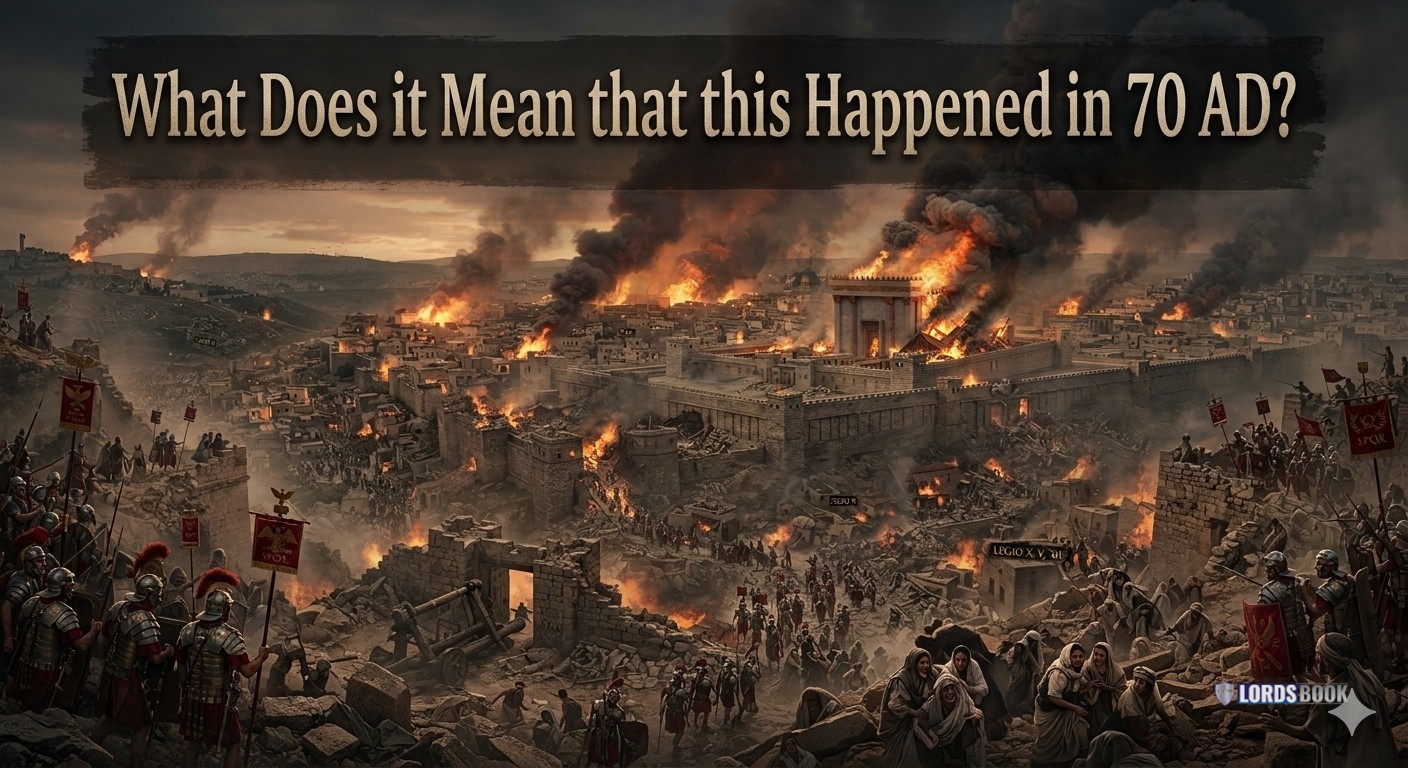 0 Comments 0 Shares 5 Views
- 24:1-3 WHAT ACTUALLY HAPPENED IN 70 AD
To adequately understand what this time in history actually meant, you have to go back 4 years. The reason many people misinterpret Matthew chapter 24 is that they don't understand what the first three verses mean. But before we delve into that we must understand what is going on here.
The precarious truce that Rome had with Jerusalem was tested daily. Zealot Jewish forces railed against Rome having so much control over Israel. Understand that these zealots were loyal to Israel, not God. And their zeal for Israel led them to do unthinkable, rather stupid things and in reality it was equal parts their responsibility what happened.
In 66 AD, about half the apostles have been martyred for their faith. And the population of Israel was divided into two main camps, zealots then everyone else. In the non-zealot camp there were the Pharisees and Sadducees who hated Rome as much as the zealots did, but understood that Rome was stronger and in charge.
These were those who despised Rome's presence but just wanted to live their lives, worship their way, and pay their taxes. But Rome was a brutal master. In 66 AD, Roman governor Gessius Florus, violated standing Roman law and pillaged the temple for gold. He carted it off with the excuse that it was for taxes he considered unpaid. This led to Pharisees and Sadducees ending the previously offered temple sacrifice on behalf of Rome. This was a move that Rome considered treasonous. This same move was considered by the zealots as a “strongly worded letter” to Rome.
In 70 AD, the Roman army stood in front of Jerusalem and allowed the millions of visiting Jews for the Passover that week to enter the city, but did not allow anyone to leave the city. And Jerusalem filled up that week as the emperor Titus knew it would.
Titus was tired of dealing with the Jews. And he decided to utterly destroy Israel. Keep in mind that it was a minor concern, an area Titus wished would go away permanently, and after attacks by zealots and the temple ceasing prayers for the emperor, it was time.
So, during the passover of 70AD, Titus allowed Jerusalem to fill to capacity and then sealed them inside the city. Jesus told them to pray this wouldn't happen during the Passover, but it did. Titus then constructed a siege wall against Jerusalem. And waited.
Inside the Zealots were angry. But they were as angry at Rome as they were at the Pharisees and Sadducees for trying to capitulate to Rome and attempt a way to resolve Titus’ anger. The Pharisees and Sadducees were not aware that their continued bowing down before Rome had led to this. And the behavior of these Jews in compromising with Rome for generations, infuriating the zealots had reached its end.
Inside Jerusalem, the storehouses of grain were full. They could have held off a siege for months and they would have. But the zealots foresaw a possibility of a long seige ending with a peaceful agreement with Rome led by the Pharisees and Sadducees. This was what they saw as well, but they did not understand the red hot rage that Titus felt. Titus fully expected a long siege and his plan was always completely destroying the city and temple and murdering all of them.
So the zealots decide they want to spur the Pharisees and Sadducees on to fight, so what do they do? They burn the storehouses to the ground with all their stored grains inside. The idea being ‘Fight or Starve’ being the motivation to make the ones who didn't want to fight actually do so.
But they never had a chance. The city was now wholly without food. Millions inside. It began in April. The Passover feasts had been consumed, there were no backup supplies. The fate of Jerusalem was already sealed, the zealots just speeded up the result. Hundreds died of starvation daily. Those who attempted escape were being crucified at a rate of 500 each day.
Children were killed and eaten. The dead were being consumed for sustenance. Civil War between rival factions of Jewish leadership broke out. By the time Titus entered Jerusalem the people were dying and certainly in no shape to fight. This is September, October time. Titus sets fire to the temple and city.
The ornate gold decorations of the temple melted ran down the cracks in between stone bricks and cooled into solid gold rivulets within the spaces between bricks. So when Jesus said, not one brick will be left on another, He was right.
The leadership responsible for calling out ‘Crucify him’ were some of the same people who were watching this happen around them. The months that this event happened had millions of people starving to death inside a walled city. It was a time of persecution and horror that had never happened on this scale before and never would again.
Next we look at what it means that this happened.
24:1-3 WHAT ACTUALLY HAPPENED IN 70 AD To adequately understand what this time in history actually meant, you have to go back 4 years. The reason many people misinterpret Matthew chapter 24 is that they don't understand what the first three verses mean. But before we delve into that we must understand what is going on here. The precarious truce that Rome had with Jerusalem was tested daily. Zealot Jewish forces railed against Rome having so much control over Israel. Understand that these zealots were loyal to Israel, not God. And their zeal for Israel led them to do unthinkable, rather stupid things and in reality it was equal parts their responsibility what happened. In 66 AD, about half the apostles have been martyred for their faith. And the population of Israel was divided into two main camps, zealots then everyone else. In the non-zealot camp there were the Pharisees and Sadducees who hated Rome as much as the zealots did, but understood that Rome was stronger and in charge. These were those who despised Rome's presence but just wanted to live their lives, worship their way, and pay their taxes. But Rome was a brutal master. In 66 AD, Roman governor Gessius Florus, violated standing Roman law and pillaged the temple for gold. He carted it off with the excuse that it was for taxes he considered unpaid. This led to Pharisees and Sadducees ending the previously offered temple sacrifice on behalf of Rome. This was a move that Rome considered treasonous. This same move was considered by the zealots as a “strongly worded letter” to Rome. In 70 AD, the Roman army stood in front of Jerusalem and allowed the millions of visiting Jews for the Passover that week to enter the city, but did not allow anyone to leave the city. And Jerusalem filled up that week as the emperor Titus knew it would. Titus was tired of dealing with the Jews. And he decided to utterly destroy Israel. Keep in mind that it was a minor concern, an area Titus wished would go away permanently, and after attacks by zealots and the temple ceasing prayers for the emperor, it was time. So, during the passover of 70AD, Titus allowed Jerusalem to fill to capacity and then sealed them inside the city. Jesus told them to pray this wouldn't happen during the Passover, but it did. Titus then constructed a siege wall against Jerusalem. And waited. Inside the Zealots were angry. But they were as angry at Rome as they were at the Pharisees and Sadducees for trying to capitulate to Rome and attempt a way to resolve Titus’ anger. The Pharisees and Sadducees were not aware that their continued bowing down before Rome had led to this. And the behavior of these Jews in compromising with Rome for generations, infuriating the zealots had reached its end. Inside Jerusalem, the storehouses of grain were full. They could have held off a siege for months and they would have. But the zealots foresaw a possibility of a long seige ending with a peaceful agreement with Rome led by the Pharisees and Sadducees. This was what they saw as well, but they did not understand the red hot rage that Titus felt. Titus fully expected a long siege and his plan was always completely destroying the city and temple and murdering all of them. So the zealots decide they want to spur the Pharisees and Sadducees on to fight, so what do they do? They burn the storehouses to the ground with all their stored grains inside. The idea being ‘Fight or Starve’ being the motivation to make the ones who didn't want to fight actually do so. But they never had a chance. The city was now wholly without food. Millions inside. It began in April. The Passover feasts had been consumed, there were no backup supplies. The fate of Jerusalem was already sealed, the zealots just speeded up the result. Hundreds died of starvation daily. Those who attempted escape were being crucified at a rate of 500 each day. Children were killed and eaten. The dead were being consumed for sustenance. Civil War between rival factions of Jewish leadership broke out. By the time Titus entered Jerusalem the people were dying and certainly in no shape to fight. This is September, October time. Titus sets fire to the temple and city. The ornate gold decorations of the temple melted ran down the cracks in between stone bricks and cooled into solid gold rivulets within the spaces between bricks. So when Jesus said, not one brick will be left on another, He was right. The leadership responsible for calling out ‘Crucify him’ were some of the same people who were watching this happen around them. The months that this event happened had millions of people starving to death inside a walled city. It was a time of persecution and horror that had never happened on this scale before and never would again. Next we look at what it means that this happened. 0 Comments 0 Shares 8 Views
- Jesus continues his speech of Woes by covering tithes and offerings. There were obligations of specific ways to tithe spices that quite literally mean nothing and are not important enough to explain. The fact is it didn't matter then and it certainly doesn't matter now. Jesus is angry because these religious leaders had the technique down pat with no clue how to handle the more important matters of justice, mercy and faithfulness.
He calls them blind guides. It takes a fair amount of audacity for a man with no sight to attempt to guide another, but that is the very picture Jesus leaves us with. These supposed “men of God”, spent so much time and effort on the finer details of the Law that they completely neglected the parts of the Law that mattered.
He rebukes them for their ritualistic methods of washing cups and bowls. To them, they were concerned for the appearance of the bowl they are eating from, not with the bowl's actual cleanliness. The thought of eating from a bowl that is only clean on the outside is rather disgusting to me personally.
But Jesus continues the rebuking by calling them “white-washed tombs”. Indeed these tombs were beautiful on the outside, the limestone gleaming in the sun amongst the graves in Jerusalem. That was Jesus’ assessment of the situation. There was absolutely nothing good in these men. All they had to offer was the appearance of godliness but denying the power behind it.
It is these people and those like them who were guilty of killing these prophets and their descendants are revering the appearance of the tombs that people like them made necessary. God's people have a history of rejecting and persecuting the prophets of God. And it's with this wailing and complaining that they admit the truth.
By insisting that they themselves are regretting their ancestor's role in murdering the prophets they admit that their ancestors are guilty. But something is coming that is so devastating, so frightening that Jesus is couching his words in a truth sandwich.
His words of truth? He's sending them prophets that history has already proven they will kill, persecute and chase from city to city. So that everyone remains clear Jesus is holding them responsible for the murder of all the righteous men of history.
so that upon you will fall the guilt of all the righteous blood shed on earth, from the blood of righteous Abel to the blood of Zechariah, the son of Berechiah, whom you murdered between the temple and the altar
An event is coming in which the suffering is so great it is bringing Jesus to tears. And he is warning them that as they shut their ears to his teaching that it is their actions that led to this punishment. This event is going to be so horrific that every one of them who is angry at him now will experience the horrors to come. These individuals personally, not their future generations.
This is a different kind of warning Jesus is giving. And a truly horrendous event did happen to these people. It was a level of suffering that is rarely seen in history. It was a punishment that though deserved, would not end quickly. The warning Jesus is giving is one of urgency. All this, He's saying will fall upon these individual people. Within a generation, which in Jewish culture equates to 40 years.
And it all happened 37 years after He spoke these words. So these individual Pharisees would experience this pain and this pain would be felt for generations afterward. The destruction of Jerusalem in 70 AD is what all of Israel would point to as the most singularly destructive event in their nation's history prior to the Holocaust.
It would be the point at which in biblical history that God “cut off” from His nation all who rejected Jesus. It's the point at which all sacrificial offerings for sin are over. To this day, there has not been another offering in the last 1,956 years. Almost 2,000 years where Israel has not been able to offer sacrifice. Biblical Israel no longer exists as a functioning religion and hasn't since 69 AD. Really, since the veil of the temple was torn at Jesus’ death.
A Woe is coming that will be Hell on Earth. It will be well deserved by a nation of those who have always capitalized on religion while at the same time murdered those they claim to revere.
23] “Woe to you, scribes and Pharisees, hypocrites! For you tithe mint and dill and cumin, and have neglected the weightier provisions of the Law: justice and mercy and faithfulness; but these are the things you should have done without neglecting the others. [24] You blind guides, who strain out a gnat and swallow a camel! [25] “Woe to you, scribes and Pharisees, hypocrites! For you clean the outside of the cup and of the dish, but inside they are full of robbery and self-indulgence. [26] You blind Pharisee, first clean the inside of the cup and of the dish, so that the outside of it may also become clean. [27] “Woe to you, scribes and Pharisees, hypocrites! For you are like whitewashed tombs which on the outside appear beautiful, but inside they are full of dead men’s bones and all uncleanness. [28] So you too, outwardly appear righteous to people, but inwardly you are full of hypocrisy and lawlessness. [29] “Woe to you, scribes and Pharisees, hypocrites! For you build the tombs for the prophets and decorate the monuments of the righteous, [30] and you say, ‘If we had been living in the days of our fathers, we would not have been partners with them in shedding the blood of the prophets.’ [31] So you testify against yourselves, that you are sons of those who murdered the prophets. [32] Fill up, then, the measure of the guilt of your fathers. [33] You snakes, you offspring of vipers, how will you escape the sentence of hell? [34] “Therefore, behold, I am sending you prophets and wise men and scribes; some of them you will kill and crucify, and some of them you will flog in your synagogues, and persecute from city to city, [35] so that upon you will fall the guilt of all the righteous blood shed on earth, from the blood of righteous Abel to the blood of Zechariah, the son of Berechiah, whom you murdered between the temple and the altar. [36] Truly I say to you, all these things will come upon this generation.
Jesus continues his speech of Woes by covering tithes and offerings. There were obligations of specific ways to tithe spices that quite literally mean nothing and are not important enough to explain. The fact is it didn't matter then and it certainly doesn't matter now. Jesus is angry because these religious leaders had the technique down pat with no clue how to handle the more important matters of justice, mercy and faithfulness. He calls them blind guides. It takes a fair amount of audacity for a man with no sight to attempt to guide another, but that is the very picture Jesus leaves us with. These supposed “men of God”, spent so much time and effort on the finer details of the Law that they completely neglected the parts of the Law that mattered. He rebukes them for their ritualistic methods of washing cups and bowls. To them, they were concerned for the appearance of the bowl they are eating from, not with the bowl's actual cleanliness. The thought of eating from a bowl that is only clean on the outside is rather disgusting to me personally. But Jesus continues the rebuking by calling them “white-washed tombs”. Indeed these tombs were beautiful on the outside, the limestone gleaming in the sun amongst the graves in Jerusalem. That was Jesus’ assessment of the situation. There was absolutely nothing good in these men. All they had to offer was the appearance of godliness but denying the power behind it. It is these people and those like them who were guilty of killing these prophets and their descendants are revering the appearance of the tombs that people like them made necessary. God's people have a history of rejecting and persecuting the prophets of God. And it's with this wailing and complaining that they admit the truth. By insisting that they themselves are regretting their ancestor's role in murdering the prophets they admit that their ancestors are guilty. But something is coming that is so devastating, so frightening that Jesus is couching his words in a truth sandwich. His words of truth? He's sending them prophets that history has already proven they will kill, persecute and chase from city to city. So that everyone remains clear Jesus is holding them responsible for the murder of all the righteous men of history. so that upon you will fall the guilt of all the righteous blood shed on earth, from the blood of righteous Abel to the blood of Zechariah, the son of Berechiah, whom you murdered between the temple and the altar An event is coming in which the suffering is so great it is bringing Jesus to tears. And he is warning them that as they shut their ears to his teaching that it is their actions that led to this punishment. This event is going to be so horrific that every one of them who is angry at him now will experience the horrors to come. These individuals personally, not their future generations. This is a different kind of warning Jesus is giving. And a truly horrendous event did happen to these people. It was a level of suffering that is rarely seen in history. It was a punishment that though deserved, would not end quickly. The warning Jesus is giving is one of urgency. All this, He's saying will fall upon these individual people. Within a generation, which in Jewish culture equates to 40 years. And it all happened 37 years after He spoke these words. So these individual Pharisees would experience this pain and this pain would be felt for generations afterward. The destruction of Jerusalem in 70 AD is what all of Israel would point to as the most singularly destructive event in their nation's history prior to the Holocaust. It would be the point at which in biblical history that God “cut off” from His nation all who rejected Jesus. It's the point at which all sacrificial offerings for sin are over. To this day, there has not been another offering in the last 1,956 years. Almost 2,000 years where Israel has not been able to offer sacrifice. Biblical Israel no longer exists as a functioning religion and hasn't since 69 AD. Really, since the veil of the temple was torn at Jesus’ death. A Woe is coming that will be Hell on Earth. It will be well deserved by a nation of those who have always capitalized on religion while at the same time murdered those they claim to revere. 23] “Woe to you, scribes and Pharisees, hypocrites! For you tithe mint and dill and cumin, and have neglected the weightier provisions of the Law: justice and mercy and faithfulness; but these are the things you should have done without neglecting the others. [24] You blind guides, who strain out a gnat and swallow a camel! [25] “Woe to you, scribes and Pharisees, hypocrites! For you clean the outside of the cup and of the dish, but inside they are full of robbery and self-indulgence. [26] You blind Pharisee, first clean the inside of the cup and of the dish, so that the outside of it may also become clean. [27] “Woe to you, scribes and Pharisees, hypocrites! For you are like whitewashed tombs which on the outside appear beautiful, but inside they are full of dead men’s bones and all uncleanness. [28] So you too, outwardly appear righteous to people, but inwardly you are full of hypocrisy and lawlessness. [29] “Woe to you, scribes and Pharisees, hypocrites! For you build the tombs for the prophets and decorate the monuments of the righteous, [30] and you say, ‘If we had been living in the days of our fathers, we would not have been partners with them in shedding the blood of the prophets.’ [31] So you testify against yourselves, that you are sons of those who murdered the prophets. [32] Fill up, then, the measure of the guilt of your fathers. [33] You snakes, you offspring of vipers, how will you escape the sentence of hell? [34] “Therefore, behold, I am sending you prophets and wise men and scribes; some of them you will kill and crucify, and some of them you will flog in your synagogues, and persecute from city to city, [35] so that upon you will fall the guilt of all the righteous blood shed on earth, from the blood of righteous Abel to the blood of Zechariah, the son of Berechiah, whom you murdered between the temple and the altar. [36] Truly I say to you, all these things will come upon this generation. 0 Comments 0 Shares 4 Views
- Matthew 23:13, 15-22
Jesus begins his Woes speech against the Pharisees. Their continued behavior in opposing Him not withstanding, they were still behaving as enemies of God. Because they were enemies of God. Now no one can literally stop another person from entering the Kingdom of God.
These leaders however, in the interest of protecting their power, can burden the people with religious laws God never intended. By this behavior, they can block others from responding to the Gospel with no intention of ever entering themselves.
And here we have to mention that verse 14 is one of the verses that is in dispute for the simple reason that many of the older manuscripts do not contain it. There is no reason to doubt it as the same teaching is found in Mark 12:40
[40] who devour widows’ houses, and for appearance’s sake offer long prayers. These will receive all the more condemnation.” and,
Luke 20:47
[47] who devour widows’ houses, and for appearance’s sake offer long prayers. These will receive all the more condemnation.”
So here's another verse that liberals like to use as proof the Bible isn't to be trusted when it doesn't get close to doing so. And since Jesus uses the same words elsewhere there really should be no controversy. What the Pharisees were doing was using the Law to seize the homes of widows for personal enrichment.
Jesus’ clear warning is that they will receive harsher judgment than those who disobeyed in ignorance. Without sounding flippant, as I do not intend to do so, their judgment will be endless torture, pain, and loss for everyone who rejects Jesus. How much worse then is it for those who use religion the same way the Pharisees did?
Next Jesus condemns the proselytizing the Pharisees do as they travel the word passing their own distortions of truth on to a group of new Pharisees who are as morally bankrupt as they were.
Then Jesus hits their habit of swearing by the temple. The Pharisees were guilty of making vows, then breaking them and justifying doing so by ridiculous methods. They could swear they will fulfill a promise, much like this,
“I swear I will do such and such by the temple of God.” Then when it didn't get done excusing it with, “but I didn't swear by the gold of the temple”. An oath to these people was extremely important but these people were essentially not only making excuses for lying but justifying it as well.
He repeats Himself but then uses swearing by the altar versus swearing by the gold on the altar. The conclusion is this “Let your Yes be Yes and your No's be no.” In other words your character should be able to be judged based on the words you swear by, not by the object being sworn by. An oath adds nothing to the words of an honest man.
Jesus isn't giving instruction on how to swear an oath, He's telling us our promises, our words don't need an oath. And He's not done. Stay with us tomorrow as he continues just ripping the Jews to pieces, metaphorically speaking.
[13] “But woe to you, scribes and Pharisees, hypocrites, because you shut the kingdom of heaven in front of people; for you do not enter it yourselves, nor do you allow those who are entering to go in. 14 Woe unto you, scribes and Pharisees, hypocrites! for ye devour widows' houses, and for a pretence make long prayer: therefore ye shall receive the greater damnation
[15] “Woe to you, scribes and Pharisees, hypocrites, because you travel around on sea and land to make one proselyte; and when he becomes one, you make him twice as much a son of hell as yourselves. [16] “Woe to you, blind guides, who say, ‘Whoever swears by the temple, that is nothing; but whoever swears by the gold of the temple is obligated.’ [17] You fools and blind men! Which is more important, the gold or the temple that sanctified the gold? [18] And you say, ‘Whoever swears by the altar, that is nothing; but whoever swears by the offering that is on it is obligated.’ [19] You blind men, which is more important, the offering or the altar that sanctifies the offering? [20] Therefore, the one who swears by the altar, swears both by the altar and by everything on it. [21] And the one who swears by the temple, swears both by the temple and by Him who dwells in it. [22] And the one who swears by heaven, swears both by the throne of God and by Him who sits upon it.
[
Matthew 23:13, 15-22 Jesus begins his Woes speech against the Pharisees. Their continued behavior in opposing Him not withstanding, they were still behaving as enemies of God. Because they were enemies of God. Now no one can literally stop another person from entering the Kingdom of God. These leaders however, in the interest of protecting their power, can burden the people with religious laws God never intended. By this behavior, they can block others from responding to the Gospel with no intention of ever entering themselves. And here we have to mention that verse 14 is one of the verses that is in dispute for the simple reason that many of the older manuscripts do not contain it. There is no reason to doubt it as the same teaching is found in Mark 12:40 [40] who devour widows’ houses, and for appearance’s sake offer long prayers. These will receive all the more condemnation.” and, Luke 20:47 [47] who devour widows’ houses, and for appearance’s sake offer long prayers. These will receive all the more condemnation.” So here's another verse that liberals like to use as proof the Bible isn't to be trusted when it doesn't get close to doing so. And since Jesus uses the same words elsewhere there really should be no controversy. What the Pharisees were doing was using the Law to seize the homes of widows for personal enrichment. Jesus’ clear warning is that they will receive harsher judgment than those who disobeyed in ignorance. Without sounding flippant, as I do not intend to do so, their judgment will be endless torture, pain, and loss for everyone who rejects Jesus. How much worse then is it for those who use religion the same way the Pharisees did? Next Jesus condemns the proselytizing the Pharisees do as they travel the word passing their own distortions of truth on to a group of new Pharisees who are as morally bankrupt as they were. Then Jesus hits their habit of swearing by the temple. The Pharisees were guilty of making vows, then breaking them and justifying doing so by ridiculous methods. They could swear they will fulfill a promise, much like this, “I swear I will do such and such by the temple of God.” Then when it didn't get done excusing it with, “but I didn't swear by the gold of the temple”. An oath to these people was extremely important but these people were essentially not only making excuses for lying but justifying it as well. He repeats Himself but then uses swearing by the altar versus swearing by the gold on the altar. The conclusion is this “Let your Yes be Yes and your No's be no.” In other words your character should be able to be judged based on the words you swear by, not by the object being sworn by. An oath adds nothing to the words of an honest man. Jesus isn't giving instruction on how to swear an oath, He's telling us our promises, our words don't need an oath. And He's not done. Stay with us tomorrow as he continues just ripping the Jews to pieces, metaphorically speaking. [13] “But woe to you, scribes and Pharisees, hypocrites, because you shut the kingdom of heaven in front of people; for you do not enter it yourselves, nor do you allow those who are entering to go in. 14 Woe unto you, scribes and Pharisees, hypocrites! for ye devour widows' houses, and for a pretence make long prayer: therefore ye shall receive the greater damnation [15] “Woe to you, scribes and Pharisees, hypocrites, because you travel around on sea and land to make one proselyte; and when he becomes one, you make him twice as much a son of hell as yourselves. [16] “Woe to you, blind guides, who say, ‘Whoever swears by the temple, that is nothing; but whoever swears by the gold of the temple is obligated.’ [17] You fools and blind men! Which is more important, the gold or the temple that sanctified the gold? [18] And you say, ‘Whoever swears by the altar, that is nothing; but whoever swears by the offering that is on it is obligated.’ [19] You blind men, which is more important, the offering or the altar that sanctifies the offering? [20] Therefore, the one who swears by the altar, swears both by the altar and by everything on it. [21] And the one who swears by the temple, swears both by the temple and by Him who dwells in it. [22] And the one who swears by heaven, swears both by the throne of God and by Him who sits upon it. [ 0 Comments 0 Shares 6 Views

More Posts