• MAY GOD HELP THIS PLATFORM, LORDSBOOK, may the lord GOD help this platform even more, this is a platform that feeds the spirit with the word of GOD, but now I can see many of the wicked or better still bad seeds creeping into it with a decietful way, by their fruit we shall know them, Satan does not take eyes to see where there is light, he will always send his own to steal and destroy, when they get flooded up here they will communicate in the spirit to find what to do in other to destroy and bring confusion!!! #LORDsBOOK #PREACH #LEARN #GROW
    MAY GOD HELP THIS PLATFORM, LORDSBOOK, may the lord GOD help this platform even more, this is a platform that feeds the spirit with the word of GOD, but now I can see many of the wicked or better still bad seeds creeping into it with a decietful way, by their fruit we shall know them, Satan does not take eyes to see where there is light, he will always send his own to steal and destroy, when they get flooded up here they will communicate in the spirit to find what to do in other to destroy and bring confusion!!! #LORDsBOOK #PREACH #LEARN #GROW
    0 Commentarios 0 Acciones 6 Views
  • Admit it. You like reading the Psalms, the Gospels, Paul's epistles and maybe Esther and Ruth.
    But what about the least read Bible books -- I call them Orphan Books -- because they almost are never read. Here's a list I found.
    Hope you take the challenge to read an "orphan" or two this week.
    ------------------------------------
    # Book Why read it? Difficulty
    1 Obadiah A miniature study of pride, injustice, and God's judgment Easy
    2 Haggai A surprisingly relevant book about misplaced priorities Easy
    3 Philemon Paul, slavery, forgiveness, and Christian brotherhood in 25 verses Easy
    4 3 John A fascinating glimpse into early church politics and leadership Easy
    5 2 John Truth, love, hospitality—and boundaries Easy
    6 Nahum The dark counterpart to Jonah: what happens to Nineveh? Medium
    7 Zephaniah Judgment followed by one of the OT's beautiful pictures of God's joy Medium
    8 Jude Strange, intense, apocalyptic, and packed with unusual references Medium
    9 Habakkuk One of the Bible's best books for wrestling honestly with God Easy
    10 Lamentations Biblical poetry about grief, catastrophe, and hope Medium
    11 Joel Locusts, the Day of the LORD, and the famous promise about God's Spirit Medium
    12 Malachi A surprisingly sharp ending to the Old Testament Easy
    The ones I'd especially recommend
    If you only want to read five, I'd pick:
    Habakkuk — perhaps the most rewarding “orphan.” The entire book is essentially a conversation between a confused believer and God. Habakkuk starts by asking, “Why aren't you doing something about this?” and ends somewhere radically different.
    Haggai — extremely short but surprisingly practical. Its central question is basically: What happens when God's people become preoccupied with their own houses while neglecting God's house?
    Philemon — don't let its size fool you. It's an extraordinarily compressed little letter about power, status, forgiveness, reconciliation, and what the gospel does to human relationships.
    Nahum — read it immediately after Jonah if you can. Jonah tells you that Nineveh repented; Nahum, written later, tells you what eventually happened to Nineveh. Reading them together makes both books considerably more interesting.
    Lamentations — probably the most emotionally neglected book on the list. It gives you something the Bible is unusually good at: language for grief when everything has gone terribly wrong.
    And here's the really fun challenge
    Don't read these as if they're merely the Bible's “B-list.”
    Try reading one orphan book a week, with no commentary at first. Just read the entire thing in one sitting.
    You'll discover something interesting: some of the books that feel least important at first are actually the ones that illuminate the famous books around them.
    Jonah → Nahum
    Isaiah/Jeremiah → Lamentations
    Romans/Galatians → Habakkuk
    1 John → 2 John → 3 John
    Ezra/Nehemiah → Haggai
    Admit it. You like reading the Psalms, the Gospels, Paul's epistles and maybe Esther and Ruth. But what about the least read Bible books -- I call them Orphan Books -- because they almost are never read. Here's a list I found. Hope you take the challenge to read an "orphan" or two this week. ------------------------------------ # Book Why read it? Difficulty 1 Obadiah A miniature study of pride, injustice, and God's judgment 🟢 Easy 2 Haggai A surprisingly relevant book about misplaced priorities 🟢 Easy 3 Philemon Paul, slavery, forgiveness, and Christian brotherhood in 25 verses 🟢 Easy 4 3 John A fascinating glimpse into early church politics and leadership 🟢 Easy 5 2 John Truth, love, hospitality—and boundaries 🟢 Easy 6 Nahum The dark counterpart to Jonah: what happens to Nineveh? 🟡 Medium 7 Zephaniah Judgment followed by one of the OT's beautiful pictures of God's joy 🟡 Medium 8 Jude Strange, intense, apocalyptic, and packed with unusual references 🟡 Medium 9 Habakkuk One of the Bible's best books for wrestling honestly with God 🟢 Easy 10 Lamentations Biblical poetry about grief, catastrophe, and hope 🟡 Medium 11 Joel Locusts, the Day of the LORD, and the famous promise about God's Spirit 🟡 Medium 12 Malachi A surprisingly sharp ending to the Old Testament 🟢 Easy 🏆 The ones I'd especially recommend If you only want to read five, I'd pick: Habakkuk — perhaps the most rewarding “orphan.” The entire book is essentially a conversation between a confused believer and God. Habakkuk starts by asking, “Why aren't you doing something about this?” and ends somewhere radically different. Haggai — extremely short but surprisingly practical. Its central question is basically: What happens when God's people become preoccupied with their own houses while neglecting God's house? Philemon — don't let its size fool you. It's an extraordinarily compressed little letter about power, status, forgiveness, reconciliation, and what the gospel does to human relationships. Nahum — read it immediately after Jonah if you can. Jonah tells you that Nineveh repented; Nahum, written later, tells you what eventually happened to Nineveh. Reading them together makes both books considerably more interesting. Lamentations — probably the most emotionally neglected book on the list. It gives you something the Bible is unusually good at: language for grief when everything has gone terribly wrong. 🕯️ And here's the really fun challenge Don't read these as if they're merely the Bible's “B-list.” Try reading one orphan book a week, with no commentary at first. Just read the entire thing in one sitting. You'll discover something interesting: some of the books that feel least important at first are actually the ones that illuminate the famous books around them. Jonah → Nahum Isaiah/Jeremiah → Lamentations Romans/Galatians → Habakkuk 1 John → 2 John → 3 John Ezra/Nehemiah → Haggai
    0 Commentarios 0 Acciones 9 Views
  • WE DO RECOVER. AND THIS IMAGE PROVES IT.

    Nearly 1,500 REAL PEOPLE. 1,500 REAL STORIES. 1,500 LIVES that show recovery IS possible.

    I took the photos that were submitted for my WE DO RECOVER videos and brought them together to form one powerful image of JESUS.

    Look closely…
    Those aren't random faces.

    THEY'RE PEOPLE WHO RECOVERED.

    Every tiny photo represents a person, a battle, a story, a comeback, and HOPE for somebody who may still be fighting today.

    And together, their faces tell one HUGE message:

    WE DO RECOVER.
    Chains CAN break.
    Lives CAN change.
    Hope IS real.
    And no story is too far gone for God.

    If you're still in the fight, LOOK AT THESE FACES.

    RECOVERY HAS A FACE—AND THERE ARE NEARLY 1,500 OF THEM RIGHT HERE.

    If you're in recovery, comment “WE DO RECOVER!”
    SHARE this so someone struggling sees what's possible.

    FOLLOW FoxxFusion Ministries as we continue to RECOVER OUT LOUD and give hope to those who still need it.

    #WeDoRecover #RecoveryIsPossible #RecoverOutLoud #JesusChangesLives #FoxxFusionMinistries
    ❤️‍🔥 WE DO RECOVER. AND THIS IMAGE PROVES IT. ❤️‍🔥 Nearly 1,500 REAL PEOPLE. 1,500 REAL STORIES. 1,500 LIVES that show recovery IS possible. 🙌 I took the photos that were submitted for my WE DO RECOVER videos and brought them together to form one powerful image of JESUS. ✝️ Look closely… 👀 Those aren't random faces. THEY'RE PEOPLE WHO RECOVERED. ❤️‍🔥 Every tiny photo represents a person, a battle, a story, a comeback, and HOPE for somebody who may still be fighting today. And together, their faces tell one HUGE message: 🔥 WE DO RECOVER. 🔥 ⛓️ Chains CAN break. ❤️ Lives CAN change. 🙌 Hope IS real. ✝️ And no story is too far gone for God. If you're still in the fight, LOOK AT THESE FACES. RECOVERY HAS A FACE—AND THERE ARE NEARLY 1,500 OF THEM RIGHT HERE. 💪❤️‍🔥 👇 If you're in recovery, comment “WE DO RECOVER!” 📲 SHARE this so someone struggling sees what's possible. ➕ FOLLOW FoxxFusion Ministries as we continue to RECOVER OUT LOUD and give hope to those who still need it. ❤️‍🔥 #WeDoRecover #RecoveryIsPossible #RecoverOutLoud #JesusChangesLives #FoxxFusionMinistries
    Like
    1
    1 Commentarios 0 Acciones 12 Views
  • FAITH TURNS PRESSURE INTO PURPOSE.

    The pressure you’re under may feel like it’s trying to break you… but GOD can use it to BUILD you.

    What feels heavy today may be preparing you for something greater tomorrow. The struggle can strengthen you. The waiting can shape you. The pain can become part of your testimony.

    PRESSURE DOESN’T HAVE TO DESTROY YOU—GOD CAN TURN IT INTO PURPOSE.

    Keep the FAITH. Keep moving forward. Your story isn’t finished yet!

    If you believe God can turn pressure into purpose, comment “AMEN!”

    Like
    Comment
    Share this with someone who needs it today
    Follow FoxxFusion Ministries for more faith, encouragement, recovery, music & hope!

    #Faith #GodsPurpose #TrustGod #ChristianEncouragement #FoxxFusionMinistries
    🔥 FAITH TURNS PRESSURE INTO PURPOSE. 🔥 The pressure you’re under may feel like it’s trying to break you… but GOD can use it to BUILD you. 💛✝️ What feels heavy today may be preparing you for something greater tomorrow. The struggle can strengthen you. The waiting can shape you. The pain can become part of your testimony. 💥 PRESSURE DOESN’T HAVE TO DESTROY YOU—GOD CAN TURN IT INTO PURPOSE. Keep the FAITH. Keep moving forward. Your story isn’t finished yet! 🙌❤️‍🔥 👇 If you believe God can turn pressure into purpose, comment “AMEN!” ❤️ Like 💬 Comment 📲 Share this with someone who needs it today ➕ Follow FoxxFusion Ministries for more faith, encouragement, recovery, music & hope! #Faith #GodsPurpose #TrustGod #ChristianEncouragement #FoxxFusionMinistries
    0 Commentarios 0 Acciones 12 Views
  • Experience Free Gas Delivery

    At Free Gas Delivery, we pride ourselves on making your propane experience seamless and convenient. Here’s what we offer:

    1. Fast Service: We understand the importance of timely delivery. Our team is dedicated to getting your propane to you quickly, ensuring you’re never left without fuel.

    2. Free Hookup: Enjoy a hassle-free experience with our complimentary hookup service. Our trained technicians will remove your empty tank and install your new one safely and efficiently.

    3. Low Rates: Quality service doesn’t have to break the bank! We offer competitive pricing to ensure you receive the best value for your propane needs.

    With our commitment to convenience, safety, and affordability, you can trust Free Gas Delivery to keep your home fueled and ready for cooking and grilling.

    Contact Us: +256 760 879102 | +256 748 327611

    Visit Our Website: www.freegasdelivery.com

    #FreeGasDelivery #FastService #FreeHookup #LowRates #PropaneDelivery #CustomerSatisfaction #ReliableFuel #Convenience #CookingEssentials #HomeComfort
    🚀 Experience Free Gas Delivery 🚀 At Free Gas Delivery, we pride ourselves on making your propane experience seamless and convenient. Here’s what we offer: 1. ⚡ Fast Service: We understand the importance of timely delivery. Our team is dedicated to getting your propane to you quickly, ensuring you’re never left without fuel. 2. 🔧 Free Hookup: Enjoy a hassle-free experience with our complimentary hookup service. Our trained technicians will remove your empty tank and install your new one safely and efficiently. 3. 💰 Low Rates: Quality service doesn’t have to break the bank! We offer competitive pricing to ensure you receive the best value for your propane needs. With our commitment to convenience, safety, and affordability, you can trust Free Gas Delivery to keep your home fueled and ready for cooking and grilling. 📞 Contact Us: +256 760 879102 | +256 748 327611 🌐 Visit Our Website: www.freegasdelivery.com #FreeGasDelivery #FastService #FreeHookup #LowRates #PropaneDelivery #CustomerSatisfaction #ReliableFuel #Convenience #CookingEssentials #HomeComfort
    Home
    At Free Gas Delivery, we specialize in providing Katabi Gas Cylinders for your Kitooro Gas For Cooker and Entebbe Cooking Gas for your cooking needs. Order today.
    0 Commentarios 0 Acciones 9 Views
  • Note


    The Stick You Write With


    When we read the bible,what do we think about? Do we think about the writer being inspired by the Spirit of God? Do we look to the setting it was written in, the culture of the times, etc? Do we look at the style of writing as some scholars teach us to do?

    These and more are often taught as the way to read the bible. In more modern education we are taught to think critically and what is being said and written. In other words what can we infer or deduce from the text we are reading?

    Questions such as these, more often than not lead to an overly complicated mess of confusion that is sometimes hard to navigate. Complicating the simple way the people of the day actually thought. What is more is that the New Testament was written in Koine ( common Greek).

    This Greek as written in the NT is often studied by scholars, pastors and laymen alike, searching for a clearer picture of what the biblical writers were intending. And in this way, we may more accurately discern the truth that God, through His servants, is trying to convey to us, 2,000 years later. Mind you in a culture that is very far removed from the culture it was written in.

    In short a lot has happened in 2,000 years, and some ideas just don’t translate well. To make up for this, scholars have tried hard to come up with different and new translations, paraphrases etc, that are everything from absolute trash, to literal word for word hard to read versions of the bible.

    Many popular bible translations we read are something of a dynamic equivalent, that’s thought for thought. Others are word for word. And still others are a paraphrase giving the general sense of what is being spoken of. Yet, for all this we seem to lose a little or a lot depending, when we try to bring this all into a culture, language and thought process that is far removed from the original.

    So we dig, scholars and laymen alike, dig. We dig into the language it is written in. We find meanings to words, and their roots. Sometimes we look at the society and culture around them and it brings out even more. Yet for all that, it seems we still come up short and we wonder why.

    In my own life, the more I dug into some limited Greek studies, the more I saw it was not really going too far, so I stopped looking. I would only look up what I was curious about or led to. If I am honest at times, I would remember my pastor who told me of his friend who was a biblical Greek scholar, who said it really doesn’t do you that much good to know Greek. As I studied I could see that, but why. Aren’t we taught to look into the language? Isn’t that the example that is set by many, if not most pastors and writers of biblical material? Look into the Greek to find the meaning of the words used in the NT, so we can understand a bit better? But its really not helping that much so what am I missing?

    What I found was not intentional. I was not looking for it. At all.

    I found where Jesus wrote about being the bread of life In John 6:35:

    “And Jesus said unto them, I am the bread of life: he that cometh to me shall never hunger; and he that believeth on me shall never thirst.”

    In our minds we wonder what that means so we dig. And that is just what I did. I wanted to find out what that meant, exactly. My research led me to the cultural life of the Jewish people. And I found out that they, without a long explanation, knew that Jesus was saying, without bread, you die, you have no life.

    That may seem obvious and overly simplistic, yet for a people who lived in the desert, to not have bread and water, was a fact of certain death. Biblically the principle stems back to the time in the wilderness when God supplied bread for them in the form of mana. Again, this may seem obvious, but it’s not something most in western culture know very much about.

    We don’t know starvation as a possibility as well as they did then, we don’t know the waterless tracts of land they made their home in for thousands of years. They knew intimately the slow agonizing death by starvation and thirst, in a land where water is a commodity. Unlike us who just go to the faucet or by another water bottle at the nearest grocery store. These things were their reality, unlike ours.

    Finding this set me on a journey of sorts to looking into their culture more. As I did I began seeing things that we don’t often talk about. Then one day I realized that almost every NT writer with the exception of Luke was born Jewish. That meant that they came from a Jewish background, culture, traditions and language.

    Then I began to wonder how come we are looking at the NT from a western outlook, through the Greek language, when we should possibly be looking at it from a more Hebraic outlook? Why weren’t we looking at what they were saying through the culture, history etc of the person who was speaking it? They knew the language and ideas of the OT far better than we do.

    So, again I began digging. What I found was that as a general rule, the Jewish people of that day, had gained some complexity of thought because of outside influences, such as the Babylonian captivity, the Roman occupation etc, they still retained much of their original simplicity and straightforward thinking. In fact, without going too deep in this, most Jewish men at the time had at least some knowledge of the OT scriptures and how they were written and the thoughts behind them. This is due to the fact that they would teach the fathers trade to the children and were required to teach them the word of God as well.

    For them, things were relatively simple. Their culture and thought process, at least so far as these things are concerned, was simple compared to the Romans, or Greeks where we in the west get much of our way of thinking.

    To see the difference when we describe something, such as a pencil, we say its long, often yellow, with lead or graphite inside, it has an eraser on one end and the other is sharpened to a point so you can write with it. In ancient Hebrew, it’s literally a stick you write with, that is the description.

    To us, who habitually over complicate everything, even a bowl of Cheerios, this seems way too simplistic. Truthfully one may be right with that assessment. But that does not negate the fact that they understood things far different than we do.

    Now, I am doing more digging. Looking into the Hebrew language and looking at the NT from somewhat of a different angle. What happened is the truth we all see, written within the pages, started taking on a deeper meaning. Instead of looking at the Word through the lens of our culture or even the Greek, I began to see things that way I think the biblical writers were seeing them, and thus seeing the intent of God through them. Regardless of how it was written.

    When we look at the bible in this way it seems to take on new life. It doesn’t change the meaning, but deepens it, brings a fuller, more clear revelation, and application to our lives and ministries.


    I write my own writing, I do not use AI to write. All my writing is my own and can be scanned for AI content as well as plagiarism.

    Note The Stick You Write With When we read the bible,what do we think about? Do we think about the writer being inspired by the Spirit of God? Do we look to the setting it was written in, the culture of the times, etc? Do we look at the style of writing as some scholars teach us to do? These and more are often taught as the way to read the bible. In more modern education we are taught to think critically and what is being said and written. In other words what can we infer or deduce from the text we are reading? Questions such as these, more often than not lead to an overly complicated mess of confusion that is sometimes hard to navigate. Complicating the simple way the people of the day actually thought. What is more is that the New Testament was written in Koine ( common Greek). This Greek as written in the NT is often studied by scholars, pastors and laymen alike, searching for a clearer picture of what the biblical writers were intending. And in this way, we may more accurately discern the truth that God, through His servants, is trying to convey to us, 2,000 years later. Mind you in a culture that is very far removed from the culture it was written in. In short a lot has happened in 2,000 years, and some ideas just don’t translate well. To make up for this, scholars have tried hard to come up with different and new translations, paraphrases etc, that are everything from absolute trash, to literal word for word hard to read versions of the bible. Many popular bible translations we read are something of a dynamic equivalent, that’s thought for thought. Others are word for word. And still others are a paraphrase giving the general sense of what is being spoken of. Yet, for all this we seem to lose a little or a lot depending, when we try to bring this all into a culture, language and thought process that is far removed from the original. So we dig, scholars and laymen alike, dig. We dig into the language it is written in. We find meanings to words, and their roots. Sometimes we look at the society and culture around them and it brings out even more. Yet for all that, it seems we still come up short and we wonder why. In my own life, the more I dug into some limited Greek studies, the more I saw it was not really going too far, so I stopped looking. I would only look up what I was curious about or led to. If I am honest at times, I would remember my pastor who told me of his friend who was a biblical Greek scholar, who said it really doesn’t do you that much good to know Greek. As I studied I could see that, but why. Aren’t we taught to look into the language? Isn’t that the example that is set by many, if not most pastors and writers of biblical material? Look into the Greek to find the meaning of the words used in the NT, so we can understand a bit better? But its really not helping that much so what am I missing? What I found was not intentional. I was not looking for it. At all. I found where Jesus wrote about being the bread of life In John 6:35: “And Jesus said unto them, I am the bread of life: he that cometh to me shall never hunger; and he that believeth on me shall never thirst.” In our minds we wonder what that means so we dig. And that is just what I did. I wanted to find out what that meant, exactly. My research led me to the cultural life of the Jewish people. And I found out that they, without a long explanation, knew that Jesus was saying, without bread, you die, you have no life. That may seem obvious and overly simplistic, yet for a people who lived in the desert, to not have bread and water, was a fact of certain death. Biblically the principle stems back to the time in the wilderness when God supplied bread for them in the form of mana. Again, this may seem obvious, but it’s not something most in western culture know very much about. We don’t know starvation as a possibility as well as they did then, we don’t know the waterless tracts of land they made their home in for thousands of years. They knew intimately the slow agonizing death by starvation and thirst, in a land where water is a commodity. Unlike us who just go to the faucet or by another water bottle at the nearest grocery store. These things were their reality, unlike ours. Finding this set me on a journey of sorts to looking into their culture more. As I did I began seeing things that we don’t often talk about. Then one day I realized that almost every NT writer with the exception of Luke was born Jewish. That meant that they came from a Jewish background, culture, traditions and language. Then I began to wonder how come we are looking at the NT from a western outlook, through the Greek language, when we should possibly be looking at it from a more Hebraic outlook? Why weren’t we looking at what they were saying through the culture, history etc of the person who was speaking it? They knew the language and ideas of the OT far better than we do. So, again I began digging. What I found was that as a general rule, the Jewish people of that day, had gained some complexity of thought because of outside influences, such as the Babylonian captivity, the Roman occupation etc, they still retained much of their original simplicity and straightforward thinking. In fact, without going too deep in this, most Jewish men at the time had at least some knowledge of the OT scriptures and how they were written and the thoughts behind them. This is due to the fact that they would teach the fathers trade to the children and were required to teach them the word of God as well. For them, things were relatively simple. Their culture and thought process, at least so far as these things are concerned, was simple compared to the Romans, or Greeks where we in the west get much of our way of thinking. To see the difference when we describe something, such as a pencil, we say its long, often yellow, with lead or graphite inside, it has an eraser on one end and the other is sharpened to a point so you can write with it. In ancient Hebrew, it’s literally a stick you write with, that is the description. To us, who habitually over complicate everything, even a bowl of Cheerios, this seems way too simplistic. Truthfully one may be right with that assessment. But that does not negate the fact that they understood things far different than we do. Now, I am doing more digging. Looking into the Hebrew language and looking at the NT from somewhat of a different angle. What happened is the truth we all see, written within the pages, started taking on a deeper meaning. Instead of looking at the Word through the lens of our culture or even the Greek, I began to see things that way I think the biblical writers were seeing them, and thus seeing the intent of God through them. Regardless of how it was written. When we look at the bible in this way it seems to take on new life. It doesn’t change the meaning, but deepens it, brings a fuller, more clear revelation, and application to our lives and ministries. I write my own writing, I do not use AI to write. All my writing is my own and can be scanned for AI content as well as plagiarism.
    0 Commentarios 0 Acciones 13 Views
  • Aflame - Shared by Smith Wigglesworth
    "Surely I will cause breath to enter into you, and you shall live. -Ezekiel 37:5
    As we speak in the Spirit, we feel that the fire that burned in the hearts of the two men on their way to Emmaus, when Jesus walked with them, is burning in our hearts. (See Luke 24:13-32.) It is sure to come to pass that when we walk with Him, our hearts will burn; the same power of the Spirit is present today to make it happen. The two men on their way to Emmaus could not understand what was happening on the road, but a few hours later, they saw Jesus break the bread, and their eyes were opened.
    But, beloved, our hearts always ought to burn. There is a place where we can live in the anointing and the clothing of the Spirit, where our words will be clothed with power. "Do not be drunk with wine ... but be filled with the Spirit" (Eph.5:18). Being filled with the Spirit is a wonderful privilege.
    It was necessary for John to be in the Spirit on the Isle of Patmos so that the revelation could be made clear to him (Rev. 1:9- 10). What does it mean to this generation for us to be kept in the Spirit? All human reasoning and all human knowledge cannot be compared with the power of the life that is lived in the Spirit. In the Spirit, we have power to loose and power to bind (Matt.16:19). There is a place where the Holy Spirit can put us where we cannot be anywhere else but in the Spirit. But it is only in the Spirit.
    Now, I read in Matthew 16:19 that Jesus says, in essence, "I will give you power to bind, and I will give you power to loose." This is a power that many of us have not yet claimed, and we will not be able to claim this manifestation of the Spirit unless we live in the Spirit. When are you able to bind and loose? It is only in the Spirit. You cannot bind things in human strength or with the natural mind. This power was never lacking in Jesus, but I feel that there is a great lack of it in most of us. God help us!
    "The Spirit of the LORD is upon Me" (Luke4:18). Beloved, there was a great purpose in this Spirit being on Jesus, and there is a special purpose in your being baptized in the Spirit. We must not forget that we are members of His body, and by this wonderful baptismal power, we are partakers of His divine nature (2 Pet. 1:4).
    The revelation came this way: I saw Adam and Eve driven out of the Garden and a flaming sword at every side to keep them from entering into the Garden. But I saw 'that all around me was a flaming sword keeping me from evil, and it seemed this would be true if I would claim it, so I said, "Lord, I will." The flaming sword was around me, delivering me from the power of hell. In this way, we are preserved from evil. God is like a wall of fire around us (Zech. 2:5); why should we fear? What a wonderful salvation! What a wonderful Deliverer!
    Notice Ezekiel 37. The only need of Ezekiel was to be in the Spirit, and while he was in the Spirit, it came to him to prophesy to the dry bones and say, "O dry bones, hear the word of the LORD" (v. 4). And as he prophesied according to the Lord's command, he saw an "exceedingly great army" (v. 10) rising up about him. The prophet obeyed God's command, and all we have to do is exactly this: obey God. What is impossible with man is possible with God (Luke18:27).
    I pray to God that your spirit, soul, and body may be preserved holy (1 Thess.5:23), and that you may be always on fire, always ready with the anointing on you. If this is not so, we are out of divine order, and we ought to cry to Him until the glory comes back upon us."
    Read Smith Wigglesworth's other works at http://www.teleiosministries.com/Gifts-of-Healing.html
    Free Downloads at www.teleiosministries.com
    Aflame - Shared by Smith Wigglesworth "Surely I will cause breath to enter into you, and you shall live. -Ezekiel 37:5 As we speak in the Spirit, we feel that the fire that burned in the hearts of the two men on their way to Emmaus, when Jesus walked with them, is burning in our hearts. (See Luke 24:13-32.) It is sure to come to pass that when we walk with Him, our hearts will burn; the same power of the Spirit is present today to make it happen. The two men on their way to Emmaus could not understand what was happening on the road, but a few hours later, they saw Jesus break the bread, and their eyes were opened. But, beloved, our hearts always ought to burn. There is a place where we can live in the anointing and the clothing of the Spirit, where our words will be clothed with power. "Do not be drunk with wine ... but be filled with the Spirit" (Eph.5:18). Being filled with the Spirit is a wonderful privilege. It was necessary for John to be in the Spirit on the Isle of Patmos so that the revelation could be made clear to him (Rev. 1:9- 10). What does it mean to this generation for us to be kept in the Spirit? All human reasoning and all human knowledge cannot be compared with the power of the life that is lived in the Spirit. In the Spirit, we have power to loose and power to bind (Matt.16:19). There is a place where the Holy Spirit can put us where we cannot be anywhere else but in the Spirit. But it is only in the Spirit. Now, I read in Matthew 16:19 that Jesus says, in essence, "I will give you power to bind, and I will give you power to loose." This is a power that many of us have not yet claimed, and we will not be able to claim this manifestation of the Spirit unless we live in the Spirit. When are you able to bind and loose? It is only in the Spirit. You cannot bind things in human strength or with the natural mind. This power was never lacking in Jesus, but I feel that there is a great lack of it in most of us. God help us! "The Spirit of the LORD is upon Me" (Luke4:18). Beloved, there was a great purpose in this Spirit being on Jesus, and there is a special purpose in your being baptized in the Spirit. We must not forget that we are members of His body, and by this wonderful baptismal power, we are partakers of His divine nature (2 Pet. 1:4). The revelation came this way: I saw Adam and Eve driven out of the Garden and a flaming sword at every side to keep them from entering into the Garden. But I saw 'that all around me was a flaming sword keeping me from evil, and it seemed this would be true if I would claim it, so I said, "Lord, I will." The flaming sword was around me, delivering me from the power of hell. In this way, we are preserved from evil. God is like a wall of fire around us (Zech. 2:5); why should we fear? What a wonderful salvation! What a wonderful Deliverer! Notice Ezekiel 37. The only need of Ezekiel was to be in the Spirit, and while he was in the Spirit, it came to him to prophesy to the dry bones and say, "O dry bones, hear the word of the LORD" (v. 4). And as he prophesied according to the Lord's command, he saw an "exceedingly great army" (v. 10) rising up about him. The prophet obeyed God's command, and all we have to do is exactly this: obey God. What is impossible with man is possible with God (Luke18:27). I pray to God that your spirit, soul, and body may be preserved holy (1 Thess.5:23), and that you may be always on fire, always ready with the anointing on you. If this is not so, we are out of divine order, and we ought to cry to Him until the glory comes back upon us." Read Smith Wigglesworth's other works at http://www.teleiosministries.com/Gifts-of-Healing.html Free Downloads at www.teleiosministries.com
    Love
    Like
    5
    0 Commentarios 0 Acciones 123 Views
  • Can we lift up a prayer to the Lord TODAY.
    Lord deliver us from trouble
    Can we lift up a prayer to the Lord TODAY. Lord deliver us from trouble 🙂🙏
    0 Commentarios 0 Acciones 23 Views
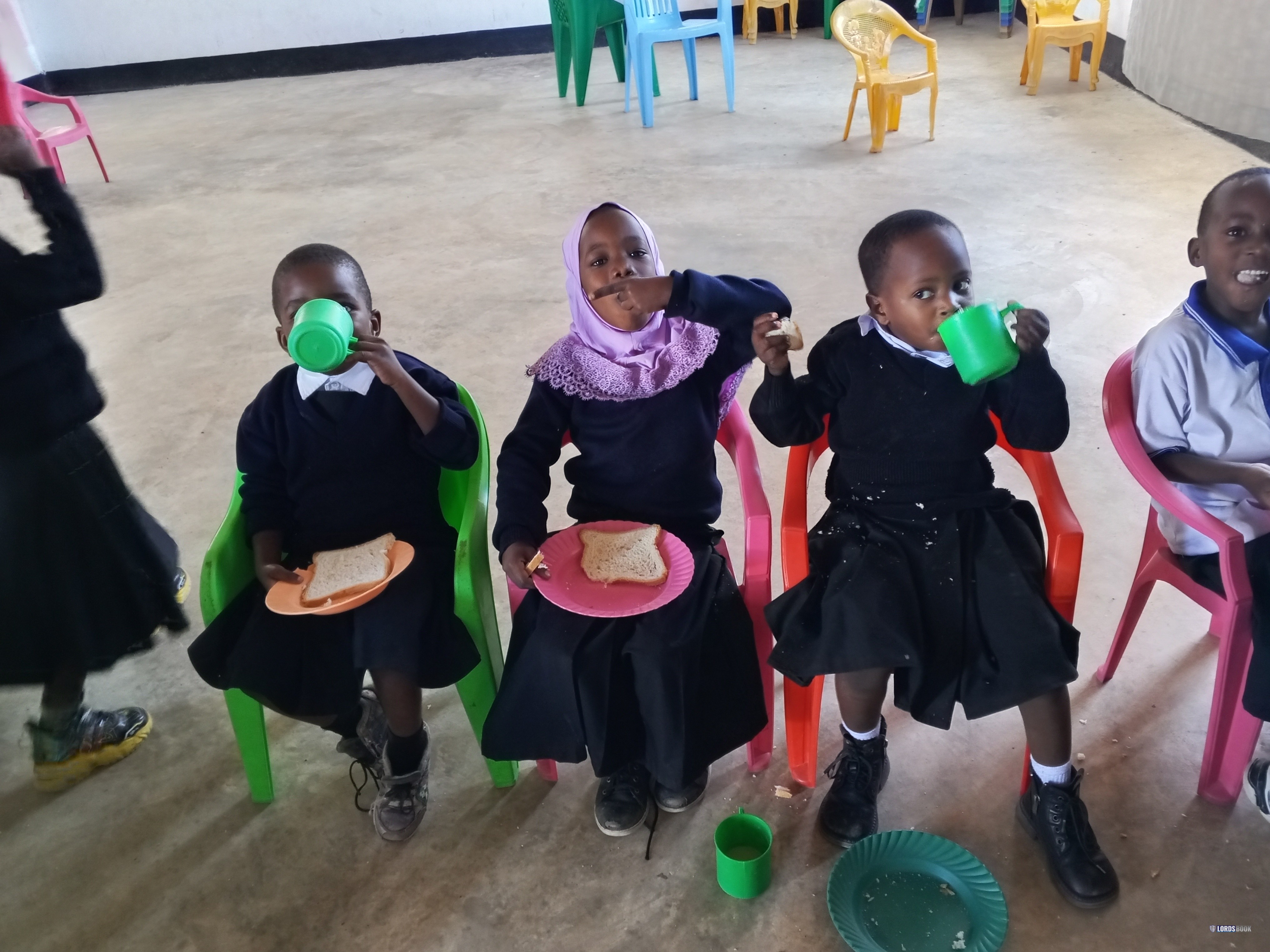
  • Giving the children food is one of the ministries which everyone can involve. we invite you to support the children of Vision complex orphanage with food depending on what you are blessed with.
    Giving the children food is one of the ministries which everyone can involve. we invite you to support the children of Vision complex orphanage with food depending on what you are blessed with.
    0 Commentarios 0 Acciones 24 Views
  • Day - 24 - Evening

    Theme: BUILDING A SAFE HOME: Creating a Marriage Where Love Respect and Peace Can Grow.

    Reflection
    Money can easily become a source of tension when couples stop seeing it as a shared responsibility.
    Today, take a quiet moment to remember that your spouse is not your financial opponent. You are partners, and the goal is not to prove who is right but to build a secure and responsible future together.
    Even when resources are limited, unity, honesty and wise planning can help protect peace in the home.

    God's Word
    "Two are better than one, because they have a good return for their labour." — Ecclesiastes 4:9

    Heart Check
    Are we facing our financial challenges together, or are we allowing money to create distance between us?

    Prayer
    Heavenly Father, give us wisdom and discipline in managing the resources You have entrusted to us. Help us communicate honestly about money and make financial decisions together. Keep greed, secrecy and resentment far from our home. May our finances serve our marriage rather than divide it. In Jesus' name, Amen.

    Remember
    In marriage, it is not about winning the argument; it is about winning each other's hearts.


    Day - 24 - Evening Theme: BUILDING A SAFE HOME: Creating a Marriage Where Love Respect and Peace Can Grow. 🌙 Reflection Money can easily become a source of tension when couples stop seeing it as a shared responsibility. Today, take a quiet moment to remember that your spouse is not your financial opponent. You are partners, and the goal is not to prove who is right but to build a secure and responsible future together. Even when resources are limited, unity, honesty and wise planning can help protect peace in the home. 📖 God's Word "Two are better than one, because they have a good return for their labour." — Ecclesiastes 4:9 🌙 Heart Check Are we facing our financial challenges together, or are we allowing money to create distance between us? 🙏 Prayer Heavenly Father, give us wisdom and discipline in managing the resources You have entrusted to us. Help us communicate honestly about money and make financial decisions together. Keep greed, secrecy and resentment far from our home. May our finances serve our marriage rather than divide it. In Jesus' name, Amen. Remember In marriage, it is not about winning the argument; it is about winning each other's hearts.
    0 Commentarios 0 Acciones 19 Views
Resultados de la búsqueda